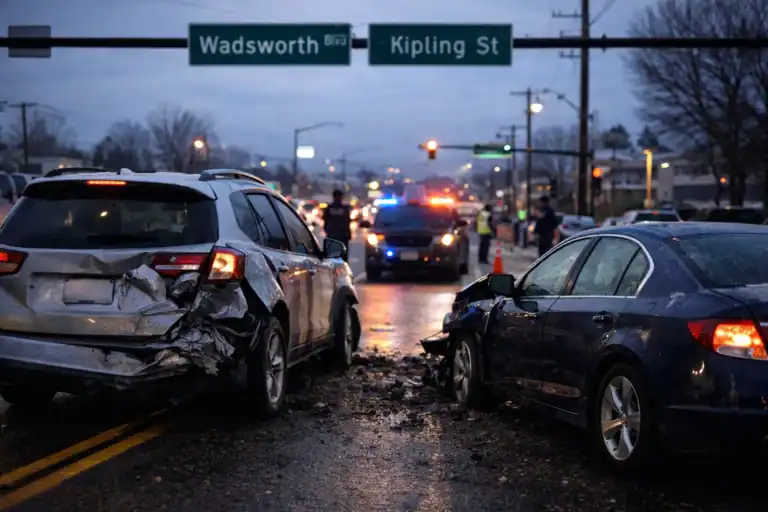
Highlands Ranch Rear-End Crash on C-470 or Santa Fe: What Douglas County Claims Require
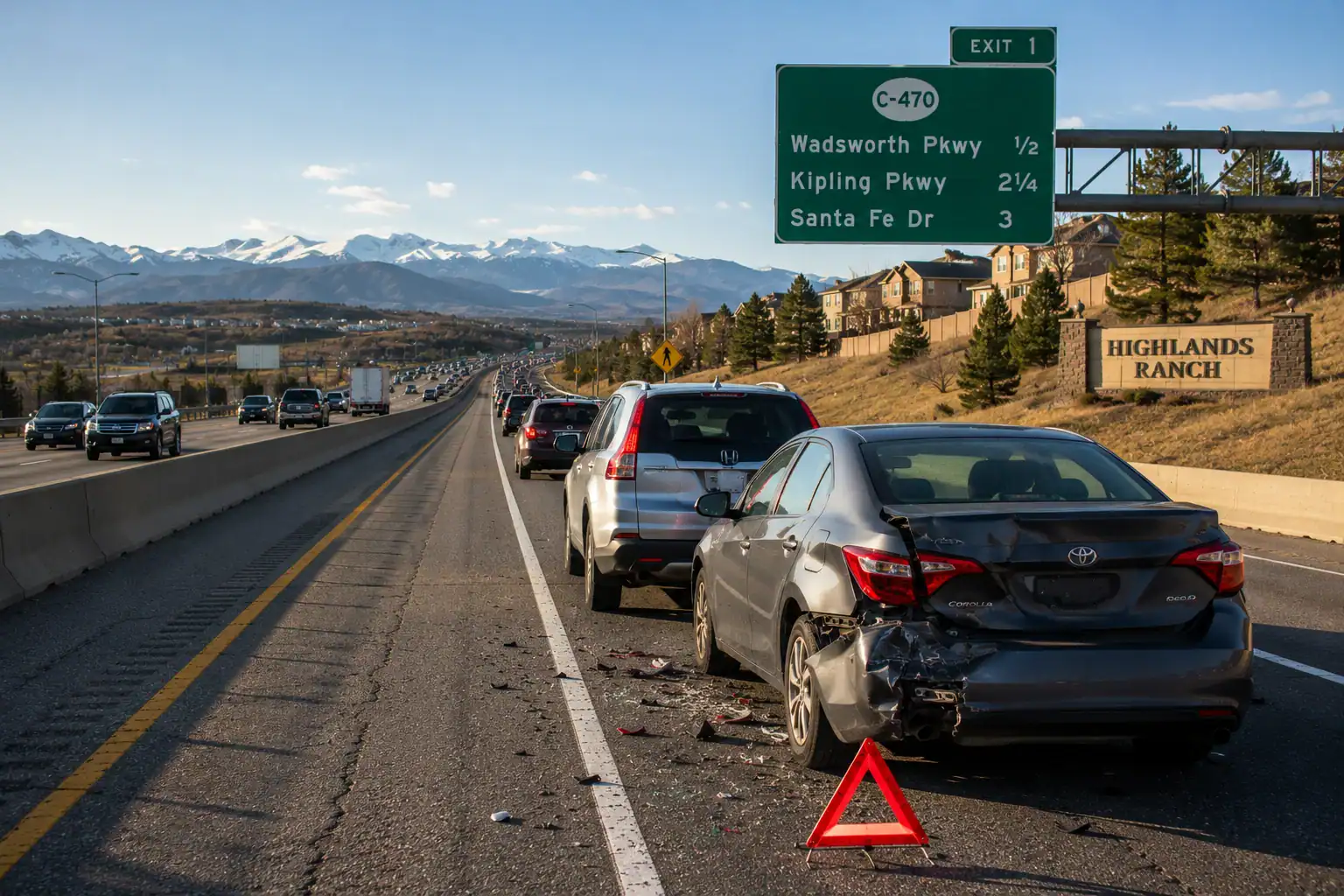
Highlands Ranch sits at one of the busiest road intersections in Douglas County. C-470 carries commute traffic between the south metro and the western suburbs. US-85, locally known as Santa Fe Drive, carries north-south traffic from Denver toward Castle Rock and Colorado Springs. The intersection of these two corridors, and the surrounding network of major roads serving Highlands Ranch’s substantial residential population, produces a consistent volume of rear-end crashes that produce real injuries.
This article is for the Highlands Ranch resident who has just been rear-ended on C-470, Santa Fe, or one of the corridors feeding the community. We have written extensively about rear-end crashes generally and the specific corridor concerns vary by location.
If you have been hurt in a Highlands Ranch rear-end crash, call us at 720-928-9178. The conversation is free, there is no obligation, and there is no fee unless we win your case.
Why C-470 Produces So Many Rear-End Crashes
C-470 is a high-speed corridor with frequent congestion patterns that produce predictable rear-end collisions.
The corridor’s design speed is high. Drivers operating at sixty-five miles per hour or more encounter sudden slowdowns at predictable points, including the I-25 interchange, the Santa Fe interchange, the University Boulevard interchange, and the Quebec Street interchange. Drivers who fail to anticipate the slowdowns rear-end the vehicles ahead of them.
The congestion patterns are seasonal and time-of-day dependent. The morning commute eastbound and the evening commute westbound produce predictable backups. Weekend traffic patterns differ. Drivers familiar with the corridor anticipate the patterns. Drivers unfamiliar with the corridor often do not.
The grade and curvature of the corridor produce specific blind areas where drivers cannot see far enough ahead to anticipate slowdowns. The stretch east of Santa Fe and the stretch west of I-25 both have these characteristics.
Weather conditions amplify the rear-end risk substantially. Light snow, fog, and rain all produce conditions where stopping distance increases and many drivers do not adjust.
Why Santa Fe Produces Different Rear-End Crashes
US-85 through Highlands Ranch and the south metro produces a different rear-end pattern than C-470.
The corridor is high-volume but moves at lower average speeds, particularly through the developed portions of Highlands Ranch and Lone Tree. Intersection-related rear-end crashes are more common than the high-speed slowdown crashes typical of C-470.
The commercial vehicle volume on Santa Fe is substantial. Trucks operating between Denver and Colorado Springs use Santa Fe as a primary corridor. Rear-end crashes involving commercial vehicles are different from rear-end crashes involving only passenger vehicles, and the framework for commercial vehicle accident claims applies.
The corridor’s road geometry, including the multiple lane configurations and the transitions between developed and undeveloped sections, produces specific crash points that we see repeatedly.
How Fault Is Assigned in a Rear-End Crash
The presumption in Colorado rear-end cases is that the rear driver is at fault. The legal basis is the duty to maintain a safe following distance, which is codified in Colorado traffic statutes and supported by case law. A driver who rear-ends another driver is presumed to have failed in that duty.
The presumption is not absolute. Several factual patterns can rebut it or reduce the rear driver’s fault percentage.
Sudden, unexpected stops by the lead driver. A driver who slams on the brakes without warning for no apparent reason may bear some fault.
Lead driver’s brake lights not functioning. A driver whose brake lights are not visible bears some fault for crashes that follow.
Multi-vehicle scenarios where the rear-ending driver was pushed by a vehicle behind them.
Adverse road conditions that affected both drivers equally and that one driver should have been more cautious about.
Even with these patterns, the rear driver typically bears the majority of fault. The recovery for the lead driver is usually substantial unless they share substantial responsibility for the conditions that produced the crash.
The Injuries in Rear-End Crashes
Rear-end crashes produce injuries that insurance carriers consistently underestimate, particularly at lower speeds.
Whiplash and cervical spine injuries are the most common. The mechanism is well-documented in the medical literature, including in our resource on the science of why whiplash symptoms appear days after a collision.
Lumbar spine injuries, including herniated and bulging discs, frequently follow rear-end crashes. Our piece on herniated versus bulging disc claims walks through the legal and medical distinction.
Traumatic brain injury can occur in rear-end crashes even when the head does not visibly strike anything. The brain decelerates inside the skull and damage occurs.
Soft tissue injuries throughout the shoulders, chest, and back from seat belt loading.
The injuries are often dismissed by insurance carriers because the vehicle damage in low-speed rear-end crashes is minimal. The medical science does not support that dismissal, and Colorado courts have recognized real injuries from low-speed crashes consistently. Our resource on low-speed rear-end collisions and what Colorado courts recognize addresses this directly.
What Your Highlands Ranch Rear-End Claim Is Worth
The value depends on the same factors that drive any Colorado car accident claim, including the severity and permanence of the injury, the strength of liability, the conduct of the insurance carrier, and the quality of representation. Our Colorado car accident settlement guide walks through the framework.
For Highlands Ranch residents specifically, the lost income picture often warrants careful presentation. The medical care available in the south metro is high quality and well-documented. The carrier’s pressure to settle early should be resisted until the medical picture is clear.
What to Do Immediately After a Highlands Ranch Rear-End Crash
Move to safety if you can. C-470 and Santa Fe both have shoulders that allow vehicles to be moved out of the travel lanes.
Call 911. Get police or sheriff deputies to the scene. Highlands Ranch is in unincorporated Douglas County, and Douglas County Sheriff deputies typically respond to crash calls.
Document the scene thoroughly.
Seek medical attention. Rear-end injuries often present with delayed symptoms. Get evaluated within twenty-four hours.
Notify your own insurance carrier.
Do not give a recorded statement to the at-fault driver’s insurance carrier.
Engage counsel.
Frequently Asked Questions
How long do I have to file a Highlands Ranch rear-end claim?
Three years from the date of the accident under CRS 13-80-101.
Is the rear driver always at fault in a rear-end crash?
The presumption is that the rear driver is at fault, but the presumption can be rebutted by specific factual patterns. The lead driver typically recovers, but the fault allocation can vary.
What if I was rear-ended at low speed?
Low-speed rear-end crashes can and do produce real injuries. The medical literature is clear, and Colorado courts have recognized these injuries consistently.
What if I was rear-ended by a commercial vehicle?
Commercial vehicles introduce higher coverage, federal regulations, and employer liability. The case framework changes substantially.
What if my injuries did not appear until days later?
Delayed-onset injuries from rear-end crashes are common, particularly for whiplash and soft tissue injuries. As long as you seek treatment promptly once symptoms appear, the delayed onset does not defeat the claim.
Should I take the first settlement offer?
Almost never. The first offer in a rear-end case is typically far below the actual value, particularly when the medical picture has not fully developed.
Sources
Colorado Revised Statutes 13-21-111: Comparative Negligence, leg.colorado.gov
Colorado Revised Statutes 13-80-101: Three-Year Limitation for Motor Vehicle Tort Actions, leg.colorado.gov
Colorado Revised Statutes 42-4-1008: Following Too Closely, leg.colorado.gov
Colorado Department of Transportation, C-470 and US-85 Corridor Data, codot.gov
National Highway Traffic Safety Administration, Rear-End Crash Data, nhtsa.gov
If you have been rear-ended in Highlands Ranch or anywhere in the south metro, please call us. The conversation is free and there is no obligation. We will tell you honestly what we see and what we recommend. Reach Samantha Flanagan and the Flanagan Law team at 720-928-9178. We are a Colorado boutique firm. We answer our own phones. And we do not get paid unless we win your case.