Colorado at 150: A Letter About the Roads We Share
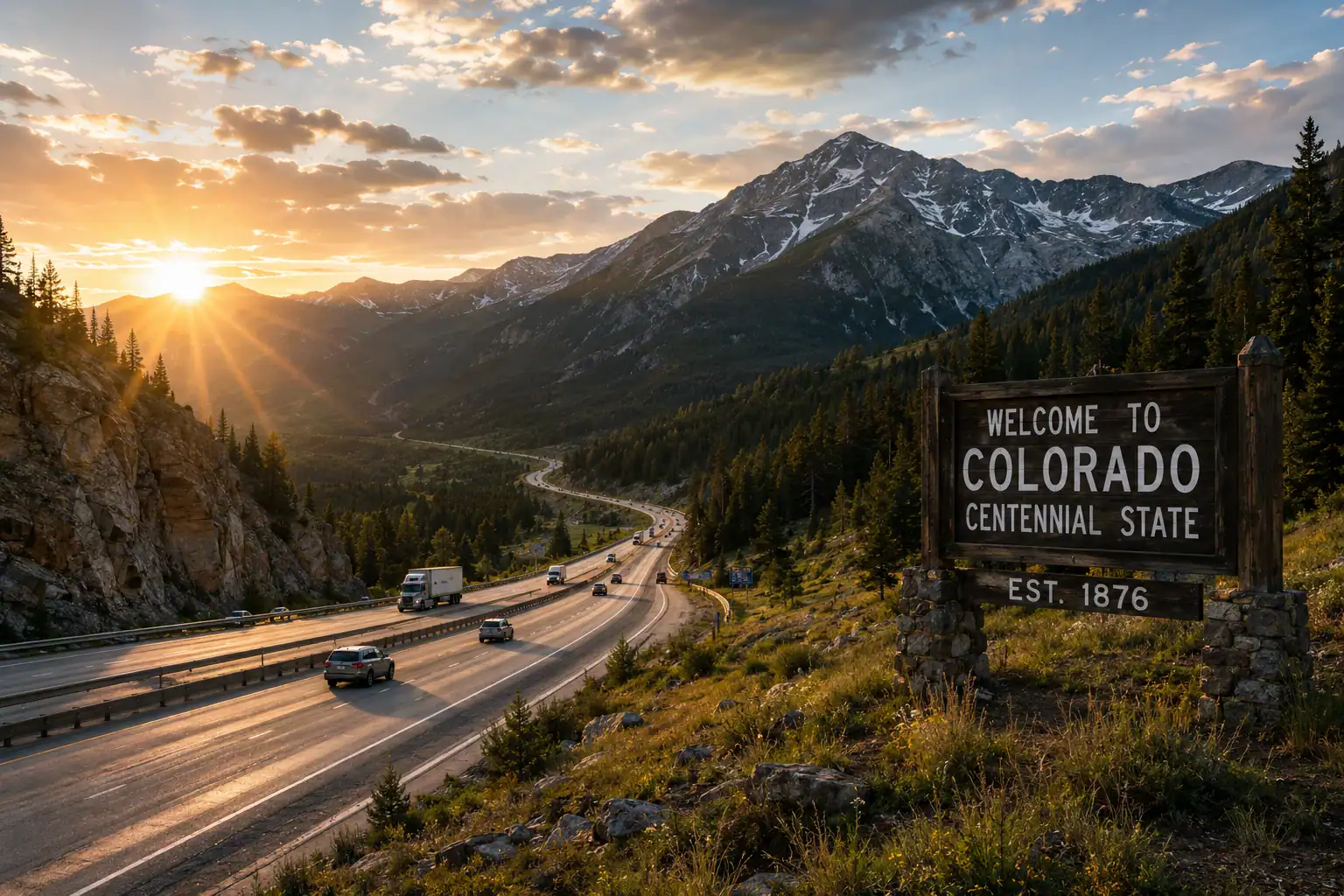
On August 1, 1876, Colorado became the thirty-eighth state. It joined the Union one month after the country’s hundredth birthday, which is how it picked up the name it still carries. The Centennial State. This August 1 marks 150 years.
Anniversaries like this usually get celebrated with mountains. The peaks, the passes, the photographs. We would like to say something about the roads instead, because that is where our work lives and because the roads tell a version of Colorado’s story that does not get told as often.
A State Built by Getting Places
Colorado exists in its current shape largely because people needed to move through terrain that did not want them to. The early routes followed what the land allowed. Wagon roads to the mining camps. Toll roads over passes that closed for half the year. Rail lines that determined which towns became cities and which ones became names on a map.
Everything since has been a variation on the same problem. The Front Range grew along a north-south corridor because that is where travel was possible without a mountain in the way. I-25 traces that logic. I-70 solved the harder problem, cutting west through country that had defeated every previous attempt at a reliable year-round crossing.
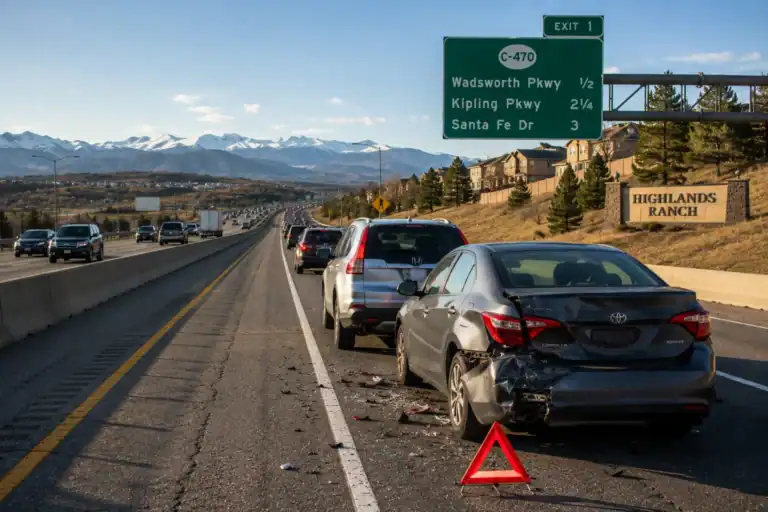
The result is a state where a remarkable share of daily life happens on a small number of critical routes. When one of them fails, whether from weather, construction, or a single collision, the effect ripples for hours across an entire region.
We wrote about the longer legal arc of American roads in from wagon trails to Interstate 70. This letter is about Colorado specifically, and about now.
What Changed in 150 Years
Almost everything, if you are looking at the machinery. Vehicles are dramatically safer than they were even thirty years ago. Crumple zones, multi-stage airbags, stability control, automatic emergency braking. Roadways are engineered with runaway ramps, variable message signs, and chain stations. Emergency response is faster and better equipped.
Volume changed too. The Front Range carries far more people than the highway network was originally designed to serve, and the growth has not been evenly distributed. Towns that were rural twenty years ago now feed thousands of daily commuters onto two-lane roads that were built for tractors and pickup trucks.
And the nature of driver attention changed in a way nobody in 1876 could have anticipated. The most consequential safety development of the last two decades was not a change to the vehicle or the road. It was the arrival of a device in the driver’s hand that is engineered specifically to capture attention.
What Did Not Change
Three things have held constant across the entire 150 years.
The terrain does not negotiate. A mountain grade in bad weather is the same physics problem it was for a freight wagon. Momentum, traction, and stopping distance are not subject to opinion, and the drivers who get in trouble on I-70 are usually the ones who assumed their vehicle exempted them from that.
The weather arrives without warning. Colorado can hand you sun, hail, and ice within an hour on the same stretch of pavement. Locals know this and still get caught.
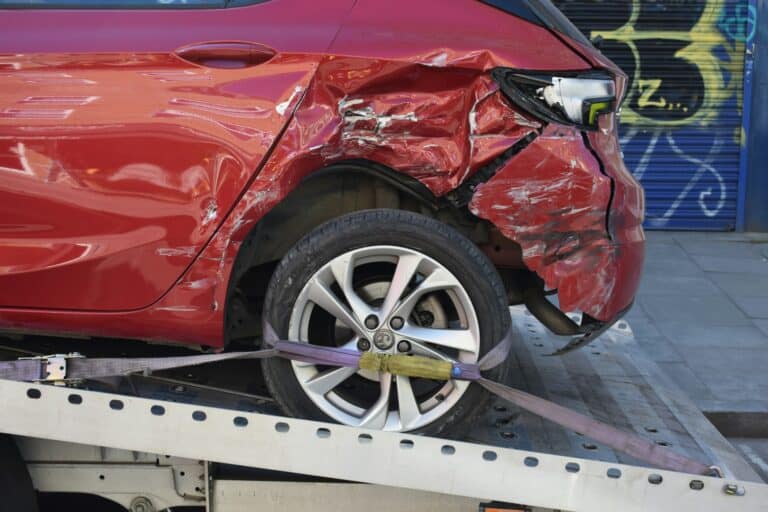
And the human body has not improved. Vehicles absorb crash forces far better than they used to, but the neck, the spine, and the brain inside a modern vehicle are exactly as fragile as they were in a Model T. That is the part of this equation that has never been engineered around, and it is the reason a collision that leaves a car looking almost undamaged can still leave a person dealing with symptoms for months.
A Note for the Weekend
August 1 falls on a Saturday this year, in the middle of the heaviest travel stretch of the Colorado summer. If you are heading into the mountains or up and down the Front Range that weekend, a few things reliably reduce risk:
- Leave earlier than you think you need to, because time pressure is the beginning of most bad decisions on a highway
- Build in real stops, since fatigue at altitude arrives sooner than at sea level
- Check your tires before a mountain trip rather than after
- Put the phone somewhere you cannot reach it
- Assume the vehicle beside you has not seen you
Our article on summer road trip crashes in Colorado goes further into what the crash data shows about these corridors, and the I-70 mountain corridor analysis covers the specific miles that account for a disproportionate share of serious collisions.
Why This Matters to a Law Firm
We represent people whose lives changed on these roads. Most of them were doing something entirely ordinary at the time. Driving to work along a route they had taken a thousand times. Heading home from a family visit. Riding a bicycle on a Saturday morning.
Sesquicentennials invite the kind of reflection that tends toward the sentimental, and we would rather be useful than sentimental. So the honest version is this. Colorado is a beautiful place to live and a demanding place to drive, and the second part is easy to forget precisely because the first part is so distracting.
We hope you spend August 1 somewhere worth being. We hope you get there and back without needing anyone in our profession.
Frequently Asked Questions
When did Colorado become a state?
Colorado was admitted to the Union on August 1, 1876, as the thirty-eighth state. August 1, 2026 marks the 150th anniversary of statehood, also called the sesquicentennial. The date is recognized each year in Colorado as Colorado Day.
Why is Colorado called the Centennial State?
Colorado earned the nickname because it achieved statehood in 1876, the same year the United States marked one hundred years since the Declaration of Independence. Statehood came roughly four weeks after the national centennial celebration, and the name has been attached to Colorado ever since.
Is Colorado Day a public holiday?
Colorado Day is recognized annually on August 1 to mark the anniversary of statehood. It is observed with commemorative events around the state rather than widespread business closures, so most offices, shops, and roads operate on a normal schedule. Travel volume on that weekend generally reflects ordinary summer patterns rather than holiday patterns.
What are the most dangerous stretches of Colorado highway in summer?
The I-70 mountain corridor and the I-25 Front Range corridor consistently account for a large share of Colorado’s serious collisions during summer months. Both combine heavy volume, significant speed differentials, and a mix of local commuters and unfamiliar out-of-state drivers. Mountain segments add grade, weather, and limited shoulder space to that combination.
What should I do if I am in a crash while traveling in Colorado?
Call 911, get medical attention even if you feel fine, and photograph the scene, the vehicles, and the road conditions before anything is moved. Exchange information but avoid discussing fault. Report the crash to your own insurer, and be cautious about giving a recorded statement to the other driver’s insurance company before you understand your injuries.
Talk to Flanagan Law
Flanagan Law is a boutique Colorado firm handling vehicle accident cases across the Denver metro and Front Range. If you or someone in your family was hurt on a Colorado road, call 720-928-9178. Someone answers 24 hours a day.
Happy 150th, Colorado.