Summer Road Trip Crashes in Colorado: I-70, I-25, and the Statistics Every Family Should Know Before They Drive
Summer in Colorado means road trips. Families load up the SUV for the drive to Glenwood Springs, to the Grand Junction-area parks, to Steamboat, to the eastern plains, to the southern Colorado highway routes through La Veta and Trinidad. The volume of recreational and family travel on Colorado highways triples or quadruples during peak summer weekends. The crashes that follow the volume are predictable, and the patterns are worth understanding before you leave.
This article is a backlink-magnet piece that walks through what the data shows about summer Colorado road trip crashes and what families can do to protect themselves. If you have been in a crash on a summer trip, call us at 720-928-9178. The conversation is free, there is no obligation, and there is no fee unless we win your case.
The Patterns That Repeat Every Summer
The CDOT and NHTSA data on Colorado summer crashes shows several patterns that repeat year over year.
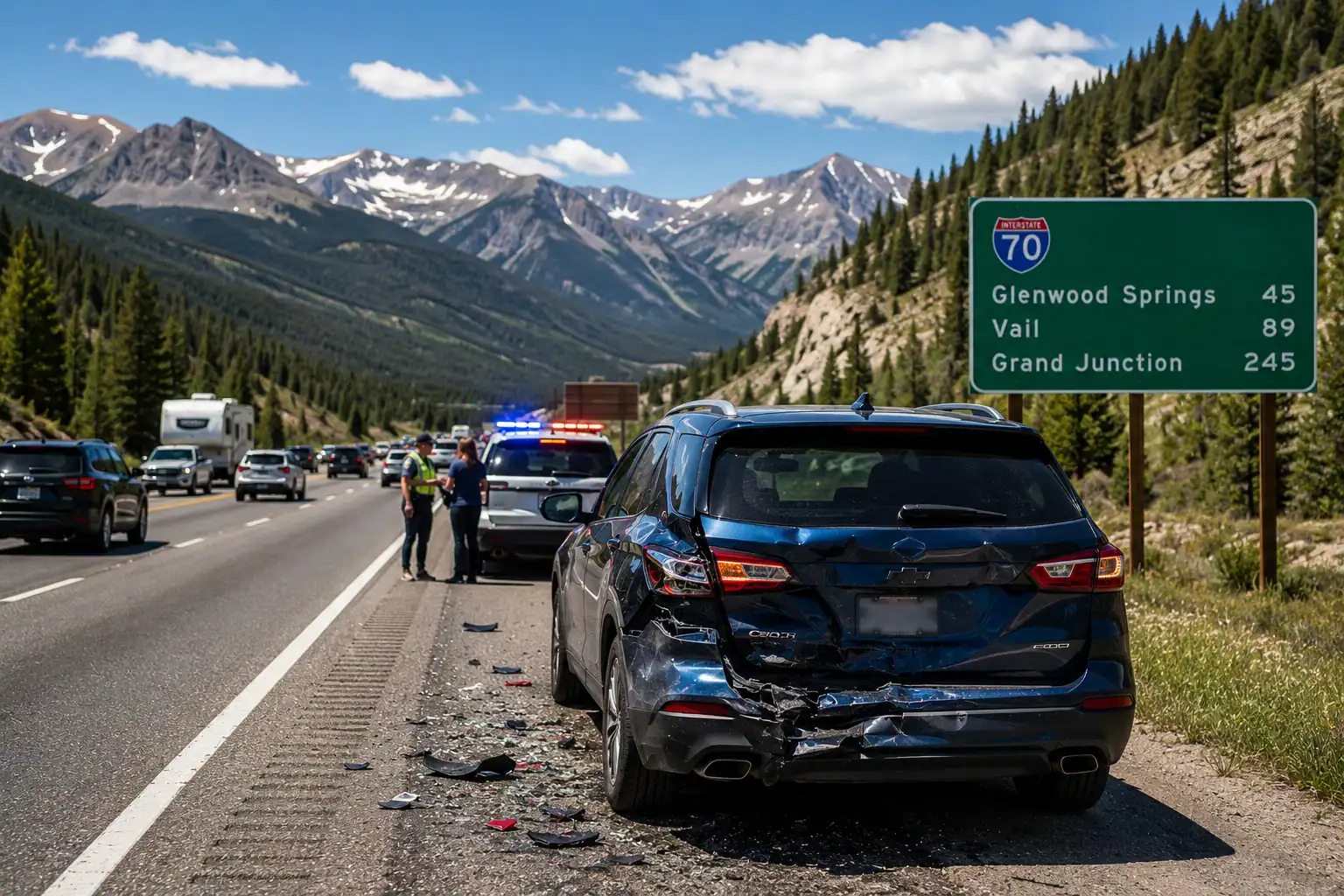
Friday afternoon and Sunday evening westbound and eastbound I-70 traffic produces concentrated crash volume during the peak weekend hours. The volume on I-70 between Denver and Eagle on a typical summer Friday afternoon exceeds the corridor’s safe capacity by a substantial margin, and the resulting congestion produces rear-end crashes consistently.
Mountain corridor crashes during summer weekends include the brake-failure and overheating crashes on the descents we discussed in our June 1 piece on I-70 mountain corridor crash statistics.
I-25 north-south traffic during holiday weekends, including Memorial Day, Independence Day, and Labor Day, produces consistent crash patterns including rear-end crashes during slowdowns near major exits and at the interchange points.
Single-vehicle crashes on rural highways increase during summer, partly because of the volume and partly because of unfamiliar drivers from out-of-state and from urban areas driving roads they do not know.
Animal strikes on rural highways increase during summer evening hours.
The High-Risk Conditions
Several conditions disproportionately produce summer road trip crashes.
Driver fatigue. Long drives, particularly drives that start early in the morning or extend late into the evening, produce fatigue-related crashes. The driver who has been on the road for five hours is slower to react and more likely to make errors of attention.
Driver inexperience with the route. Out-of-state visitors and Colorado residents driving routes they do not regularly use are more likely to make mistakes. The Independence Pass corridor, the Trail Ridge Road corridor, and the mountain passes around Steamboat and Aspen all see disproportionate crash rates among unfamiliar drivers.
Weather. Summer thunderstorms can produce sudden visibility loss and slick conditions. Hail can total a windshield in minutes. Flash flooding on roads in southern and eastern Colorado is a real hazard.
Wildlife. Deer and elk are active in summer at dawn and dusk. The corridors most affected include all of the mountain corridors and many rural state highways.
Heat. Vehicles that overheat in summer conditions, particularly older vehicles climbing mountain grades, can produce mechanical failures that contribute to crashes.
Equipment failure. Tire blowouts in summer heat, brake failures on long descents, and cooling system failures all produce summer crash patterns.
The Specific Corridors
The I-70 mountain corridor we addressed in detail in our June 1 piece. The patterns repeat every summer.
The I-25 corridor from Pueblo north through Castle Rock, Colorado Springs, and into the Denver metro carries substantial volume during summer weekends, with the busy stretches near Colorado Springs and through the south metro producing the most consistent crash volume.
The US-285 corridor from Denver to Fairplay and beyond is the alternative route to the mountain destinations for drivers avoiding I-70. The corridor’s grades, curves, and at-grade intersections produce crashes consistently.
The US-40 corridor from I-70 west toward Steamboat and Craig sees concentrated weekend recreational traffic and the standard crash patterns of high-volume two-lane highway driving.
The Highway 14 corridor through Poudre Canyon between Fort Collins and Walden sees recreational traffic and the canyon-driving crash patterns of curve and visibility-limited highway.
What Families Can Do
Plan the route and the timing. Avoid the peak Friday afternoon westbound and Sunday evening eastbound on I-70 if possible. Travel earlier or later when the volume is lower.
Take breaks. Driver fatigue is a major contributor to summer crashes. Stop every two to three hours, switch drivers when possible, and recognize when you are too tired to drive safely.
Maintain the vehicle. Tires, brakes, fluids, and cooling system should all be checked before any extended summer trip.
Adjust speed for conditions. Mountain driving, especially on descents, requires significantly slower speeds than the posted limit suggests. The posted limit is the maximum for ideal conditions, not the recommended speed for the descent you are on.
Build slack into the schedule. The tightest schedules produce the worst driving behavior. Allow more time than you think you need, especially for return trips.
Stay off the phone. Distracted driving is a major contributor to vacation crashes. The vacation does not start until you arrive.
What to Do If You Are in a Summer Road Trip Crash
The standard advice that applies to any Colorado crash applies here. Call 911. Document the scene. Seek medical attention. Notify your own carrier. Do not give recorded statements to other drivers’ carriers.
If you are out of state when you are hit and are returning to Colorado, your home-state coverage still applies to many aspects of the claim, including UM/UIM and MedPay. Our resource on rental car accidents in Colorado addresses the broader coverage picture for travelers.
Frequently Asked Questions
What is the most dangerous Colorado highway in summer?
The I-70 mountain corridor produces the highest crash volume by sheer traffic. The most dangerous miles within that corridor include the Floyd Hill descent, the Vail Pass descents, and the Eisenhower Tunnel approaches.
Are summer crashes worse than winter crashes?
The patterns are different. Summer crashes involve higher speeds, more out-of-state drivers, and more single-vehicle and animal strike events. Winter crashes involve more weather-related events and slower speeds. The severity profile differs, but both seasons produce serious crashes.
What if I am hit by an out-of-state driver?
Colorado courts have jurisdiction. The legal merits are the same. Service of process and locating the driver are practical issues.
What insurance should I carry for summer trips?
Meaningful liability limits, robust UM/UIM, MedPay, and an umbrella policy if your financial profile warrants it. The Colorado state minimum is inadequate for any serious crash. We discuss the full coverage picture in our complete guide to Colorado auto insurance.
What if I am driving a rental car on a Colorado trip?
Your home auto policy typically extends to a rental car. The rental company’s CDW may provide additional coverage. Your credit card may provide secondary coverage. We address the framework in our rental car resource.
Sources
Colorado Department of Transportation, Summer Crash Data and Safety Resources, codot.gov
National Highway Traffic Safety Administration, Summer Driving Safety Resources, nhtsa.gov
Colorado State Patrol, Holiday Weekend Enforcement and Crash Data, csp.state.co.us
Colorado Revised Statutes 13-80-101: Three-Year Limitation for Motor Vehicle Tort Actions, leg.colorado.gov
Colorado Revised Statutes 10-4-609: Uninsured Motorist Coverage, leg.colorado.gov
If you have been hurt in a summer crash on Colorado roads, please call us. The conversation is free and there is no obligation. Reach Samantha Flanagan and the Flanagan Law team at 720-928-9178. We are a Colorado boutique firm. We answer our own phones. And we do not get paid unless we win your case.