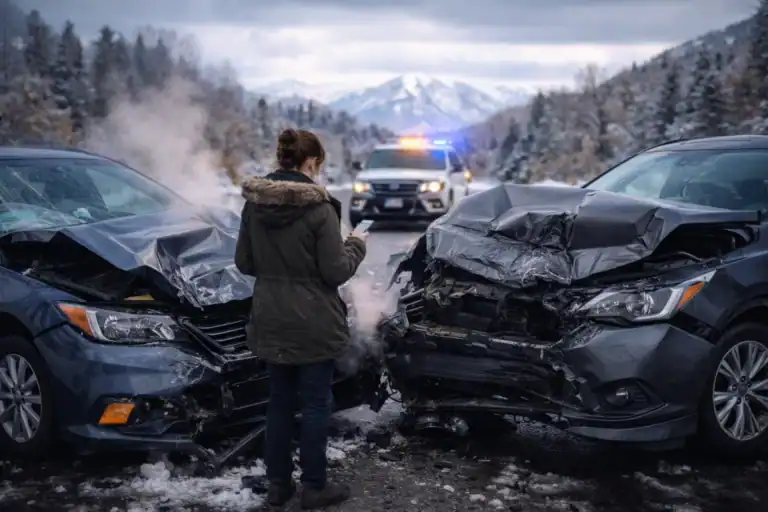
Breckenridge or Summit County Car Accident: What Mountain Resort Claims Involve That Front Range Claims Don’t
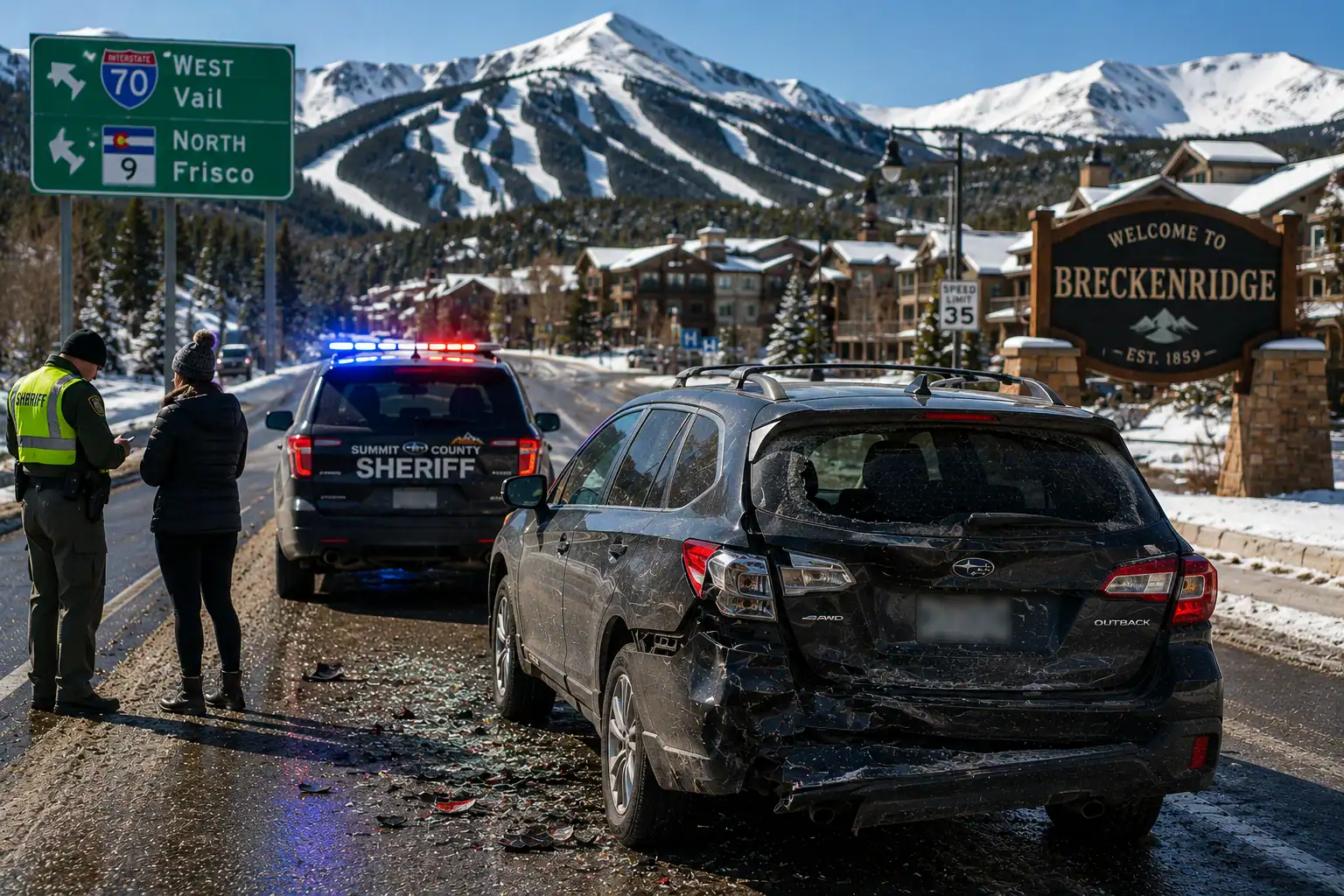
A car accident in Breckenridge, Frisco, Silverthorne, or Dillon involves a set of complications that a similar accident on a Front Range corridor does not. The driver who hits you may be from out of state and on the second day of a ski vacation. The road may be a CDOT-maintained highway, a Summit County road, or a private resort road, and the jurisdiction matters. The witnesses may all be tourists who fly home within hours. The medical evaluation may happen at a small mountain hospital before you transfer to a Denver-area trauma center.
In our practice we handle Summit County crashes regularly, and the patterns are different enough from Front Range crashes that they warrant their own discussion. This article walks through what to expect, what to do, and how the legal and insurance picture typically unfolds.
If you have been hurt in a Breckenridge or Summit County crash, call us at 720-928-9178. The conversation is free, there is no obligation, and there is no fee unless we win your case.
The Out-of-State Driver Factor
Summit County’s economy is built on tourism. The drivers using the local roads during peak season are disproportionately from out of state. Texas, California, the Midwest, the East Coast, all of them are represented in the visitor traffic.
The out-of-state driver factor affects the case in several ways. The driver may be unfamiliar with mountain driving. The driver may be on a rental car policy with limits and terms different from a standard Colorado policy. The driver may leave the state within days of the crash, complicating witness availability and follow-up. The driver’s home-state insurance policy responds to the claim, but coordination with an out-of-state carrier sometimes adds friction.
The fact that the driver is from out of state does not change Colorado’s jurisdiction over the case or the applicability of Colorado law. The case proceeds in Colorado courts under Colorado law. Service of process and locating the driver, however, can be practical complications worth knowing about.
The Rental Car Layer
Many Summit County visitors drive rental cars. Rental coverage has multiple layers, including the rental company’s collision damage waiver (CDW), the renter’s own auto policy, and the renter’s credit card coverage. Sorting through which coverage applies to which loss is one of the more confusing aspects of rental car claims. We have addressed the framework in our rental car accidents in Colorado resource.
When you are hit by a rental car driver, the same multi-layer coverage analysis applies on the other side. The liability coverage available depends on the renter’s home policy, the rental company’s commercial coverage, and any optional coverages the renter purchased at the counter.
The Jurisdictional Patchwork
Summit County’s roads include CDOT-maintained highways (I-70, US-6, Highway 9, Highway 91), Summit County roads, municipal roads in Breckenridge, Frisco, Silverthorne, Dillon, and Blue River, and private resort roads at the various ski areas.
The jurisdiction of the road affects several aspects of the case. Police response varies by jurisdiction. Colorado State Patrol covers state highways. Sheriff deputies cover unincorporated county areas. Municipal police cover municipalities. Private security covers resort property.
If the crash involves a government vehicle from any of these jurisdictions, the Governmental Immunity Act and the 182-day notice deadline we discussed in our May 18 piece apply.
If the crash occurs on private resort property, the resort may have its own liability framework, and the property owner’s premises liability rules may come into play in addition to standard vehicle liability rules.
The Medical Evaluation Pattern
Serious mountain crashes typically follow a predictable medical pattern. Emergency response on the scene. Transport to St. Anthony Summit Hospital in Frisco or Vail Health Hospital in Vail for initial trauma evaluation. Stabilization and then transfer to a larger trauma center on the Front Range, often Saint Anthony Hospital in Lakewood or one of the major Denver-area trauma centers.
The medical record created in this pattern often spans multiple facilities and multiple physician groups. Collecting and coordinating the records is part of the case work that begins almost immediately.
We have written about how post-accident medical treatment decisions make or break your claim. The framework applies to mountain crashes with the additional consideration that the record will likely span multiple geographic locations.
The Witness Problem
Mountain crash witnesses are often tourists who fly home within days. The witness contact information collected at the scene is essential because the witnesses are typically not available for in-person follow-up later.
Surveillance footage from ski resorts, hotels, gas stations, and other businesses along the route can be valuable. The retention windows are short, however, and prompt requests are essential.
Cell phone data from witnesses and from the involved drivers can establish the timeline and the conditions. Cell tower records and phone records can be obtained.
The Insurance Picture
The insurance picture in a Summit County crash often includes multiple parties’ coverages.
The at-fault driver’s primary liability policy is the starting point. If they are in a rental car, the rental company’s policy may also apply. If they are on commercial business, commercial coverage may apply.
Your own UM/UIM coverage applies when the at-fault driver’s coverage is exhausted or non-existent. The fact that the crash occurred outside the Denver metro does not change the applicability of your home auto policy.
Your own MedPay applies regardless of fault.
The full coverage analysis is addressed in our complete guide to Colorado auto insurance.
What to Do After a Summit County Crash
Call 911. Get emergency response and police to the scene.
Document everything. Photographs, witness contact information (especially given that witnesses will likely leave the area soon), and the conditions.
Get medical evaluation immediately at the nearest appropriate facility.
Notify your own carrier.
Do not give recorded statements to other drivers’ carriers.
Engage counsel quickly. Mountain crash cases benefit from early evidence preservation, particularly given the tourist-witness problem and the multi-jurisdictional complexity.
Frequently Asked Questions
Can I file a claim in Colorado if I am from out of state?
Yes. Colorado courts have jurisdiction over crashes that occurred on Colorado roads. The claim proceeds under Colorado law.
What if the at-fault driver is from out of state?
The legal merits are the same. The practical complications involve service of process and witness availability.
What if the crash occurred on resort property?
The case may involve both vehicle liability rules and premises liability rules. The legal analysis is fact-specific.
How long do I have to file a Summit County crash claim?
Three years from the date of the accident under CRS 13-80-101 for personal injury claims arising from a motor vehicle. If a government entity is involved, the 182-day notice deadline applies.
What if I was driving a rental car?
Your home auto policy typically extends to a rental car. The rental CDW and your credit card may provide additional coverage.
Sources
Colorado Revised Statutes 13-21-111: Comparative Negligence, leg.colorado.gov
Colorado Revised Statutes 13-80-101: Three-Year Limitation for Motor Vehicle Tort Actions, leg.colorado.gov
Colorado Revised Statutes 10-4-609: Uninsured Motorist Coverage, leg.colorado.gov
Colorado Revised Statutes 24-10-101 et seq.: Colorado Governmental Immunity Act, leg.colorado.gov
Colorado Department of Transportation, Summit County Corridor Resources, codot.gov
Summit County, Colorado, Public Safety Resources, summitcountyco.gov
If you have been hurt in Breckenridge, Frisco, Silverthorne, Dillon, or anywhere in Summit County, please call us. The conversation is free and there is no obligation. Reach Samantha Flanagan and the Flanagan Law team at 720-928-9178. We are a Colorado boutique firm. We answer our own phones. And we do not get paid unless we win your case.