First Snow, Same Mistakes: Why Colorado Crashes Spike on the Season’s First Storm
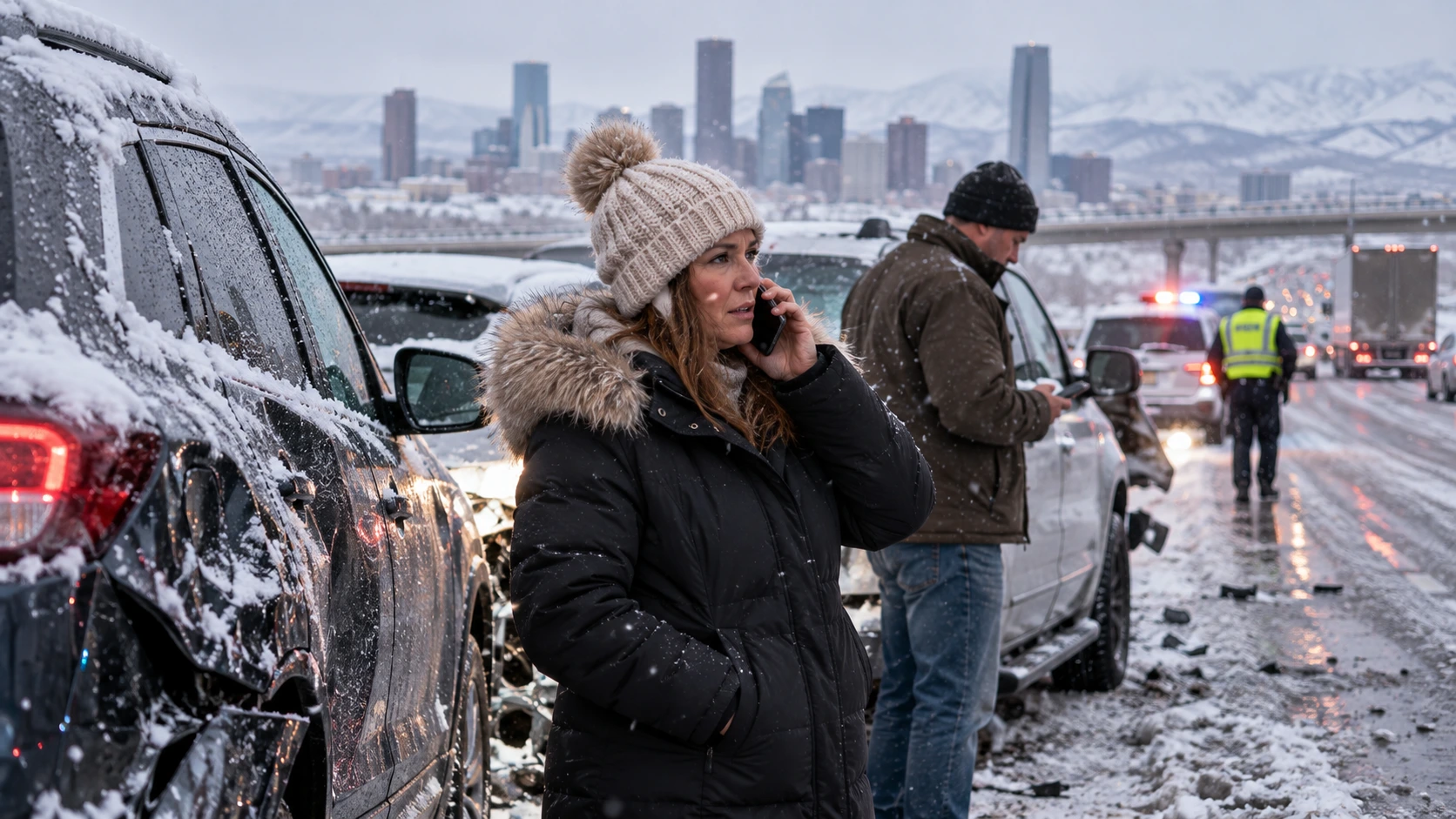
Every fall it happens the same way. The first real snow hits the Denver metro, usually sometime in mid to late October, and crash reports pour in by the hundreds before lunch. The roads aren’t worse than they will be in January. The drivers are. After six months of dry pavement, people leave home on summer habits: the same speed, the same following distance, the same worn tires. The first storm is when those habits meet ice, and the results are predictable.
Why are crashes so common in the first snow of the season?
Crashes spike in the first snow because drivers haven’t adjusted their speed, spacing, and equipment to winter conditions yet. Most people drive the way they’ve been driving all summer until something forces a change. The first storm also catches cars with worn all-season tires that nobody replaced in September, and wipers and defrosters that haven’t been tested since spring. A mid-season storm finds drivers who have already relearned winter. The first one finds everyone out of practice.
What makes first-storm roads slicker than they look?
Early-season roads are often slicker than later storms because of what has built up on the pavement. Months of oil and rubber residue sit on the surface, and the first moisture lifts it into a slick film. Wet leaves pile up in gutters and intersections in October and act almost like ice under a braking tire. Pavement that is still warm from fall days can melt the first snow and then refreeze after dark, creating black ice on bridges, overpasses, and shaded curves. Our article on black ice in Denver explains why those spots freeze first.
Is a driver at fault for sliding on snow or ice?
Usually, yes. Colorado’s basic speed law, C.R.S. 42-4-1101, requires drivers to go no faster than is reasonable and prudent for the actual conditions, regardless of the posted limit. Snow and ice don’t excuse a crash. They raise the standard of care. A driver who slides through a red light or into the back of a stopped car on the first snowy morning will almost always be found to have been driving too fast for conditions or following too closely. Our article on snowstorms, spinouts, and Denver liability rules covers how fault is assigned in winter crashes.
Can the at-fault driver blame the weather?
The at-fault driver can try, but the weather defense rarely works. Insurers sometimes argue a crash was an unavoidable accident caused by sudden ice. That argument only has a chance when ice was truly hidden and the driver was already going slowly and keeping proper distance. A first snowstorm is forecast days in advance, and every driver can see snow falling. Choosing to drive at summer speed into a forecast storm is exactly the kind of decision Colorado’s basic speed law addresses.
What if you were also driving on worn tires?
Your own equipment can affect your recovery. If the other driver’s insurer can show your bald tires or slow reaction contributed to the crash, it will argue you share the fault. Under Colorado’s comparative negligence rule, your damages are reduced by your percentage of fault, and you recover nothing if you are 50 percent or more at fault. Checking your tread and replacing worn tires before the first storm protects your safety and your claim. Our guide on winter tires, chains, and Denver crash liability explains how equipment comes up in winter claims.
How do multi-car pileups on the first snowy morning get sorted out?
Chain-reaction crashes on a first snowy commute often involve several drivers who each share some fault. A driver who couldn’t stop in time, another who was tailgating, and a third who swerved into the next lane may all bear part of the responsibility. Colorado divides fault by percentage among everyone who contributed. Photos, dashcam video, police reports, and witness names gathered at the scene make the difference in how those percentages land. Our article on how comparative negligence works in multi-vehicle pileups walks through those claims.
Should you report a fender bender during a snowstorm?
Yes, but how you report it may change during a big storm. When crash volume overwhelms responders, Denver-area police departments often go on accident alert, which means officers respond only to crashes involving injuries, impaired drivers, hit and runs, or vehicles that can’t be moved. In that case, drivers exchange information and file a report online or at a station within the time allowed. If anyone is hurt, call 911 regardless of accident alert status.
How can you get ready before the first storm?
Check tire tread with a quarter, and replace tires that fall short before the forecast turns. Replace wiper blades, top off winter washer fluid, and test the defroster. On the first snowy morning, leave early, double your following distance, brake gently and early, and treat bridges and overpasses as icy even when the rest of the road looks wet. Our Colorado winter driving pre-trip checklist covers the rest.
Frequently Asked Questions
When does Denver usually get its first snow?
The Denver area usually sees its first measurable snow in mid to late October, though some years it arrives in September and others not until November. Foothill and mountain communities typically see snow earlier. The first storm often follows a warm stretch, which catches many drivers unprepared.
Is the other driver automatically at fault if they slid into me on ice?
Not automatically, but usually. Colorado law requires drivers to adjust speed and following distance to road conditions. A driver who slides into another car on a snowy road is generally considered to have been driving too fast for conditions. Fault still depends on the facts, including what the other vehicles were doing.
Can I still recover damages if I was partly at fault in a snow crash?
Yes, as long as you are less than 50 percent at fault. Under Colorado’s modified comparative negligence rule, your recovery is reduced by your share of fault. If you are found 20 percent at fault, for example, your damages are reduced by 20 percent.
What is accident alert in Denver?
Accident alert is a status police departments activate when bad weather causes more crashes than officers can respond to. During an alert, officers respond only to crashes with injuries, suspected impairment, hit and runs, or disabled vehicles. Drivers in minor crashes exchange information and report the crash afterward.
Does snow change who pays in a rear-end collision?
Generally, no. The driver behind is expected to leave enough room to stop safely, and that duty increases on snow and ice. A rear-end crash on a snowy road is usually still the trailing driver’s fault, because snow is exactly the condition that calls for more following distance.
When should I call a lawyer after a snowy weather crash?
Call when you were injured, when fault is disputed, or when several vehicles were involved. Weather crashes give insurers extra room to argue about fault, and early evidence matters. Flanagan Law offers free consultations at 720-928-9178.
If you were hurt in a crash during Colorado’s first snowstorm or any winter weather, call Flanagan Law at 720-928-9178 for a free consultation.