Why Fragmented Medical Records Weaken a Colorado Injury Claim, and What Consolidated Care Changes
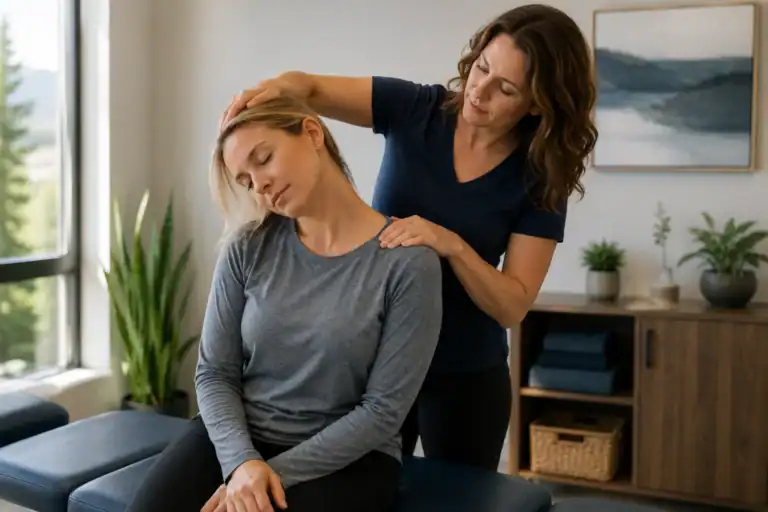
After a serious collision, treatment tends to scatter. The emergency room sends you home with a referral. A chiropractor treats your neck. A physical therapist at a different address handles the shoulder. Imaging happens at a fourth location weeks later, ordered by someone who has not spoken to any of the others.
Each provider is competent. The care is reasonable. And the medical record that comes out the other end is a mess.
That matters, because the record is the claim. An adjuster evaluating what your injuries cost you is not in the room with you. They are reading paper.
What Fragmentation Actually Looks Like on Paper
When four unconnected offices treat one injured person, four separate charts get built. Nobody is reconciling them, and predictable problems follow.
Contradictions nobody intended. One provider documents your pain as a six, another records it as a three on the same week, because they asked the question differently. Neither is wrong. Read side by side by someone looking for inconsistency, it becomes an argument.
Duplicated intake, inconsistently recorded. You describe the collision four times to four intake staff. Small differences creep in. Direction of impact, whether you were belted, whether you struck your head. An adjuster who finds three versions of the mechanism of injury will use the weakest one.
Apparent gaps that are not real gaps. You treated continuously for four months, but each individual chart shows only its own visits. Pulled separately, each one looks intermittent. The continuity exists only if someone assembles all four in date order, and the insurer has no incentive to do that assembly for you.
Nobody documenting the whole picture. The chiropractor addresses the cervical spine. The therapist addresses the shoulder. No single provider is documenting how the combination affects your ability to work, sleep, lift your child, or sit through a commute. That combined functional impact is a substantial part of what a claim is worth, and it frequently appears nowhere.
Slow, incomplete records production. Four record requests to four offices with four billing departments, each on its own timeline. One of them takes eleven weeks. Settlement waits on the slowest one.
What Changes When Care Sits Under One Roof
A multi-disciplinary clinic solves this structurally rather than through effort.
One chart. One intake describing the collision, referenced by everyone. Providers who can walk down the hall and coordinate. Imaging ordered by someone who examined you, with results that land in the same file the treating providers are already using. One records request at the end.
The clinical argument for coordinated care is straightforward and it is why this model exists. The documentation benefit is a byproduct, but for someone with a claim, it is a substantial one.
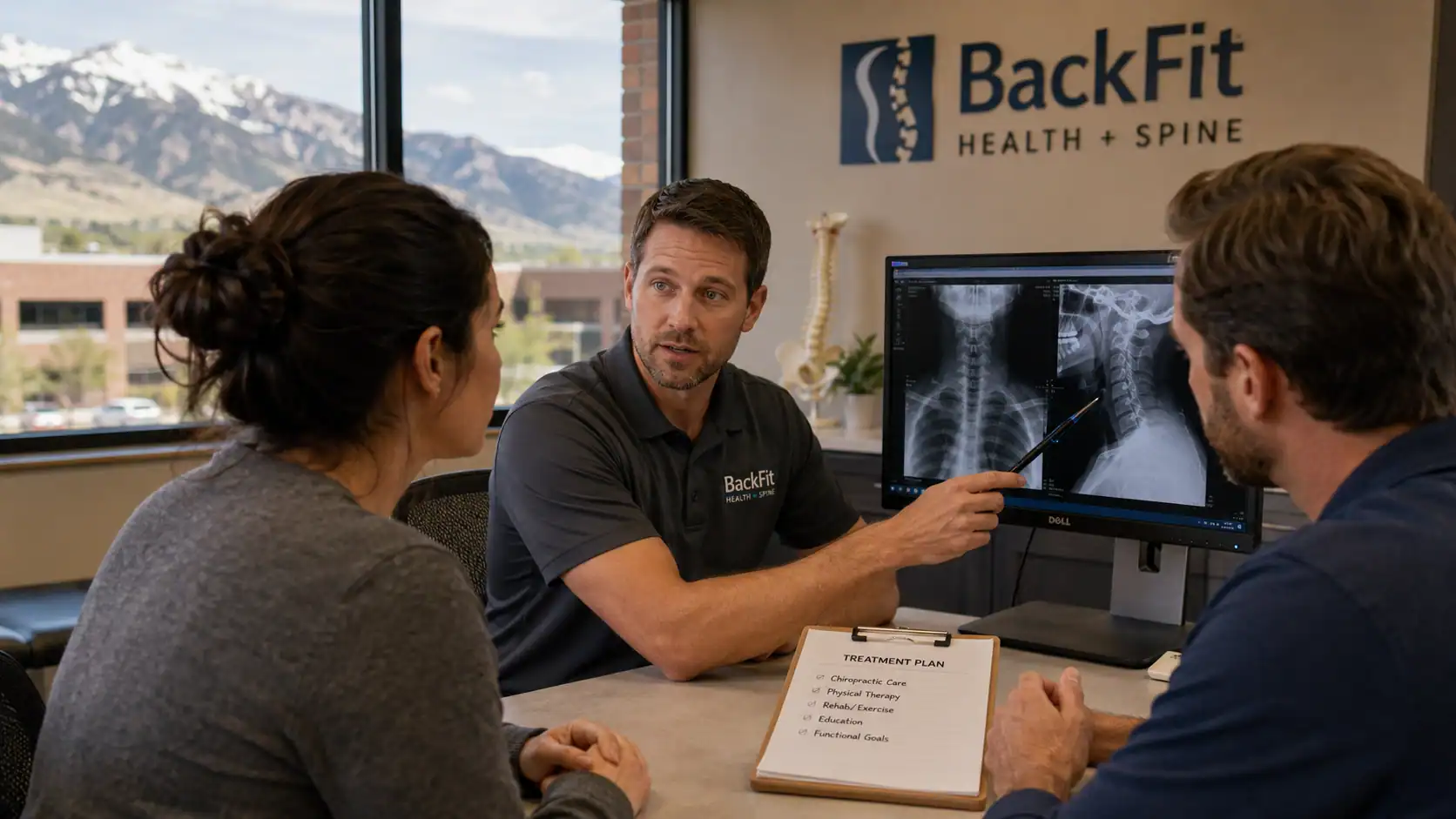
BackFit Health + Spine, one of our Power Partners, is built on this model. The practice combines chiropractic, medical providers, physical therapy, and rehabilitative care in one integrated clinic, with onsite diagnostic imaging at their locations. In Colorado they operate in Lakewood, Littleton, and Broomfield, with additional Front Range locations.
The onsite imaging piece deserves specific mention. When X-ray is available in the building, the provider who examined you can order it the same day and read it against what they just found on physical exam. When imaging requires a referral to an outside facility, the typical lag is one to three weeks, and that gap becomes an argument that your symptoms developed from something other than the collision.
We name BackFit here because Colorado crash patients need somewhere to go and this structure genuinely serves them. Flanagan Law has no financial arrangement with them and receives nothing when you make an appointment.
The Billing Side Matters Too
Fragmentation creates a second problem that has nothing to do with clinical notes.
Four providers means four billing entities, four sets of insurance submissions, and potentially four separate liens or letters of protection against your eventual settlement. Each one has to be identified, verified, and resolved before anything is distributed to you. Miss one and it surfaces months later.
Consolidated care produces a single billing relationship. That does not eliminate lien issues, particularly where health insurance, Medicare, or Medicaid are involved, which we cover in medical liens after a Colorado accident. It does eliminate the version of the problem where nobody is certain how many parties have a claim on the recovery.
When Fragmented Care Is Unavoidable
Sometimes it is, and that is fine. Serious injuries require surgeons, neurologists, and specialists no single clinic employs, which we address in finding the right medical specialists after a Colorado car accident. Never choose a worse provider for a better paper trail.
When care is spread across offices, a few habits close most of the gap:
- Keep a single written list of every provider, address, and treatment date range, and update it as you go
- Tell each new provider about every other provider treating you, and ask that it be noted in the chart
- Describe the collision the same way every time, using a written summary you carry with you
- Ask each provider to send notes to whoever is coordinating your overall care
- Request your own records as you go rather than waiting until the end
- Keep your own log of missed work, activities you cannot do, and daily limitations, since no chart captures this well
Our guide to documenting your injuries goes further on the personal record side.
Frequently Asked Questions
Does it hurt my claim to see multiple providers after a car accident?
No. Seeing the right providers is always the correct decision, and serious injuries often require several specialists. The risk is not the number of providers but the fragmentation of the record, which can create apparent contradictions, unexplained gaps, and slow records production. Coordinating care and keeping your own treatment log addresses most of that.
What is multi-disciplinary care after a car accident?
Multi-disciplinary care means several types of providers, such as chiropractors, physical therapists, medical providers, and rehabilitation specialists, treating one patient under a shared plan and a shared chart. In practice this usually means one clinic housing several disciplines, so providers can coordinate directly rather than through referral letters.
Why does onsite imaging matter for an injury claim?
Timing. When X-ray or other imaging is available in the same building, it can be ordered the same day and interpreted alongside the physical examination findings. Outside referrals commonly add one to three weeks, and that delay gives an insurer room to argue that something other than the collision caused what the imaging eventually shows.
How do I get all my medical records for a Colorado injury claim?
Each provider requires its own written authorization and records request, and response times vary widely from days to months. Consolidated care reduces this to a single request. If your care was spread across offices, start requesting records while treatment is ongoing rather than waiting until the end, because the slowest provider sets the pace of your settlement.
Will my chiropractor and physical therapist talk to each other?
Only if someone arranges it. Within an integrated clinic, coordination is built into the structure and providers share a chart. Across separate offices, it depends entirely on whether you tell each provider about the others and ask that notes be shared. Assume nothing is being coordinated unless you have confirmed it.
Does Flanagan Law get paid for referring patients to a Power Partner?
No. Flanagan Law receives no compensation, referral fee, or benefit of any kind when a reader contacts one of the practices named on our Power Partners page. These are businesses whose work our clients have come back from in better condition, and we name them for that reason alone.
Talk to Flanagan Law
Flanagan Law is a boutique Colorado firm handling vehicle accident cases across the Denver metro and Front Range. If you are being treated by several providers and unsure whether your record is holding together, call 720-928-9178. Someone answers 24 hours a day.
This article is general information about Colorado injury claims. It is not medical advice and it is not legal advice for your particular situation.