The Insurance Company’s Medical Exam: What a Colorado IME Really Is and How to Handle It
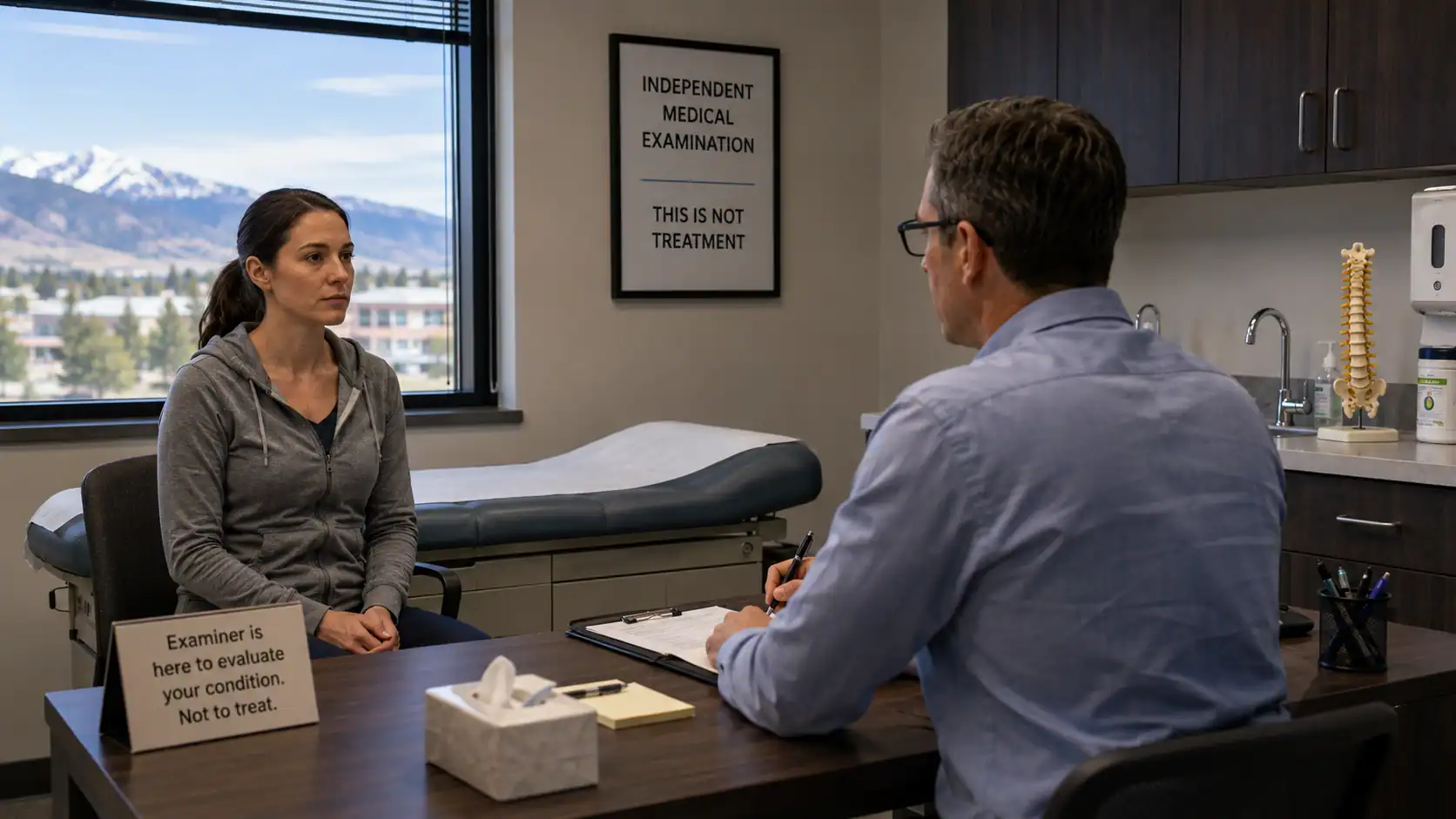
At some point in a serious Colorado injury claim, a letter arrives scheduling you for an examination with a physician you have never met, at a location you did not choose, arranged and paid for by an insurance company.
It will be called an independent medical examination. That name is doing a lot of work, and understanding what it actually is changes how you approach the appointment.
What It Is Not
It is not treatment. The examiner is not your doctor, will not prescribe anything, will not follow up, and owes you none of the ordinary duties a treating physician owes a patient. Nothing about the visit is designed to help you get better.
It is not independent in the everyday sense either. The physician is selected and compensated by a party with a financial interest in the outcome. Many examiners derive a substantial share of their income from this work, and repeat selection depends on producing reports the paying party finds useful.
What it is, functionally, is evidence gathering. The examiner produces a written report and, if the case proceeds, may testify. Attorneys sometimes call it a defense medical examination, which is a more honest description of the function.
None of this means every examiner is dishonest. Many are careful and many reports are reasonable. It means you should understand whose question is being answered.
Do You Have to Go
It depends entirely on which kind of claim you are in, and people routinely confuse the two.
A claim against your own insurer. Uninsured and underinsured motorist claims are made against your own policy, and most policies contain a cooperation clause requiring you to submit to examination on request. Refusing can be treated as a breach of the policy. In practice you generally attend, though the scope, location, and conditions can often be negotiated. The coverage framework is covered in uninsured and underinsured motorist coverage in Colorado.
A claim against the other driver. Before a lawsuit is filed, the other driver’s insurer has no automatic right to have you examined. They can request it. You are not obligated to agree, and agreeing without understanding why is a common unforced error.
Once litigation begins, the picture changes. Colorado’s civil rules allow a defendant to obtain an examination when your physical condition is genuinely in controversy, subject to court oversight regarding scope, examiner, and conditions. It stops being optional, but it becomes governed.
What the Examiner Is Looking For
Reports tend to reach a small number of conclusions, and knowing the list tells you what the appointment is actually about.
- That your injuries predate the collision, most often supported by degenerative findings on imaging
- That you reached maximum medical improvement earlier than your treating providers say
- That the treatment you received was excessive in duration or frequency
- That your subjective complaints exceed the objective findings
- That your restrictions are self-imposed rather than medically necessary
- That the collision forces were insufficient to cause the claimed injury
Notice how many of these depend on the medical record rather than on the exam itself. The examiner will have your entire file before you arrive, frequently including records predating the collision by years. Much of the report is written from paper. The physical examination is often brief.
How to Prepare
The goal is accuracy, in both directions. Exaggeration is detected easily and destroys credibility. Stoic minimizing produces a report saying you have recovered.
- Arrive on time and be polite, since demeanor gets described in the report
- Answer the question asked and stop, without volunteering history or narrative
- Describe your worst days and your best days honestly, since injuries fluctuate and claiming constant maximum pain reads as unreliable
- Give effort during physical testing that is real, neither reduced nor exaggerated
- Say you do not know rather than estimating, particularly about dates and durations
- Do not discuss fault, the collision’s legal status, settlement, or your attorney
- Disclose prior injuries and prior claims accurately, because the examiner already has the records
- Write down what happened immediately afterward, including how long the exam took and what was actually tested
That final point is more useful than it sounds. A report describing a thorough forty minute examination is harder to sustain when contemporaneous notes show the examiner spent nine minutes in the room.
Recording and Attendance
Whether you may record the examination or bring an observer varies with the posture of the case, the policy language, and any court order governing the exam. It is frequently negotiable, and it is worth raising in advance rather than at the door. Do not record covertly. Ask first, in writing, and get the answer in writing.
Surveillance Often Accompanies It
Insurers sometimes schedule surveillance around the examination date, and sometimes on the day itself, on the theory that behavior in a parking lot differs from behavior in an exam room.
The defense against this is not vigilance. It is consistency. Report your limitations accurately from the beginning, describe what you can do on a good day as well as a bad one, and behave the same whether or not anyone is watching. Claims damaged by surveillance are usually claims where the description outran the reality.
When the Report Comes Back
An unfavorable report is not the end of a claim. It is one physician’s opinion, obtained by a party with an interest, and it can be met.
Treating providers who have examined you repeatedly over months generally carry more weight than an examiner who saw you once. Reports frequently contain factual errors that undermine them, including wrong collision dates, wrong mechanisms of injury, and tests described as performed that were not. Examiner history, meaning how often they work for insurers and what share of their income comes from it, is discoverable. And an internally inconsistent report is a liability for the party who paid for it.
If the report becomes the basis for an unreasonable denial, that raises separate questions covered in when insurance delays turn into denials.
Frequently Asked Questions
What is an IME in a Colorado injury claim?
An independent medical examination is an evaluation performed by a physician selected and paid for by an insurance company to assess your injuries, treatment, and prognosis. The examiner does not treat you and is gathering evidence rather than providing care. The resulting report is used to evaluate, and often to reduce, the value of your claim.
Do I have to attend an IME requested by the other driver’s insurer?
Before a lawsuit is filed, generally no. The other driver’s insurance company has no automatic right to examine you, and attending is a decision rather than an obligation. Once litigation begins, Colorado’s civil rules permit a defendant to obtain an examination when your physical condition is in controversy, subject to conditions the court can set.
What about an exam requested by my own insurance company?
Claims under your own uninsured or underinsured motorist coverage are contract claims, and most policies contain a cooperation clause requiring you to submit to examination on request. Refusing can jeopardize coverage. The scope, location, examiner, and conditions of the exam are often negotiable even when attendance is not.
Can I bring someone with me or record the exam?
It depends on the posture of the case, your policy language, and any applicable court order, and it is frequently negotiable. Ask in advance and in writing rather than raising it at the appointment. Do not record covertly, since doing so can create problems that outweigh any benefit.
What should I not say at an IME?
Avoid discussing fault, settlement, legal strategy, or conversations with your attorney. Answer the medical questions asked without volunteering additional narrative. Do not guess at dates or durations, and do not minimize or exaggerate your symptoms. Describe both your worst days and your better days, because injuries that fluctuate are more credible than injuries described as constant.
What happens if the IME report says I am fine?
The claim continues. The report is one opinion from a physician retained by an interested party, and it is weighed against your treating providers, who examined you repeatedly over a longer period. Reports often contain factual errors or internal inconsistencies, and the examiner’s financial relationship with insurers is generally subject to discovery.
Talk to Flanagan Law
Flanagan Law is a boutique Colorado firm handling vehicle accident cases across the Denver metro and Front Range. If an insurer has scheduled you for an examination, call 720-928-9178 before you attend. Someone answers 24 hours a day.
This article is general information about Colorado injury claims and is not legal advice for your particular situation.