Elk rut season brings increased wildlife crash risk, particularly at dusk on US-285 and Highway 9.
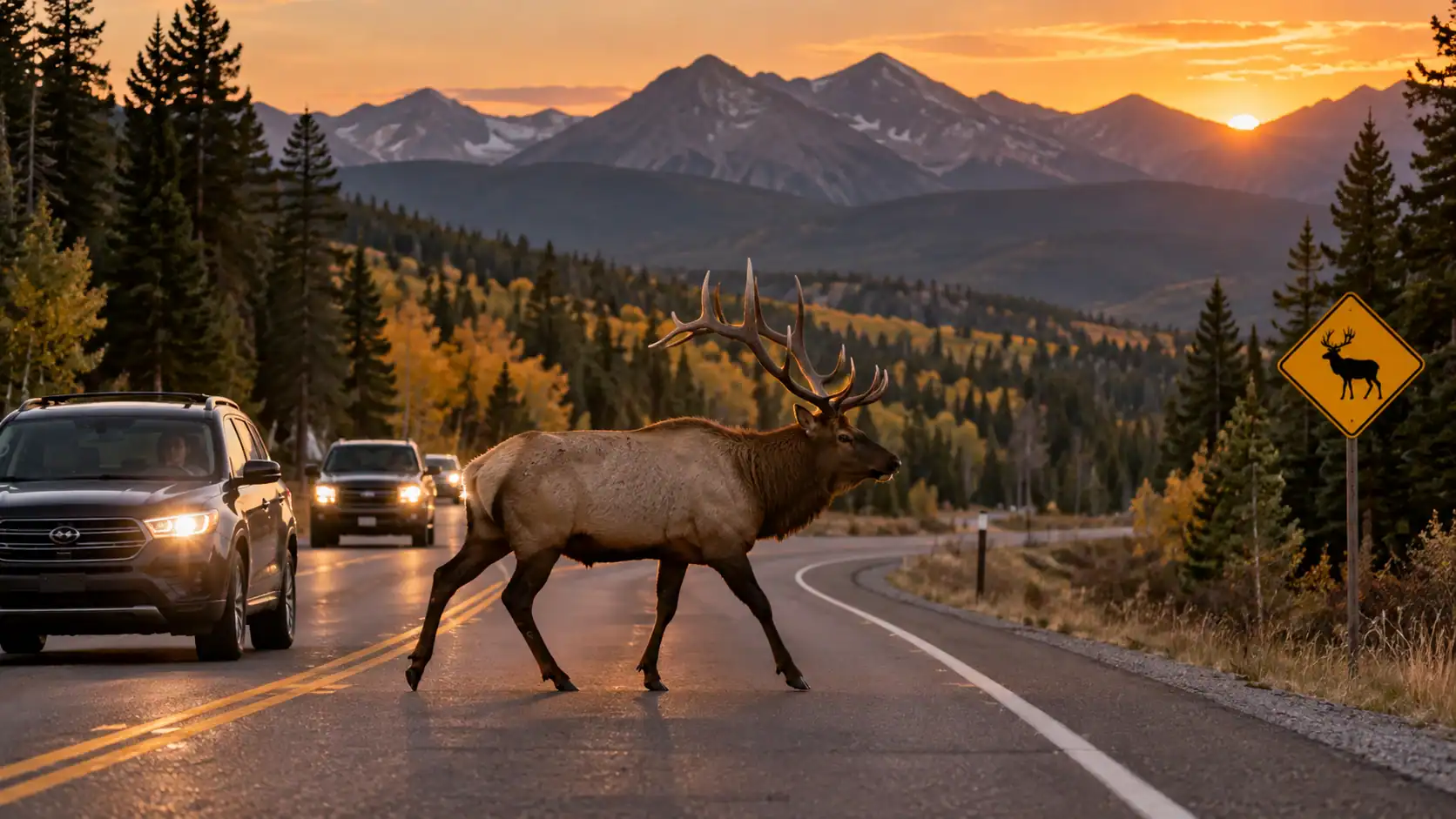
Elk Rut at Dusk: Crash Risk on US-285 and Highway 9 This Fall
From mid-August through October, Colorado’s elk enter the rut—a breeding season when bulls are aggressive, distracted, and far more likely to cross highways without warning. Peak rut runs through September, and dusk is the most dangerous window. If you commute or travel US-285 between Bailey and Kenosha Pass, or Highway 9 near Breckenridge and Silverthorne, you’re in the collision zone.
Why Elk Rut Matters on Mountain Highways
During the rut, bull elk are bugling at dawn and dusk, herding cows, and fighting each other for breeding rights. They cross roads with less caution than they do the rest of the year. A collision with a 600-pound elk moving at speed can total a vehicle and cause serious injury. Unlike a collision with a small animal, an elk strike is often survivable damage to the car but real trauma to the occupants.
US-285: Bailey to Kenosha Pass
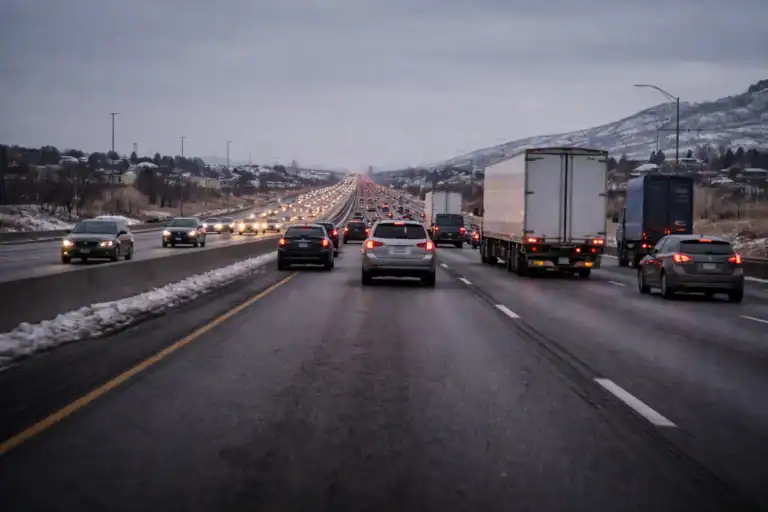
US-285 runs through prime elk territory on the western side of the Front Range. The stretch between Bailey and the pass crosses open meadows and aspen groves where elk congregate. Dusk—roughly 6 p.m. to 8 p.m. in September—is peak movement time. Many drivers are transitioning from work commutes or beginning evening travel, exactly when visibility is poorest and elk are most active.
Highway 9: Breckenridge and Silverthorne
Highway 9 climbs toward Breckenridge and Silverthorne through similar terrain. The highway cuts through elk habitat, and the curves and tree cover reduce visibility. Dusk collisions on Highway 9 often happen when drivers crest a hill or round a bend to find elk in the roadway with no time to stop.
Comprehensive Coverage for Wildlife Crashes
A collision with an elk is a comprehensive coverage claim, not a collision claim. Comprehensive (or “other than collision”) coverage on your auto policy covers wildlife damage. Your deductible applies, but comprehensive claims typically cost less to file than collision claims, and they don’t affect your driving record the way at-fault collision claims can.
If you don’t have comprehensive coverage, the crash is an uninsured loss that comes out of pocket. Adding comprehensive coverage before the fall rut season is cheap insurance.
Comparative Fault and Wildlife Crashes
Colorado law holds that a driver has a duty to avoid a collision when possible, but a wildlife collision is an act of nature. Unlike a collision with another vehicle, you are not “at fault” for hitting an elk in the legal sense. There is no negligent driver to pursue; the elk is a natural hazard, not a responsible party.
This means your recovery is limited to what your own insurance provides. You cannot sue the elk’s “owner” (the state) for damages. Comprehensive coverage is your only avenue to recovery.
Tips for Dusk Driving on These Routes
Slow down during rut season, especially at dusk. Increase your following distance. Watch for movement at the roadside. If you see one elk, there are usually others nearby. If a collision is unavoidable, do not swerve into oncoming traffic or off a cliff—a crash with another car or a rollover is often worse than an elk strike.
If you are struck by an elk and injured, the injury may still be compensable if another driver’s negligence contributed to the crash (such as a driver who ran you off the road while you were avoiding an elk). The analysis is fact-specific and depends on how the collision played out.
Rut season is peak elk-collision season. Drive cautiously on US-285 and Highway 9 through September. Comprehensive coverage is the only insurance protection against these unavoidable wildlife crashes.