Aurora Distracted Driving Crash on Peoria or Mississippi: Protecting Your Claim in Colorado’s Second Largest City
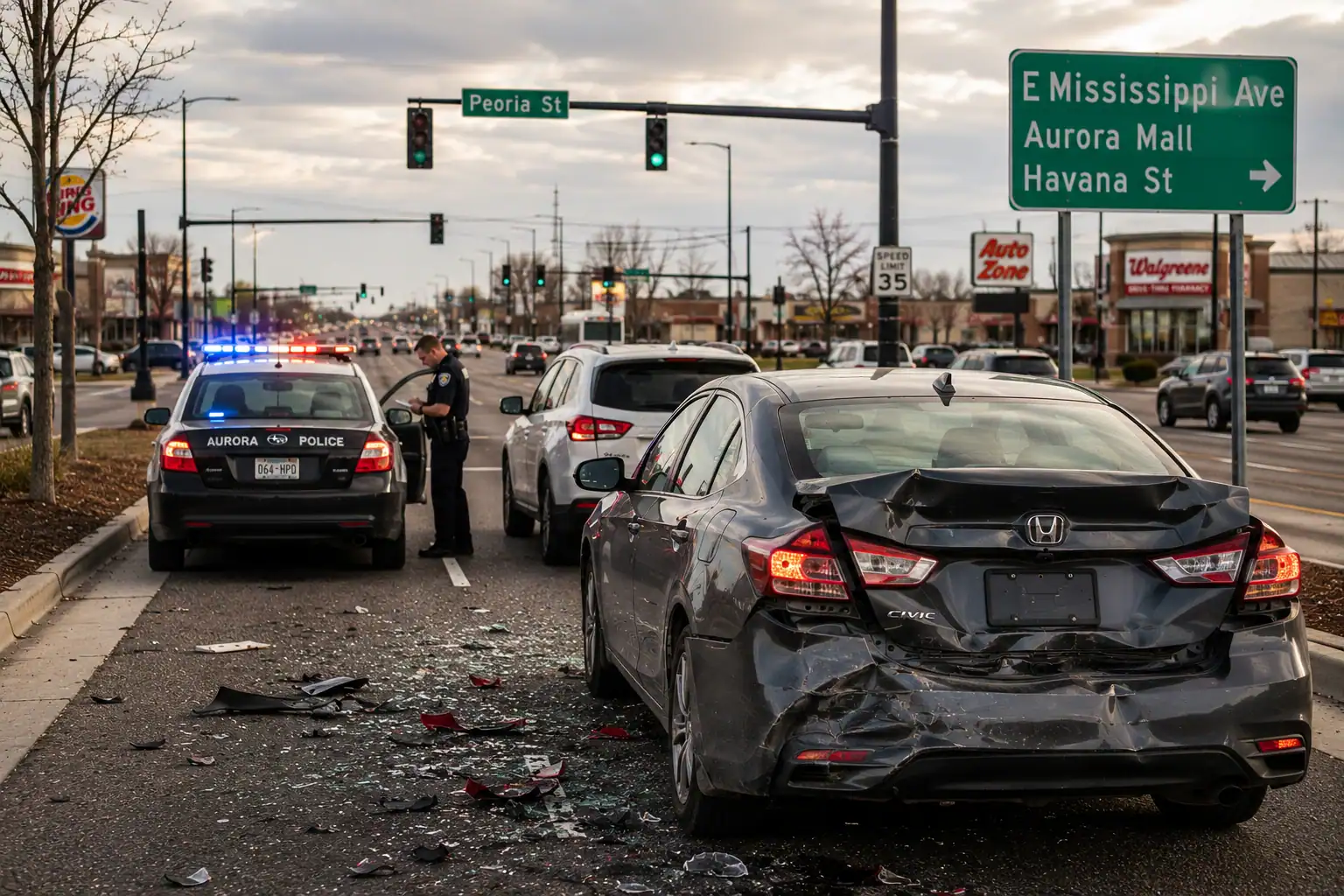
Aurora is the third largest city in Colorado and one of the most ethnically and economically diverse municipalities on the Front Range. The corridors of Peoria Street and East Mississippi Avenue carry substantial commuter traffic, retail traffic, and through-traffic, and they produce a steady volume of crashes that we handle regularly. A significant share of these crashes involve distracted driving, which is one of the most consistent contributing factors in Aurora-area crashes year over year.
This article addresses distracted driving crashes specifically. The general framework for Aurora accident claims applies, and our coverage of Aurora distracted driving service area work explains the broader picture. Here we focus on what distracted driving is, how it produces crashes, and what to do if you have been hit by a distracted driver in Aurora.
If you have been hurt by a distracted driver in Aurora, call us at 720-928-9178. The conversation is free, there is no obligation, and there is no fee unless we win your case.
What Distracted Driving Actually Means
Distracted driving is any activity that takes the driver’s attention away from the driving task. The categories typically include visual distraction (eyes off the road), manual distraction (hands off the wheel), and cognitive distraction (mind off the driving task).
Phone use, particularly texting, combines all three. Eating, drinking, reaching for objects, adjusting radio or climate controls, conversing with passengers, looking at navigation systems, and even daydreaming all qualify as distracted driving.
The Colorado statutes addressing distracted driving include CRS 42-4-239, which prohibits text messaging while driving for all drivers and prohibits any handheld phone use for drivers under 18. Violation of these statutes is evidence of negligence in a civil case.
Why Peoria and Mississippi See So Many Distracted Driving Crashes
Peoria Street runs north-south through Aurora and carries substantial commuter and retail traffic, particularly through the corridor between East Colfax and Mississippi Avenue.
East Mississippi Avenue runs east-west across the city and is one of the busiest east-west corridors in Aurora, serving the major retail areas including Aurora Mall and the dense retail along Havana Street.
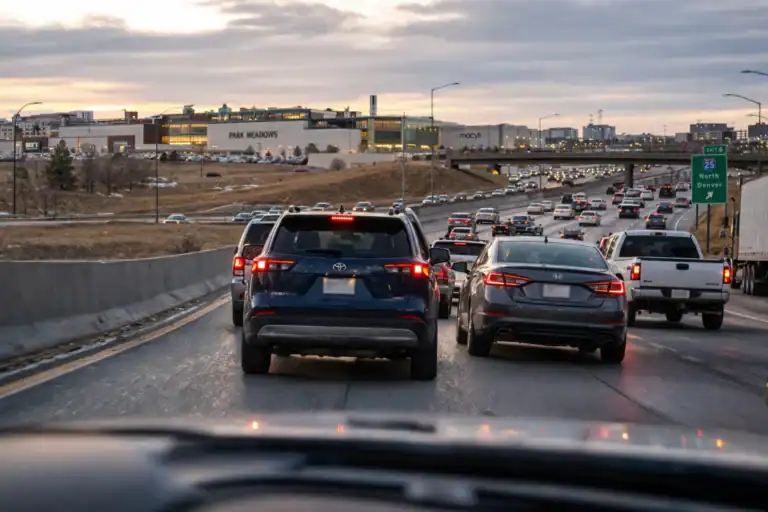
The corridors share characteristics that make distracted driving particularly hazardous. Multiple lanes in each direction. Frequent traffic signals. Mixed traffic including pedestrians, cyclists, and bus traffic on key bus routes. Retail driveways and side street intersections that create frequent conflict points.
A driver looking at a phone for two seconds at thirty-five miles per hour travels more than one hundred feet without looking at the road. The distance is long enough to miss a stopping vehicle ahead, a pedestrian in a crosswalk, or a cross-traffic conflict at the next signal.
How Distracted Driving Affects the Case
Evidence that the at-fault driver was distracted strengthens the civil case substantially.
Phone records can be obtained showing whether the driver was using their phone at or near the time of the crash. This is a routine subpoena in cases where distraction is suspected.
Witness statements can establish the driver’s behavior in the moments before the crash.
The driver’s own statements, made to police at the scene or to insurance carriers afterward, can establish the distraction.
The accident reconstruction work can show patterns consistent with inattention, including no brake application before impact, no swerving to avoid, and other indicators that the driver did not see the conflict developing.
Distracted driving evidence supports the case for negligence and also opens the door to potentially higher damages, including in some cases punitive damages if the conduct was sufficiently egregious. Texting while driving in a school zone, for example, can rise to the level of willful and wanton conduct that supports punitive damages under CRS 13-21-102.
We have written about drunk driving versus distracted driving and the legal differences in Colorado in a related resource.
What to Do After a Distracted Driving Crash
Standard accident advice applies. Call 911. Get police to the scene. Aurora Police respond to Aurora crashes.
Tell the responding officer if you observed or suspect the at-fault driver was distracted. The police report is often the first place that the distraction is documented.
Document the scene. Photographs and witness contacts.
Seek medical attention.
Notify your own carrier.
Do not give recorded statements to the at-fault driver’s carrier.
Engage counsel if the injuries are meaningful. Distracted driving cases benefit from early action to preserve phone records and other electronic evidence.
The Insurance Picture
Standard Colorado framework applies. The at-fault driver’s liability coverage is the primary source. Your own UM/UIM applies when their coverage is exhausted. Your MedPay pays regardless of fault. Punitive damages, where supported, may meaningfully increase settlement value because the carrier prices the exposure.
We have addressed the broader insurance framework in our complete guide to Colorado auto insurance after an accident.
Frequently Asked Questions
How do you prove the other driver was distracted?
Through a combination of phone records, witness statements, the driver’s own admissions, and accident reconstruction evidence. Cell phone records in particular are routinely subpoenaed in cases where distraction is suspected.
Can I get punitive damages in a distracted driving case?
Sometimes. Distracted driving that rises to the level of willful and wanton conduct can support punitive damages under CRS 13-21-102. Texting while driving in a school zone is one example. The fact pattern matters.
How long do I have to file an Aurora distracted driving claim?
Three years from the date of the accident under CRS 13-80-101.
What if the at-fault driver denies they were distracted?
Phone records and witness statements often establish the distraction even when the driver denies it. The evidence is rarely solely the driver’s testimony.
What is the Colorado law on phone use while driving?
CRS 42-4-239 prohibits text messaging while driving for all drivers and prohibits any handheld phone use for drivers under 18. The law has been amended over the years and may continue to evolve.
Sources
Colorado Revised Statutes 13-21-102: Exemplary Damages, leg.colorado.gov
Colorado Revised Statutes 13-21-111: Comparative Negligence, leg.colorado.gov
Colorado Revised Statutes 13-80-101: Three-Year Limitation for Motor Vehicle Tort Actions, leg.colorado.gov
Colorado Revised Statutes 42-4-239: Wireless Telephone Use Restrictions, leg.colorado.gov
National Highway Traffic Safety Administration, Distracted Driving Resources, nhtsa.gov
Colorado Department of Transportation, Distracted Driving Resources, codot.gov
If you have been hit by a distracted driver in Aurora, please call us. The conversation is free and there is no obligation. Reach Samantha Flanagan and the Flanagan Law team at 720-928-9178. We are a Colorado boutique firm. We answer our own phones. And we do not get paid unless we win your case.