Home Exercise Programs: How At-Home Recovery Becomes Part of the Record

Most recovery from a car accident injury doesn’t happen in the clinic. It happens in the living room, at the kitchen counter, and on the bedroom floor, where patients do the stretches and strengthening exercises their provider assigned. Those home exercise programs are a real part of treatment, and they matter to an injury claim too. Insurers look for signs that a patient took recovery seriously. For patients of BackFit Health + Spine in Lakewood, Littleton, and Broomfield, one of Flanagan Law’s Power Partners, a well-documented home program can show exactly that.
What is a home exercise program?
A home exercise program is a set of stretches, strengthening movements, and mobility exercises a provider assigns for you to do between clinic visits. It usually starts simple, such as gentle neck rotations or pelvic tilts, and progresses as you heal. The goal is to build on what happens during in-office treatment, so that strength and range of motion keep improving between appointments instead of slipping back.
Why do insurers care about what you do at home?
Insurers care because a claim depends on showing that you did what a reasonable injured person would do to recover. Colorado law expects injured people to take reasonable steps to limit their own losses. An adjuster who sees notes saying you didn’t do your exercises may argue that a slow recovery was your fault, not the crash’s. Notes showing you followed the program, and that it was adjusted as you improved, make that argument much harder.
How does a home program get into your medical record?
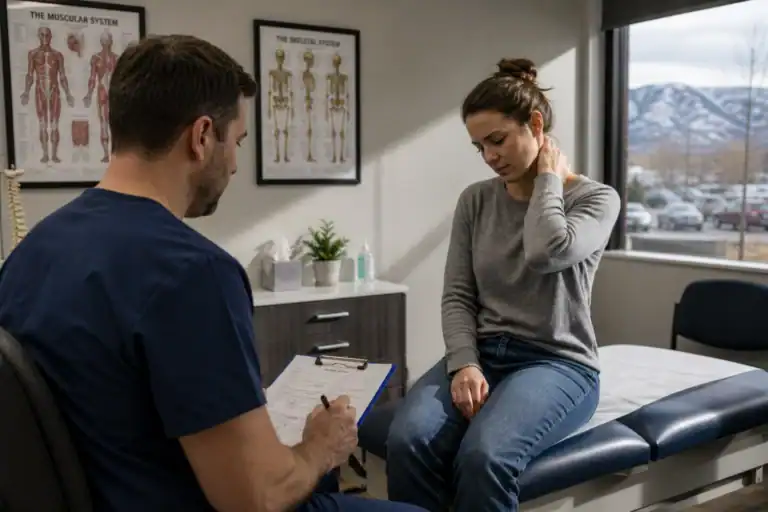
A home program gets into your record when your provider writes down what was assigned, how you’re doing with it, and what changed at each visit. Good notes list the specific exercises, the sets and repetitions, and any modifications. At follow-up visits, providers often record whether you’ve been doing the program and how it’s going. Our article on what your chiropractor’s SOAP notes actually prove about your injury explains how those daily notes are read.
Should you keep your own log of home exercises?
Yes. A simple log showing the date, the exercises you did, and how you felt helps you stay consistent and gives your provider accurate information at each visit. Note when an exercise caused pain or when you had to stop. Bring the log to appointments so your provider can record what you report. That consistency between your log and your chart strengthens both your treatment and your claim.
What if an exercise makes your pain worse?
If an exercise makes your pain worse, stop doing it and tell your provider at your next visit, or sooner if the pain is significant. Don’t push through sharp pain or quietly skip the program. Telling your provider lets them modify the exercise and document why, which turns a setback into evidence of an active, responsive treatment plan. Silently stopping looks like noncompliance in the record.
How does a home program show active care?
A home program shows active care when the exercises progress as you improve. Starting with basic movements and advancing to harder ones over weeks tells an insurer that your treatment was aimed at measurable recovery, not just holding steady. When your provider re-evaluates you and updates the program based on progress, the record ties each phase of care to a goal. Our article on chiropractic and physical therapy together after a crash covers how insurers evaluate combined care.
Why does winter make home programs harder to keep up?
Winter makes home programs harder because the holidays disrupt routines, travel pulls people away from home, and cold weather leaves bodies stiffer and less motivated. Missing a week of exercises in December can set recovery back and leave a gap an adjuster may notice. Planning a shortened version of your program to do while traveling, and telling your provider about schedule changes ahead of time, keeps progress on track.
Why does BackFit Health + Spine’s approach matter?
Patients across Lakewood, Littleton, and Broomfield benefit from a provider who treats home programs as part of the care plan rather than an afterthought. When home exercises are assigned clearly, reviewed at each visit, and updated as patients improve, the record shows a complete picture of recovery. That helps patients heal faster and helps their attorney show that every part of treatment was purposeful and followed.
Frequently Asked Questions
Do home exercises matter in a car accident injury claim?
Yes. Home exercise programs are part of your treatment, and your medical records usually note whether you followed them. Following the program helps show you took reasonable steps to recover, which makes it harder for an insurer to blame a slow recovery on you.
What happens if I don’t do my home exercises?
If your records show you didn’t follow your home program, an insurer may argue that your recovery was slower because of your own choices. That can reduce the value of your claim. If something prevents you from doing the exercises, tell your provider so the reason is documented.
Should I tell my chiropractor if an exercise hurts?
Yes. Tell your provider right away if an exercise increases your pain. They can modify or replace it and document the change. That keeps your treatment safe and shows an active plan that responds to how you’re doing.
Should I keep a log of my home exercises?
A simple log of the date, exercises, and how you felt helps you stay consistent and gives your provider accurate information. Bring it to each visit so your report and your chart line up.
Can I keep up my home program while traveling for the holidays?
Ask your provider for a shortened version you can do anywhere, and let them know your travel dates ahead of time. Keeping some version of the program going prevents setbacks and avoids gaps in your treatment record.
When should I talk to a lawyer about my treatment records?
Talk to a lawyer while you’re still in treatment. An early review can help make sure your records, including your home program, fully reflect your recovery. Flanagan Law offers free consultations at 720-928-9178.
Learn more about BackFit Health + Spine at backfithealth.com.
If you were injured in a Colorado car accident and are working through a recovery plan, call Flanagan Law at 720-928-9178 for a free consultation.