Thanksgiving Travel on I-70 and I-25: What the Crash Patterns Show
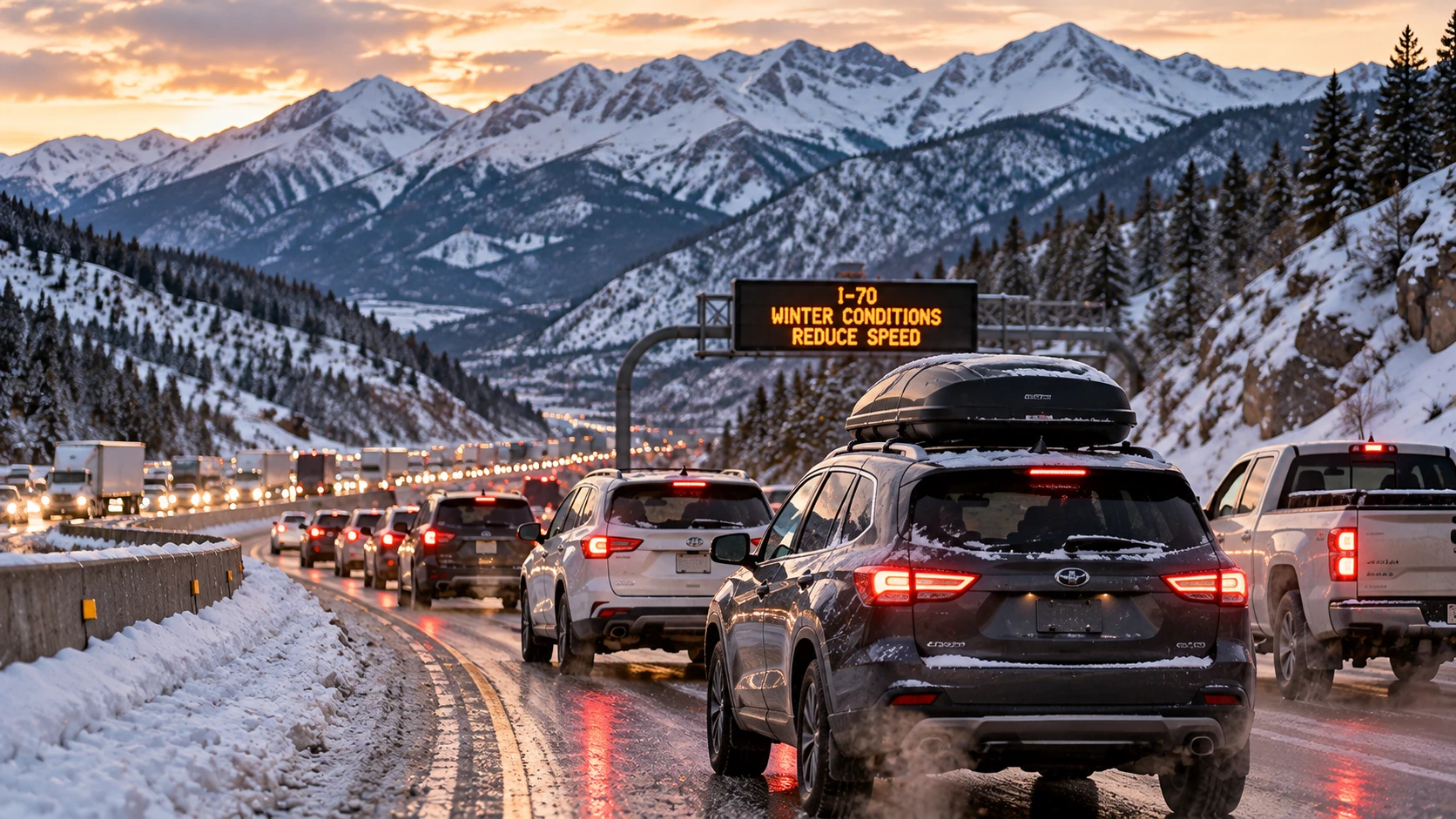
Thanksgiving week puts more Coloradans on the road than almost any other stretch of the year. Families head to the mountains, to Colorado Springs and Fort Collins, and out of state, and the ski season is opening at the same time. Most of that traffic funnels onto two highways: I-70 west into the mountains and I-25 along the Front Range. The crashes that happen that week follow patterns that repeat year after year, and knowing them is the easiest way to avoid becoming part of one.
When is Thanksgiving traffic heaviest in Colorado?
Thanksgiving traffic is heaviest on the Wednesday before the holiday and on the Sunday after it. Wednesday afternoon and evening combine the normal commute with holiday departures, and Sunday brings everyone home at once. On I-70, the Sunday return from the mountains can back up for hours eastbound, and crashes in slow, stop-and-go traffic are common. Leaving early in the morning or traveling on Thursday itself usually means lighter roads.
Why is I-70 so risky during Thanksgiving week?
I-70 is risky during Thanksgiving week because heavy holiday traffic meets mountain grades, sharp curves, and the first serious winter weather of the season. The Traction Law is in effect on I-70 between Dotsero and Morrison from September through May, but many holiday travelers, including visitors in rental cars, still head up on worn or unsuitable tires. A single spinout on a grade can block lanes and set off a chain of crashes behind it. Our article on I-70 in December covers the corridor’s hardest stretches.
What makes I-25 dangerous over the holiday?
I-25 is dangerous over the holiday because it carries heavy, fast traffic between Fort Collins, Denver, and Colorado Springs, with sudden slowdowns that catch distracted drivers. Rear-end crashes in backed-up traffic are the most common pattern, especially near interchanges and on Monument Hill between Castle Rock and Monument, where weather can turn quickly. Our article on rear-end collisions on I-25 explains how those claims are built.
Why is the night before Thanksgiving a DUI risk?
The night before Thanksgiving is a DUI risk because it has become one of the busiest bar nights of the year, as people home for the holiday reconnect with friends. Impaired drivers on the road that night share it with families starting long trips and college students driving home. Colorado law can sometimes hold a bar or a social host responsible for serving alcohol in limited situations, as our article on dram shop and social host liability explains.
How do chain-reaction crashes get sorted out?
Chain-reaction crashes on holiday highways are sorted out by dividing fault among every driver who contributed. A driver who spun out on bald tires, another who followed too closely, and a third who was looking at a phone may all share responsibility in different amounts. Under Colorado’s comparative negligence rule, each driver pays their share. Gathering photos, dashcam video, and witness names at the scene matters, as our article on multi-vehicle pileups on mountain roads explains.
What if you’re hit by an out-of-state driver or a rental car?
If you’re hit by an out-of-state driver, their liability insurance still applies to a crash in Colorado, and Colorado law generally governs. Rental cars add another layer, since the rental company’s coverage, the renter’s own policy, and any coverage bought at the counter may all come into play. Our article on rental car accidents in Colorado explains who pays.
How can you make Thanksgiving travel safer?
Check road conditions and closures before leaving, and leave earlier or later to avoid Wednesday afternoon and Sunday afternoon peaks. Make sure your tires meet the Traction Law if you’re heading west on I-70, and carry water, blankets, and a phone charger in case of long delays. Leave extra following distance in heavy traffic, put the phone away, and plan a sober ride if you’re going out Wednesday night. If weather turns, wait it out. The turkey will keep.
Frequently Asked Questions
What is the worst day to drive for Thanksgiving in Colorado?
The Wednesday before Thanksgiving and the Sunday after are typically the heaviest travel days. Wednesday afternoon combines commuters and holiday travelers, and Sunday brings mountain and out-of-state traffic home at the same time. Early morning departures usually face lighter traffic.
Is the Traction Law in effect on I-70 at Thanksgiving?
Yes. The Traction Law is in effect on I-70 between Dotsero and Morrison from September 1 through May 31. Vehicles must have adequate tires or traction devices, and CDOT can impose stricter chain requirements during storms.
Who is at fault in a rear-end crash in holiday traffic?
The trailing driver is usually at fault in a rear-end crash, because Colorado law requires drivers to leave enough distance to stop safely. Heavy traffic and sudden slowdowns don’t excuse following too closely. Other drivers can share fault depending on what happened.
Can I sue a bar if a drunk driver hit me the night before Thanksgiving?
Possibly. Colorado’s dram shop law allows claims against a licensed seller in limited situations, such as serving a visibly intoxicated person who then causes a crash. Social hosts can be liable in narrower circumstances. These claims have strict requirements, so talk to a lawyer quickly.
What should I do after a crash on I-70 or I-25?
Move to safety if you can, turn on hazards, and call 911. Photograph all vehicles, tires, road conditions, and any overhead signs. Get every driver’s information and witness names, and see a doctor promptly. Then call Flanagan Law at 720-928-9178 for a free consultation.
If you were hurt in a holiday crash on I-70, I-25, or any Colorado highway, call Flanagan Law at 720-928-9178 for a free consultation.