Deer Rut in November: Crash Risk on Front Range Foothill Roads
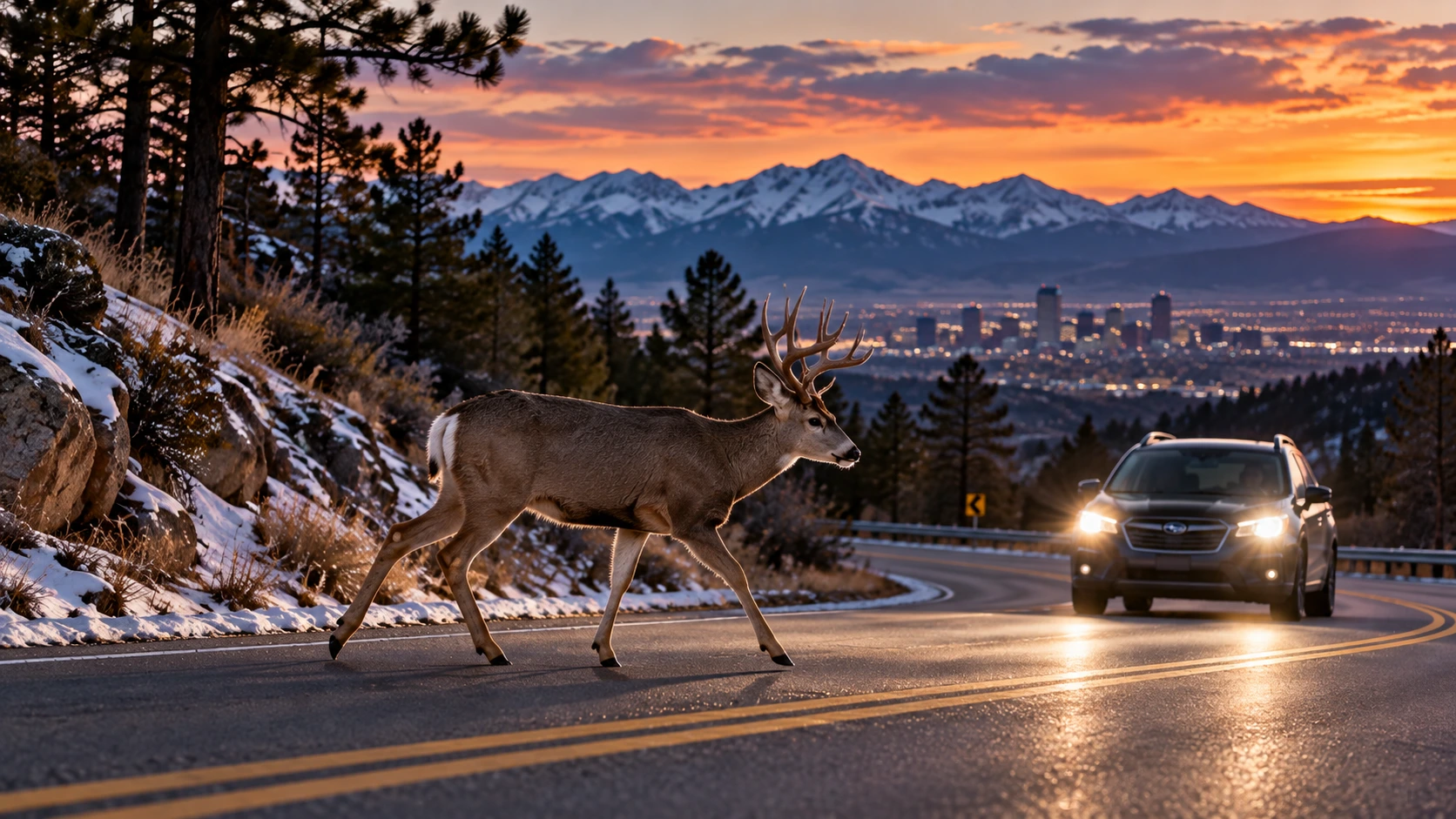
Colorado’s elk rut winds down in October, but the deer rut is just getting started. Mule deer and white-tailed deer breed in November, and bucks that spend most of the year cautious and hidden start moving at all hours, following does across roads they would normally avoid. The result is a sharp rise in deer collisions along the foothill corridors west of Denver, and in the neighborhoods, open space, and creek corridors that cut through the metro area itself.
Why does November bring more deer crashes?
November brings more deer crashes because the rut changes how deer move. Bucks chase does over long distances, often without stopping at roads, and a deer that has just crossed is frequently followed by another a few seconds later. The rut also overlaps with the time change, which puts the evening commute into dusk, the hour when deer are most active. Shorter days, more movement, and more traffic in the dark combine to make November one of the most dangerous months for deer strikes on the Front Range.
Which Front Range roads see the most deer activity?
Deer activity is heaviest on roads that run along the edge of the foothills and through canyons, where deer move between high ground and lower feeding areas. Drivers should expect deer on CO-93 between Golden and Boulder, US-6 in Clear Creek Canyon, CO-74 through Evergreen and Bear Creek Canyon, Deer Creek Canyon Road, Golden Gate Canyon Road, and the roads around Lookout Mountain and Morrison. Deer also live inside the metro area, crossing streets near open space, golf courses, and creek trails in Lakewood, Littleton, Arvada, and Highlands Ranch.
Is a deer crash different from an elk crash?
A deer crash is usually less violent than an elk crash, but it happens far more often, and the bigger danger is often what drivers do to avoid it. A deer typically strikes at bumper and grille height rather than windshield height. The most serious deer-related injuries often come from swerving: a car that leaves the road and hits a tree, rolls down an embankment, or crosses into oncoming traffic. Motorcycle riders face the highest risk, because even a small deer can throw a rider to the pavement. Our article on animal strike accidents in Colorado covers the coverage rules for both.
What if you crashed avoiding a deer but never hit it?
If you swerved to miss a deer and crashed without touching it, the claim is usually treated as a collision claim rather than a comprehensive claim. Insurers may also treat it as an at-fault loss, because there’s no contact with the animal to show why you left the lane. Photos of deer tracks or the animal itself, a witness, dashcam footage, or a prompt police report describing the deer can help show what happened.
Can a passenger recover after a deer-related crash?
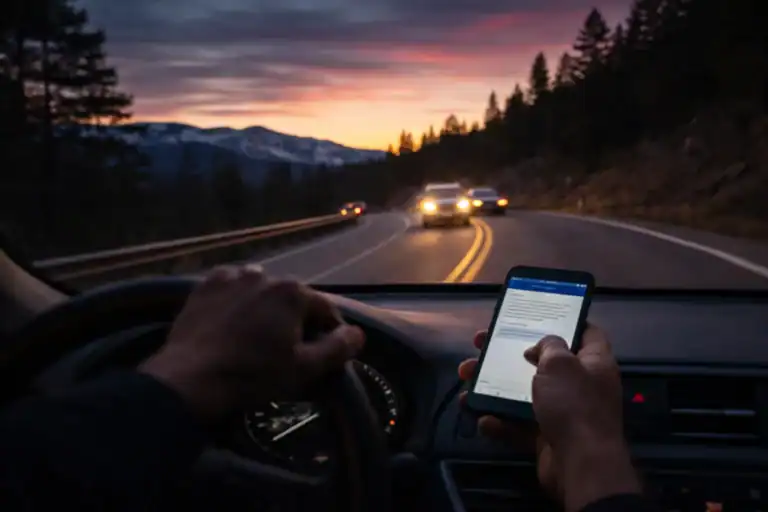
A passenger can often recover when the driver’s choices turned a deer sighting into a crash. If the driver was speeding on a canyon road at dusk, looking at a phone, or swerved into oncoming traffic instead of braking, the passenger may have a claim against the driver’s liability coverage. That includes family members and friends riding in the car. Making a claim against a friend’s insurance can feel awkward, but that coverage exists for exactly this purpose.
When is another driver responsible for a deer-related crash?
Another driver is responsible when their own carelessness caused or worsened the crash. A driver who rear-ends you after you brake for a deer, or one who swerves around a deer into your lane, is responsible for the harm their choice caused. Colorado’s comparative negligence rule divides fault by percentage when more than one driver contributed.
How can you lower your risk this November?
Slow down on canyon and foothill roads from late afternoon through the evening, and on neighborhood streets that border open space. Use high beams when there’s no oncoming traffic and watch the shoulders for eyes reflecting your lights. When one deer crosses, slow down and wait for the others. If a deer appears close in front of you, brake firmly and stay in your lane. A deer strike usually causes far less harm than a swerve into a tree or an oncoming car. Motorcycle riders should cut speed sharply in deer areas at dusk and after dark.
Frequently Asked Questions
When is deer rut in Colorado?
Deer rut in Colorado generally peaks in November, with activity starting in late October and tapering into December. During the rut, bucks travel long distances following does and cross roads with little caution, especially around dawn and dusk.
Does insurance cover hitting a deer in Colorado?
Damage from hitting a deer is usually covered under comprehensive coverage and is typically treated as a not-at-fault loss. Your comprehensive deductible applies. A liability-only policy won’t pay for damage to your own car.
Is swerving to avoid a deer covered by insurance?
If you swerve and hit something else without touching the deer, the damage is usually covered under collision coverage, not comprehensive, and may be treated as at-fault. Photos, witnesses, or dashcam footage showing the deer can help your claim.
Can I make a claim against my friend’s insurance if I was a passenger?
Yes, if the driver’s carelessness contributed to the crash. Passengers can often recover from the driver’s liability coverage for their injuries, and their own medical payments coverage may also help with medical bills.
Should I swerve or brake for a deer?
Brake firmly and stay in your lane in most situations. Swerving often leads to crashes with trees, guardrails, or oncoming vehicles that cause more serious injuries than the deer strike would have.
What should I do after a deer-related crash?
Move to safety, turn on your hazards, and call 911 if anyone is hurt or the road is blocked. Photograph the scene, the vehicles, and the deer if present. See a doctor promptly, and call Flanagan Law at 720-928-9178 if another driver was involved or you were hurt as a passenger.
If you were hurt in a deer-related crash on a Colorado road, call Flanagan Law at 720-928-9178 for a free consultation.