Lone Tree Car Accident Near Park Meadows or Lincoln Avenue: Protecting High-Value Claims in Douglas County
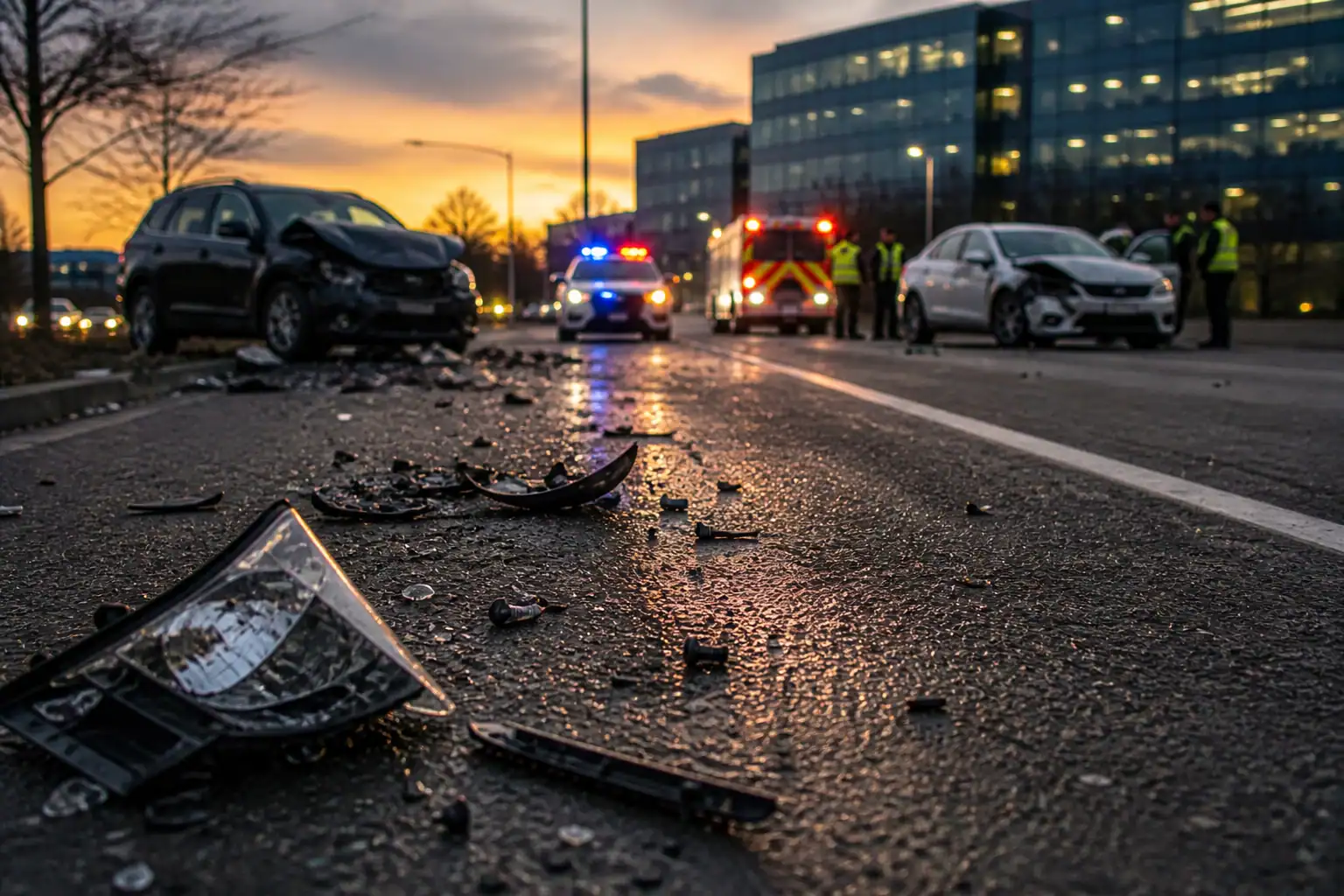
Lone Tree is one of the highest-income communities on the Front Range. The drivers who live and work in Lone Tree carry better-than-average insurance, drive vehicles worth more than the state average, and have more to lose financially when an accident reshapes the year ahead. They are also, in our experience, more likely than average to be aggressively underpaid by insurance carriers who assume they will not push back. We see this pattern often, and we wrote this article for the Lone Tree resident who has just been in a crash and is trying to figure out what to do next.
The corridors that produce most of the Lone Tree crashes we handle, the area around Park Meadows mall, the Lincoln Avenue stretch, and the I-25 corridor through Douglas County, all carry high traffic volumes and the kind of speed and density that produces serious crashes routinely. This article addresses what those crashes look like, what to do immediately after one, and why a high-value claim in Douglas County deserves the same careful attention as any other serious case.
If you have been hurt in a Lone Tree crash, call us at 720-928-9178. The conversation is free, there is no obligation, and there is no fee unless we win your case.
Where Lone Tree Crashes Happen Most
The Lone Tree crashes we handle cluster in a few predictable areas.
The Park Meadows corridor, including the mall property itself, the parking lot infrastructure that surrounds it, and the surface streets feeding into and out of the mall (Park Meadows Drive, Yosemite Street, County Line Road), produces a steady volume of crashes year-round and a substantial spike during the holiday shopping season. We have addressed parking lot accidents in our recent piece on parking lot accidents in Aurora and Thornton and many of the same dynamics apply at Park Meadows.
The Lincoln Avenue corridor, particularly the stretch between I-25 and Yosemite Street, sees consistent traffic and produces both intersection crashes and rear-end crashes during commute hours. The Lincoln-Park Meadows intersection cluster is one of the busiest in the city.
The I-25 corridor through Lone Tree, including the on-ramps and off-ramps at Lincoln, County Line, and RidgeGate, generates highway-speed crashes with the injury profile that comes with them. The transition between the high-speed interstate and the slower local network produces speed-differential crashes consistently.
The RidgeGate area, with its mix of medical facilities, residential development, and the relatively new infrastructure on the eastern side of I-25, produces crashes involving drivers unfamiliar with the area, drivers turning across multiple lanes of traffic, and the standard mix of intersection conflicts.
Why High-Income Suburban Claims Need Different Handling
The financial profile of a Lone Tree resident affects the claim in ways that matter.
The medical providers Lone Tree residents see tend to be high-quality. The treatment is well-documented, the diagnostic imaging is comprehensive, and the treating physicians are typically credible witnesses. This is good for the claim, but it also produces medical bills that exceed what carriers want to pay, and the carrier’s first response is often to argue that the treatment was excessive or unnecessary.
The lost income picture is often substantial. Professionals in Lone Tree often earn well above state average wages, and lost wages and lost earning capacity in serious cases can be the largest single line item in the claim. Carriers know this and often try to limit the lost income calculation to base salary, ignoring bonuses, deferred compensation, equity vesting, partner draws, and other non-base compensation that high-income professionals routinely receive. Proper calculation often requires forensic accountants, vocational experts, and economists, and we use them when the case warrants it.
The vehicle and property damage is often higher. A totaled luxury vehicle in Lone Tree may carry a replacement cost well above what an average claim involves, and the diminished value claim on a damaged-but-repaired vehicle is also typically larger.
The insurance picture is often deeper. Lone Tree drivers more often carry meaningful liability limits, UM/UIM coverage, and umbrella policies. Stacking analysis matters. Coverage discovery on the other side, including any commercial coverage or umbrella policies the at-fault driver may carry, can change the picture substantially.
These factors mean Lone Tree cases reward careful, technically thorough representation. They also mean carriers know they are likely dealing with a sophisticated claimant and adjust their tactics accordingly. Cases handled well in this market settle for substantially more than cases handled casually.
What to Do Immediately After a Lone Tree Crash
Standard advice applies, with a few Lone Tree-specific points.
Call 911 and get the police to the scene. Park Meadows-area crashes sometimes draw mall security or private property officers first, but a Lone Tree Police or Douglas County Sheriff response generates the official report that becomes part of the evidence.
Document the scene. Photographs, witness contacts, the location of any surveillance cameras (Park Meadows and the surrounding business district have many), and notes about the conditions.
Seek medical evaluation. Get to a major Front Range trauma center if the injuries warrant it. Several are within a short drive of Lone Tree.
Notify your own insurance carrier. Even when the at-fault driver is identified and their carrier is involved, your own coverages may all be relevant.
Do not give a recorded statement to the at-fault driver’s insurance company. Their adjuster will call quickly. You are not obligated to provide one.
Do not sign anything from the at-fault driver’s carrier without legal review. Releases, authorizations, and early settlement offers are common in Lone Tree cases and are almost always far below what the case is worth.
Engage counsel early. The clients who recover the most are usually the ones who called early in the process and made informed decisions throughout.
How to Protect the Insurance Picture
The insurance picture in a Lone Tree crash often involves multiple layers, and the layers need to be discovered, documented, and pursued carefully.
The at-fault driver’s primary coverage is the starting point. We obtain the policy declarations sheet and confirm the limits.
The at-fault driver’s umbrella coverage, if any, must be discovered. Many Lone Tree-area drivers carry umbrellas, and the umbrella coverage is often substantial. We routinely send detailed coverage inquiries and pursue umbrella discovery in any case where damages exceed the underlying primary limits.
Commercial coverage applies if the at-fault driver was operating in the course of employment. Discovery of commercial coverage often changes the case dramatically, because commercial policies typically carry one million dollars or more in liability protection. Our coverage of why commercial vehicle accident claims work differently walks through this.
Your own UM/UIM coverage applies when the at-fault driver’s coverage is exhausted or non-existent. The stacking analysis, including any policies in your household that may stack, often produces substantial additional coverage that was not initially obvious. Our piece on multiple coverages working together after a serious crash addresses this directly.
Your own MedPay coverage pays medical bills regardless of fault. This is often underused. We make sure clients claim every dollar available.
Your own umbrella, if you have one, may include UM/UIM coverage in many cases. Many drivers do not realize this and miss substantial coverage as a result.
What Your Lone Tree Crash Claim Is Worth
The value of any serious Colorado car accident claim is built from economic damages (medical bills, lost wages, lost earning capacity), non-economic damages (pain and suffering, loss of enjoyment of life), physical impairment and disfigurement, and in some cases punitive damages. Our Colorado car accident settlement guide walks through how these categories combine and how the realistic timeline plays out.
For Lone Tree residents specifically, the lost income and lost earning capacity components often warrant substantial expert work. The pain and suffering component, presented well, often produces stronger outcomes when the medical record and the human story are documented carefully. The physical impairment category, especially in cases involving permanent injury, often becomes the largest single component of the claim.
The right time to start thinking about all of this is not at the end of treatment. It is at the beginning. Decisions made in the first weeks after the crash, particularly about treatment continuity, social media use, and recorded statements, shape what the claim becomes by the time it is ready to settle.
Frequently Asked Questions
How long do I have to file a Lone Tree car accident claim?
Three years from the date of the accident under CRS 13-80-101 for personal injury claims arising from a motor vehicle. The deadline applies regardless of the city or county within Colorado where the accident occurred.
Can I bring a claim if the crash happened in the Park Meadows parking lot?
Yes. Crashes on private property are still subject to Colorado liability rules and are still claimable through the at-fault driver’s insurance. Surveillance footage and witness statements are particularly important in parking lot cases because police may not respond to the scene.
What if the at-fault driver was driving a company vehicle?
Commercial coverage applies, often providing substantially more liability protection than personal coverage. Employer liability may also apply if the driver was acting within the scope of employment.
What if I have an umbrella policy and the at-fault driver does too?
Both umbrellas can come into play. The at-fault driver’s umbrella provides additional liability coverage. Your own umbrella may provide additional UM/UIM coverage if structured to include it. Coverage analysis on both sides is important.
How are bonuses and equity treated in lost wage calculations?
Properly documented and presented, bonuses, deferred compensation, equity vesting, and other forms of non-base compensation are all part of the lost wages and lost earning capacity calculation. Forensic accountants and economists are often needed to present these components credibly.
What if my injuries affect my ability to work in a high-skill profession?
Lost earning capacity in cases involving high-skill professionals is often substantial and warrants expert support. Vocational experts can evaluate how the injury affects the ability to continue in the profession or to retrain into another field. The numbers in these cases can be very large.
Should I accept the first offer?
Almost never. The first offer in a Lone Tree case is often well below the realistic value, particularly because the carrier knows the financial profile of the area and is testing whether the claimant will push back.
Sources
Colorado Revised Statutes 13-21-102: Exemplary Damages, leg.colorado.gov
Colorado Revised Statutes 13-21-102.5: Limitations on Damages for Noneconomic Loss or Injury, leg.colorado.gov
Colorado Revised Statutes 13-21-111: Comparative Negligence, leg.colorado.gov
Colorado Revised Statutes 13-80-101: Three-Year Limitation for Motor Vehicle Tort Actions, leg.colorado.gov
Colorado Revised Statutes 10-4-609: Uninsured Motorist Coverage, leg.colorado.gov
Colorado Revised Statutes 10-3-1115 and 10-3-1116: Bad Faith Insurance Remedies, leg.colorado.gov
Colorado Department of Transportation, I-25 Corridor and Crash Data, codot.gov
Douglas County, Colorado, Public Safety and Traffic Resources, douglas.co.us
If you have been hurt in Lone Tree, please call us before you sign anything from an insurance carrier. The conversation is free, there is no obligation, and we will tell you honestly what we see and what the realistic recovery range looks like. The clients who recover the most are usually the ones who called early. Reach Samantha Flanagan and the Flanagan Law team at 720-928-9178. We are a Colorado boutique firm. We answer our own phones. And we do not get paid unless we win your case.