Motorcycle Season in Colorado: The First Ride Checklist That Could Save Your Claim
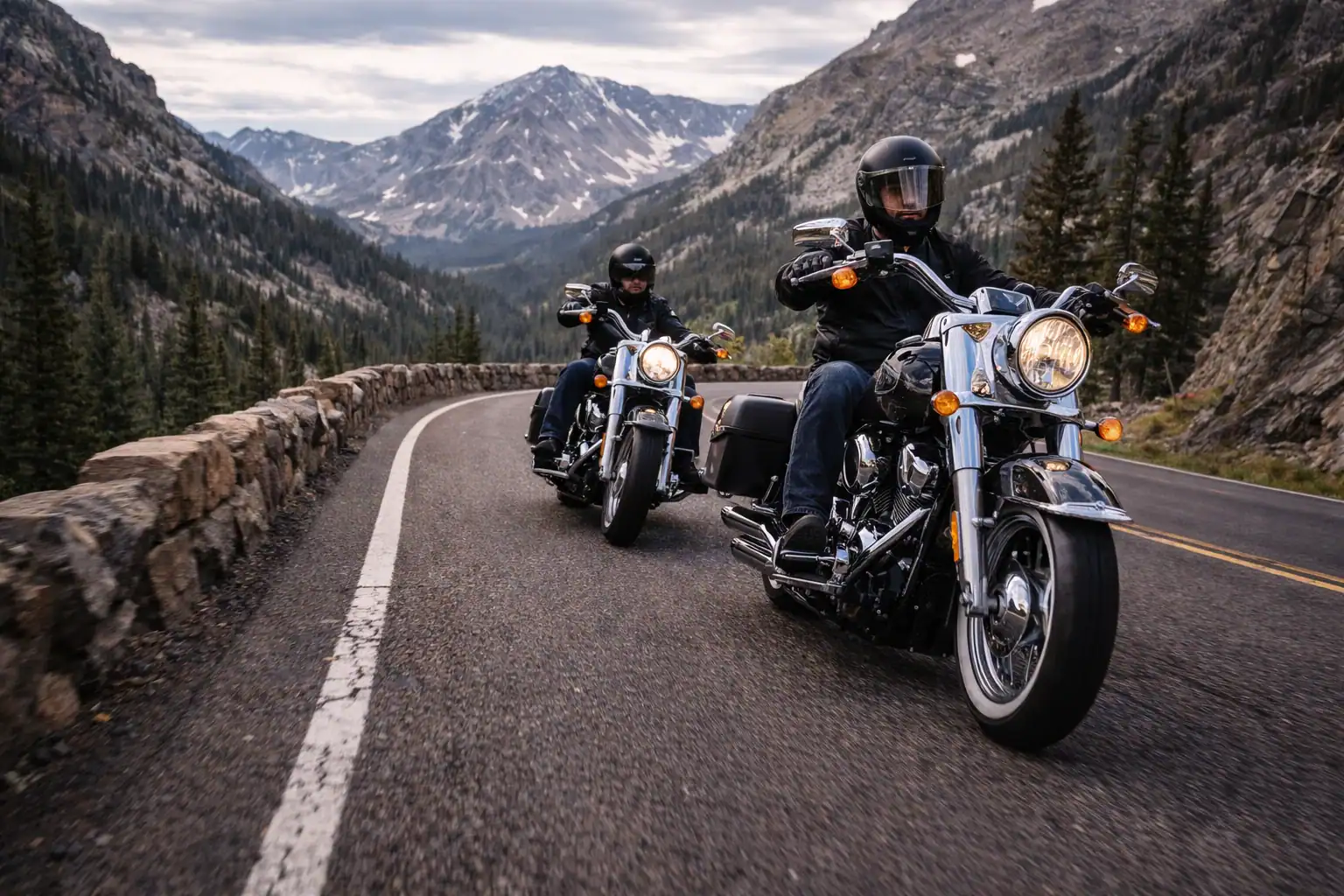
Colorado motorcycle season opens every May. Before your first ride, here is what to check, what Colorado law requires, and how to protect your legal rights if another driver causes your crash.
There is something specific about the first ride of Colorado’s motorcycle season. The roads are cleaner than they were in March, the air has lost its winter bite, and the mountain passes that were closed since October are opening one by one. For the hundreds of thousands of Colorado riders who put their bikes away sometime in late fall, May represents a genuine return.
It also represents elevated risk. CDOT data consistently shows that motorcycle accident rates spike in May and remain elevated through the early weeks of a season when riders are shaking off winter rust, drivers havent recalibrated their attention to two-wheeled traffic, and the roads themselves are transitioning out of the conditions that made winter riding dangerous but into spring conditions that introduce their own hazards.
This article is for Colorado riders preparing for their first ride. It covers the mechanical and legal preparation that protects both your safety and your claim if another driver makes a mistake that puts you on the ground.
Why May Is the Most Dangerous Month for Colorado Motorcyclists
The seasonal spike in motorcycle accidents in May is not random. Several factors converge at the start of each riding season to create conditions that are statistically more dangerous than the middle of a well-established riding season.
Rider unfamiliarity with the bike is the first factor. Motorcycling skills degrade over the winter months. Reaction times, throttle and brake sensitivity, and the automatic physical calibration that experienced riders develop through consistent riding all require re-establishment at the start of a new season. Riders who overestimate their current skill level relative to their peak-season capability are overrepresented in early-season accident statistics.
Driver inattention to motorcycles is the second factor and the one most relevant to legal claims. Colorado drivers who have spent five months in conditions where motorcycles are rare on the road have effectively recalibrated their visual scanning patterns to not register two-wheeled traffic. The failure-to-yield collision, where a driver turns left across an oncoming motorcycle because they genuinely did not see it, is the single most common serious motorcycle accident type nationally and it concentrates at the start of each riding season.
Road surface conditions in May present a third factor. Sand applied for winter traction remains on road surfaces and collects in corners and at road edges. Potholes that opened during the freeze-thaw cycle have not all been repaired. And the late-season moisture that Colorado’s spring brings creates intermittent wet surfaces, particularly in shaded sections of mountain roads, that may not be apparent to a rider who has not been monitoring road conditions through the winter.
The Pre-Season Mechanical Checklist
Before your first May ride, a thorough mechanical inspection protects both your safety and your legal position if an accident occurs. Insurance companies and defense attorneys in motorcycle accident cases sometimes attempt to introduce questions about motorcycle maintenance as a factor in comparative fault analysis. A documented pre-season inspection addresses this argument directly.
Tires are the highest priority. Motorcycle tires degrade through a combination of age and UV exposure even when not in use. Check tread depth, look for sidewall cracking or dry rot, and verify that pressure is within the manufacturer’s specified range. A tire that was marginal at the end of last season may have crossed the line into genuinely unsafe over the winter.
Brakes require inspection for pad thickness, rotor condition, and hydraulic fluid integrity. Brake fluid absorbs moisture over time and should be flushed on a schedule appropriate to your bike’s manufacturer recommendations. Soft or spongy brake feel on your first ride is a warning that should not be dismissed.
Chain or belt drive systems require lubrication and tension adjustment after winter storage. Lights, horn, and turn signals should be verified as functional. And the bike’s fluid levels, oil, coolant where applicable, and brake fluid all require confirmation before the first ride of the season.
Colorado’s Motorcycle Laws and What They Mean for Your Claim
Colorado law requires all motorcycle operators and passengers to wear eye protection under CRS 42-4-232 unless the motorcycle is equipped with a windscreen. Adult riders are not required by state law to wear a helmet, though the evidence supporting helmet use in reducing TBI severity is substantial and consistent.
The absence of a helmet does not eliminate your legal right to recover damages if another driver caused your accident. However, in cases where head injuries are part of your claim, the defense may argue that helmet non-use contributed to the severity of those injuries. Colorado’s comparative negligence framework under CRS 13-21-111 allows this as a factor in fault apportionment. An experienced motorcycle accident attorney can address this argument effectively.
Colorado requires motorcycle operators to be licensed specifically for motorcycle operation under CRS 42-2-130. Riding without a motorcycle endorsement on your license is a violation that could affect your comparative fault analysis if raised by the defense.
Lane splitting, the practice of riding between lanes of slow or stopped traffic, is not legal in Colorado under current law. Riding in a manner consistent with Colorado traffic laws protects your legal position if another driver causes an accident.
Call us at 720-928-9178 if another driver caused your Colorado motorcycle accident. Motorcycle claims require specific expertise and early evidence preservation. The consultation is free and there is no fee unless we win.
What to Do If You Are in a Motorcycle Accident in Colorado
Call 911 immediately. Even if your injuries seem minor in the moment, adrenaline and shock suppress pain signals effectively and symptoms that appear mild at the scene may reveal themselves as serious injuries within hours.
Do not remove your helmet at the scene if you have any neck or head pain. Let emergency medical personnel handle this assessment.
Photograph the scene from as many angles as possible before vehicles are moved: the road surface, skid marks, the position of the motorcycle and the other vehicle, any road defects that may have contributed, signage and signals, and your injuries and gear. Document the other driver’s license, registration, and insurance information.
Get witness contact information. Witness accounts of motorcycle accidents are particularly valuable because they are free from the credibility questions that sometimes affect the accounts of the parties themselves.
Do not give a recorded statement to the at-fault driver’s insurance company before consulting an attorney. Motorcycle accident claims attract aggressive defense from insurance carriers who know that juries sometimes hold negative assumptions about motorcyclists. An attorney can protect you from the recorded statement trap before it is sprung.
Frequently Asked Questions
What is the most common type of serious motorcycle accident in Colorado?
The failure-to-yield left-turn collision, where a driver turning left across an oncoming motorcycle fails to see or misjudges the motorcycle’s speed, is the single most common serious injury scenario. These accidents concentrate at the start of riding season when drivers have recalibrated to not expect motorcycle traffic and at intersections where sight distance limitations make motorcycle approach speed difficult to judge.
Does Colorado require motorcycle helmets?
Adult riders are not required by Colorado law to wear helmets. Eye protection is required under CRS 42-4-232. Helmet use is strongly supported by injury prevention research, and non-use may be raised as a comparative fault factor in head injury cases, but it does not eliminate your right to recover from an at-fault driver.
Can I recover if I was filtering or lane splitting when the accident happened?
Lane splitting is not legal in Colorado. If you were splitting lanes when an accident occurred, the defense will raise this as a comparative fault factor. Whether it affects your recovery depends on whether it was a contributing cause of the accident and what percentage of fault is assigned. An attorney can evaluate the specific facts.
What if the driver who hit me claims they never saw me?
Failure to see an oncoming motorcycle does not eliminate a driver’s liability. Colorado law requires drivers to maintain proper lookout and to yield based on what a reasonable driver would have seen and anticipated. A driver who failed to see your motorcycle because they weren’t paying adequate attention to the road has breached the standard of care regardless of whether they saw you.
What makes motorcycle accident claims different from car accident claims?
Injury severity, insurance dynamics, and jury perception all differ. Motorcycle accidents produce more serious injuries on average because riders have no structural protection. Insurance carriers defend motorcycle claims more aggressively because of the higher damage values involved. And some jurors carry negative assumptions about motorcyclists that experienced attorneys work to address proactively in case strategy.
What evidence matters most in a Colorado motorcycle accident case?
The police report, witness statements, traffic and surveillance camera footage, road condition documentation, the other driver’s cell phone records if distraction is suspected, accident reconstruction analysis, and your medical records documenting the full extent of your injuries. Preserving the motorcycle itself as physical evidence is also important in cases where its condition at impact is relevant.
How long do I have to file a motorcycle accident claim in Colorado?
Three years from the date of injury under CRS 13-80-101 for standard negligence claims. Government entity claims require the 182-day notice under CRS 24-10-109 first. Evidence degrades quickly in motorcycle cases. Contact an attorney promptly.
Sources
Colorado Motorcycle Helmet and Eye Protection Law, CRS 42-4-232 Colorado Motorcycle Operator License Requirements, CRS 42-2-130 Colorado Comparative Negligence Statute, CRS 13-21-111 Personal Injury Statute of Limitations, CRS 13-80-101 Uninsured and Underinsured Motorist Coverage, CRS 10-4-609 Government Notice of Claim Requirement, CRS 24-10-109 Colorado Department of Transportation, Motorcycle Safety Data: https://www.codot.gov National Highway Traffic Safety Administration, Motorcycle Crash Statistics: https://www.nhtsa.gov Motorcycle Safety Foundation, Pre-Ride Inspection Standards: https://www.msf-usa.org
You are not alone in this. If another driver caused your Colorado motorcycle accident, call Samantha Flanagan at 720-928-9178. The consultation is free, confidential, and comes with no obligation. Your recovery comes first.