
Colorado School Zone Law and What Happens Legally When a Child Is Struck
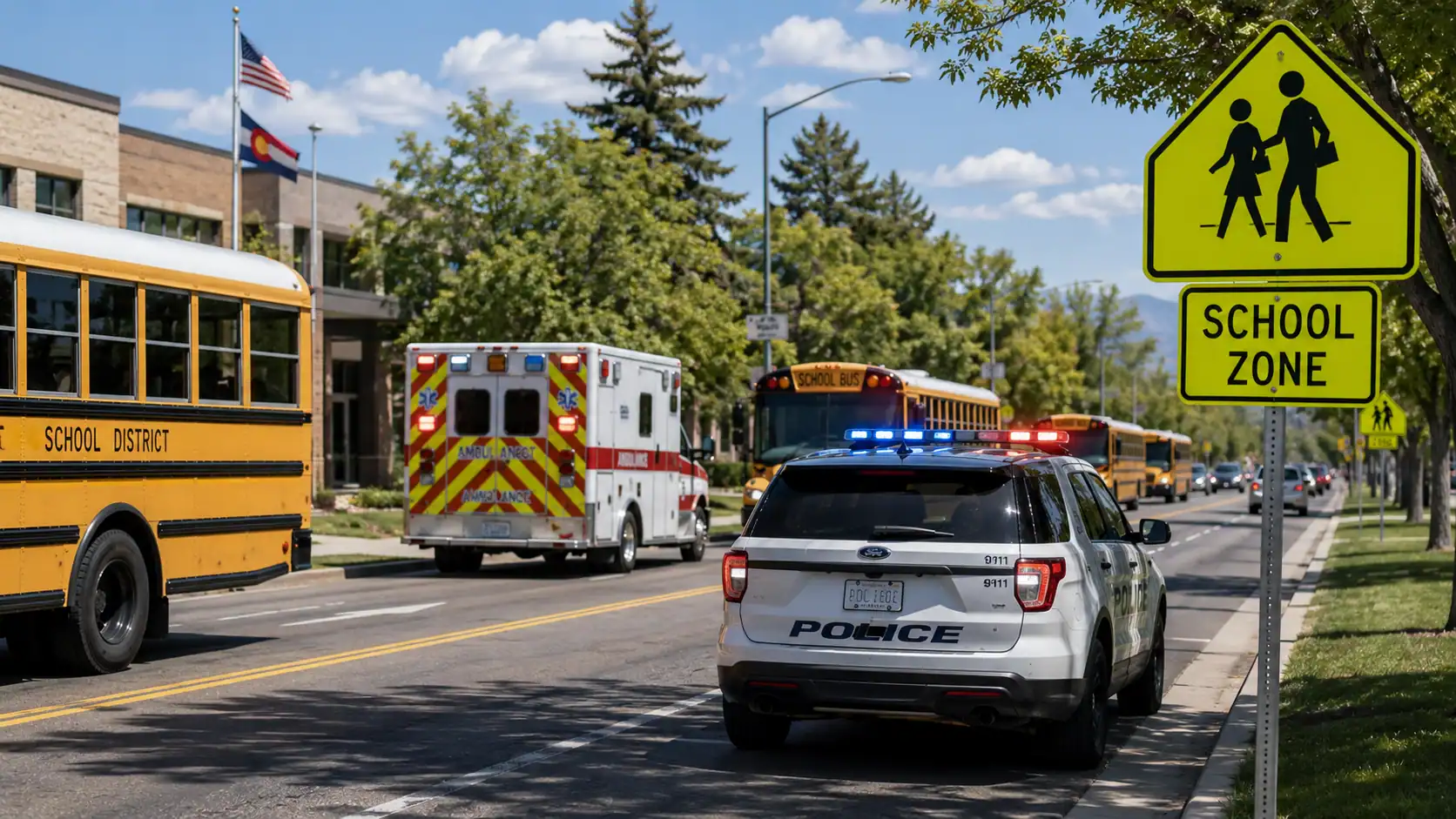
Front Range schools are back in session across August, and the traffic pattern around every one of them changes overnight. Reduced speed limits activate. Crossing guards appear. Several hundred children arrive and leave within a twenty minute window, on foot, on bicycles, and in vehicles driven by people who are running late.
School zones exist because that combination is genuinely dangerous. Colorado law treats them accordingly, and treats collisions inside them differently than collisions anywhere else.
What Colorado School Zone Law Requires
A school zone is a designated stretch of roadway near a school where a reduced speed limit applies. The limit is posted, commonly twenty miles per hour, and it applies during the hours indicated on the signage or while the beacons are flashing, depending on how the zone is marked.
Two features make school zones legally distinct.
Penalties are doubled. Colorado increases the fine for speeding in a designated school zone. The doubling is a legislative statement that the conduct is more serious in that location, and that statement carries beyond the traffic citation. In a civil injury claim, a violation of a safety statute specifically enacted to protect a class of people, here children near schools, is powerful evidence of negligence.
Crossing guard authority is real. A crossing guard directing traffic is exercising actual authority, and disregarding those directions is a violation independent of speed. Drivers routinely treat a guard’s hand signal as a suggestion. It is not.
Separately, Colorado requires drivers to yield to pedestrians in crosswalks, and marked school crosswalks are a common location for collisions during arrival and dismissal.
Why a Child’s Own Conduct Is Judged Differently
This is where most parents receive a genuine surprise.
When an adult pedestrian is struck outside a crosswalk, an insurer will argue the pedestrian shares fault, and under Colorado’s modified comparative negligence rule that can reduce or eliminate recovery.
Children are not measured against the adult standard. Colorado evaluates a child’s conduct against what a reasonably careful child of similar age, intelligence, and experience would have done. Very young children are generally treated as incapable of negligence at all, on the reasoning that they lack the developmental capacity to assess traffic risk.
The practical consequences are significant. A seven year old who steps into the road chasing a ball is not held to what an adult should have anticipated. And a driver’s duty in a school zone is heightened precisely because the presence of children makes exactly that behavior foreseeable. Darting into the roadway is not an unforeseeable event near an elementary school. It is the thing the reduced speed limit exists to account for.
A related point that catches families off guard in the other direction: a parent’s own inattention is generally not charged against the child’s claim in Colorado. If a parent was distracted at the moment a child ran ahead, that does not automatically reduce the child’s recovery. The child’s claim belongs to the child.
Who Can Be Responsible
The driver is the obvious answer and usually the primary one. Others may share responsibility depending on the facts.
An employer. If the driver was working at the time, a delivery driver, a contractor, a service vehicle, the employer is typically exposed for conduct within the scope of employment. Commercial policies carry far higher limits than personal auto policies, which frequently determines whether a seriously injured child’s future needs can actually be covered.
A government entity. If a city vehicle, a school district vehicle, or a district employee driving on district business is involved, the claim changes character entirely. Colorado’s Governmental Immunity Act imposes a short written notice deadline that runs from the date of injury, and missing it can extinguish an otherwise valid claim regardless of how badly the child was hurt. We cover this in hit by a government vehicle in Colorado. Do not let this deadline pass while waiting to see how a child recovers.
Roadway design and signage. Occasionally a zone is inadequately marked, a beacon is inoperative, or sightlines are obstructed. This is difficult ground and also implicates governmental immunity, but it is worth investigating where the physical setting clearly contributed.
Deadlines Work Differently for Injured Children
Colorado tolls limitation periods for injured minors under certain circumstances, which means the ordinary filing clock may not run against a child the way it runs against an adult.
Do not treat that as breathing room. The tolling rules contain conditions and exceptions, a government defendant carries its own short notice requirement that tolling does not rescue, and evidence disappears on the same schedule regardless of who was hurt. Video overwrites. Witnesses move. Scene conditions change.
The correct approach is to preserve evidence immediately and get the legal deadlines confirmed for the specific facts, rather than assuming there is time.
What to Do If Your Child Is Struck
- Call 911 and insist on transport for evaluation even if your child gets up and seems fine
- Photograph the scene before vehicles move, including signage, beacons, crosswalk markings, and sightlines
- Photograph the posted school zone signs and note whether beacons were flashing and what time it was
- Get contact information for every adult present, including crossing guards, school staff, and parents waiting nearby
- Ask the school in writing to preserve any exterior camera footage, immediately, because these systems overwrite quickly
- Identify the vehicle completely, including any company markings, which determines whether a commercial policy applies
- Do not give a recorded statement to the driver’s insurer before you understand your child’s injuries
- Watch for head injury symptoms over the following days, since children often minimize or cannot articulate what they are feeling
That last point deserves weight. Children want to be fine. They want to go back to school and they do not want to worry their parents. Delayed reporting of headaches, nausea, sensitivity to light, sleep changes, or irritability is common, and the symptoms that matter most may surface days later.
Our Colorado parent’s legal guide covers the settlement approval and structure issues that arise once a child’s claim moves forward.
For Drivers
- Treat the posted school zone limit as a hard ceiling, not a target
- Assume a child will emerge from between parked vehicles, because that is the most common pattern
- Stop behind the crosswalk line rather than on it, so the driver in the next lane can see the crosswalk
- Follow crossing guard directions without exception
- Put the phone away entirely for the length of the zone
- Add ten minutes to your morning rather than making them up on the last quarter mile
Frequently Asked Questions
What is the speed limit in a Colorado school zone?
School zone speed limits in Colorado are set by posted signage, most commonly twenty miles per hour, and apply during the hours shown on the sign or while the warning beacons are flashing. Because the limit varies by zone and by how the zone is marked, the posted sign controls. Fines for speeding in a designated school zone are doubled.
Can a child be found partly at fault for being hit by a car?
Colorado does not hold children to the adult standard of care. A child’s conduct is measured against what a reasonably careful child of similar age, intelligence, and experience would have done, and very young children are generally treated as incapable of negligence. A driver’s duty near a school is correspondingly heightened, because unpredictable child behavior is exactly what the reduced speed limit anticipates.
Does a parent’s inattention reduce a child’s injury claim in Colorado?
Generally no. The claim belongs to the child, and a parent’s own conduct is typically not charged against it. Insurers sometimes raise the argument anyway, particularly where a parent was present at the scene, so it is worth understanding early rather than conceding the point in a recorded statement.
How long do I have to file a claim for my injured child in Colorado?
Colorado tolls limitation periods for injured minors in certain circumstances, so the ordinary clock may not run the same way it does for an adult. The tolling rules carry conditions, and claims involving a city, county, school district, or state agency have a separate short written notice deadline that tolling does not fix. Confirm the deadlines for your specific facts promptly rather than assuming there is time.
What if a school district vehicle or employee hit my child?
The claim falls under Colorado’s Governmental Immunity Act, which requires written notice to the entity within a short period after the injury. Missing that notice can end the claim entirely no matter how serious the injuries are. This deadline runs while a child is still receiving treatment, so it needs attention immediately rather than after recovery.
Should I get school security footage after my child is hit?
Yes, and quickly. School exterior cameras, nearby business systems, and residential doorbell cameras commonly overwrite within days to a few weeks. Make the preservation request in writing to the school and to any nearby business, and keep a copy of the request. Footage of the moments before impact is often the single most valuable piece of evidence available.
Talk to Flanagan Law
Flanagan Law is a boutique Colorado firm handling vehicle accident cases across the Denver metro and Front Range. If your child was struck by a vehicle near a school, call 720-928-9178. Someone answers 24 hours a day.
This article is general information about Colorado law and is not legal advice for your particular situation.