Hit by a Government Vehicle in Colorado: Suing a City, County, or State Agency Under CRS 24-10
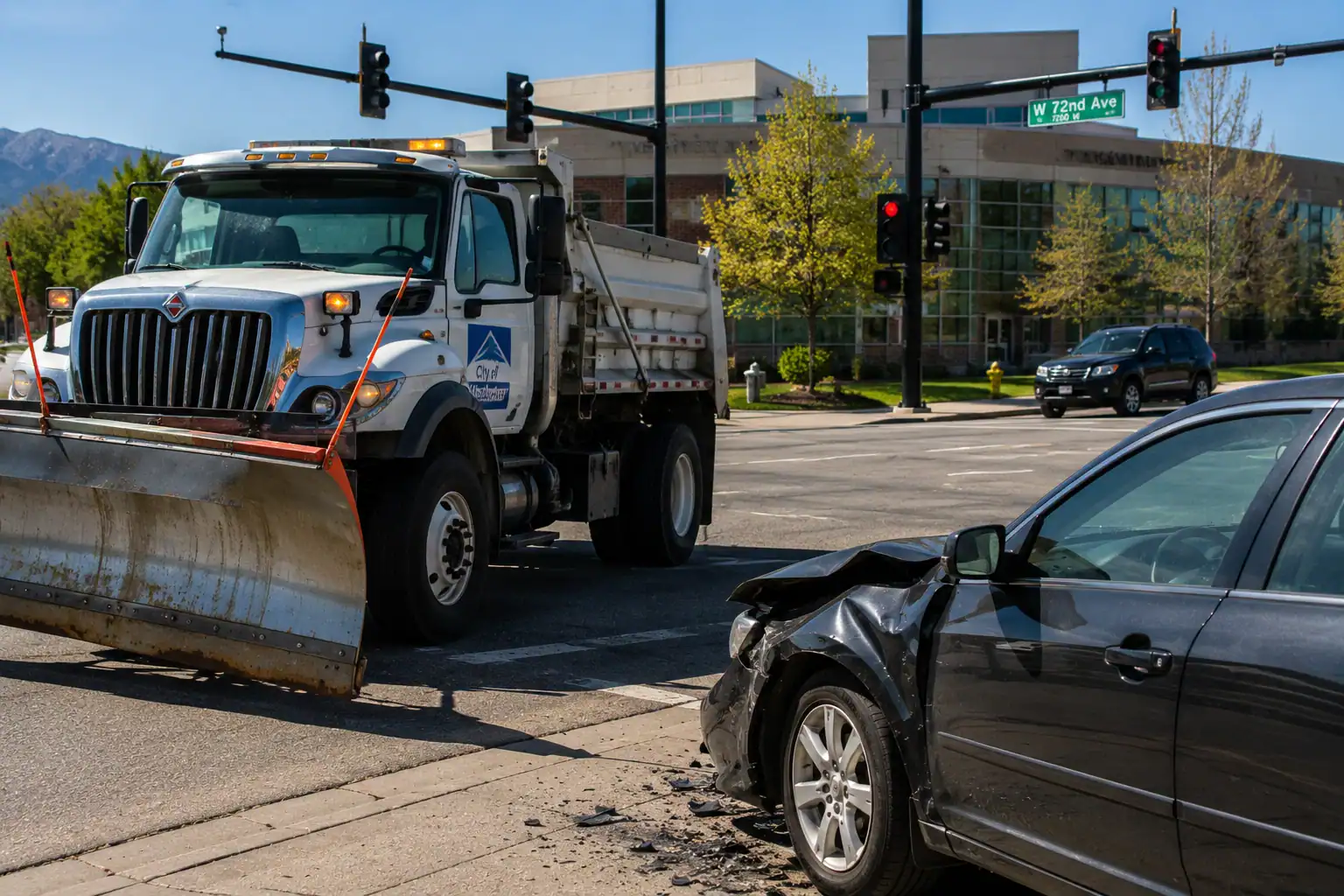
A government vehicle accident is the one type of Colorado vehicle accident claim where a deadline you have probably never heard of can destroy an otherwise strong case. Most people who are hit by a city snowplow, a county sheriff vehicle, an RTD bus, or a state highway department truck assume they have plenty of time to think about whether to pursue a claim. They do not. They have one hundred and eighty-two days. After that, regardless of how serious the injuries are or how clear the liability is, the claim is gone.
In our practice we see these cases regularly. Snowplows striking parked vehicles. RTD buses involved in intersection crashes. City vehicles running stop signs. Ambulances colliding with private vehicles at intersections. Each of these crashes triggers the Colorado Governmental Immunity Act, which is one of the most unforgiving statutory frameworks in Colorado law. This article explains how the Act works, why the 182-day deadline is the most important fact in your case, and what to do if you have been hit by a government vehicle anywhere in Colorado.
If you have been hit by a government vehicle, call us at 720-928-9178 today. Not next week. Not next month. The deadline is real, and waiting damages cases. The conversation is free, there is no obligation, and there is no fee unless we win your case.
Why Government Vehicle Cases Are Different
Sovereign immunity is the legal doctrine that says the government cannot be sued without its consent. The doctrine has roots in English common law and survived into American law in modified form. Colorado, like every other state, has waived sovereign immunity in certain categories of cases through statute. The waiver is conditional, technical, and in some respects narrower than people expect.
The relevant statute is the Colorado Governmental Immunity Act, codified at CRS 24-10-101 et seq. The Act waives immunity for several specific categories of claims, including injuries arising from the operation of motor vehicles by public employees. This is the waiver that allows you to sue when a city snowplow rear-ends you on East Colfax or when an RTD bus runs a red light at Broadway and Mississippi.
But the waiver comes with conditions. The most important is the 182-day notice requirement.
The 182-Day Notice Deadline
CRS 24-10-109 requires anyone bringing a claim against a Colorado public entity to provide written notice of the claim within 182 days of the date the injury occurred or was discovered. The notice must be in writing. It must be properly served on the right official. It must contain specific information about the claim, including the name of the claimant, the factual basis for the claim, the nature of the injury, the amount of damages claimed, and the names of any other persons involved.
Missing the 182-day deadline is fatal to the claim. Colorado courts apply the deadline strictly. They do not generally allow late notices. They do not generally accept “I did not know” as an excuse. The deadline is not flexible.
Six months sounds like plenty of time. It is not, particularly when you consider that you may not even know the full extent of your injuries within that window. Soft tissue injuries can take weeks to fully present. TBI symptoms can take longer. The medical picture in any serious case is rarely clear at six months. But the notice deadline is six months, regardless of where the medical picture is.
The practical implication is that a government vehicle case requires fast action. We send notices within days of taking on these cases. We do not wait for the medical picture to clarify before filing the notice. The notice can be amended later if necessary, but it cannot be filed late.
If you were hit by what you suspect is a government vehicle, even if you are not sure, call us today. We will determine within minutes whether the Governmental Immunity Act applies and start the notice clock if it does.
Which Vehicles Trigger the Governmental Immunity Act
The Act applies to vehicles operated by public employees in the course of their employment. The categories of vehicles we see most often include the following.
City and municipal vehicles. Public works trucks, snowplows, street sweepers, parks vehicles, code enforcement vehicles, and any other vehicle operated by city employees. Cities like Denver, Aurora, Lakewood, Westminster, Thornton, Centennial, and the smaller Front Range municipalities all operate fleets that produce these crashes.
County vehicles. Sheriff vehicles, county road and bridge vehicles, county social services vehicles, and any other vehicle operated by county employees. Adams County, Arapahoe County, Boulder County, Douglas County, Jefferson County, and Larimer County all maintain fleets that produce occasional crashes.
State vehicles. Colorado State Patrol vehicles, CDOT vehicles, state university vehicles, state department vehicles, and any other vehicle operated by state employees. CDOT vehicles in particular, including snowplows, road maintenance trucks, and inspection vehicles, see substantial road time and produce the occasional crash.
Special district vehicles. RTD buses are the most prominent. Other special districts, including water districts, fire districts, and library districts, all operate vehicles that occasionally produce crashes.
Federal vehicles. United States Postal Service vehicles, federal park service vehicles, and other federal vehicles are governed by federal sovereign immunity rules under the Federal Tort Claims Act, not the Colorado Governmental Immunity Act. The deadlines and procedures are different and equally unforgiving. We handle these claims differently but with the same urgency.
What the Act Limits Even When the Notice Is Timely
The Governmental Immunity Act caps damages even when liability is clear and the notice is timely.
The damage caps are codified in CRS 24-10-114. They are adjusted periodically by the legislature. The caps apply per person and per occurrence and are substantially lower than the damages typically available in private-party cases. In serious cases, the caps mean that a claim worth two million dollars in a private-party context may be worth substantially less when the defendant is a government entity.
The caps are not negotiable. They apply regardless of the severity of the injury. They are one of the reasons government vehicle cases require careful damages analysis and thorough exploration of any non-government defendants who may share liability and not be subject to the caps.
The Act also bars certain types of damages entirely, including punitive damages against government entities. A drunk driving crash in a private vehicle supports punitive damages under CRS 13-21-102. The same conduct in a government vehicle does not, because the Act bars exemplary damages against the government.
The RTD Bus Cases We See Most
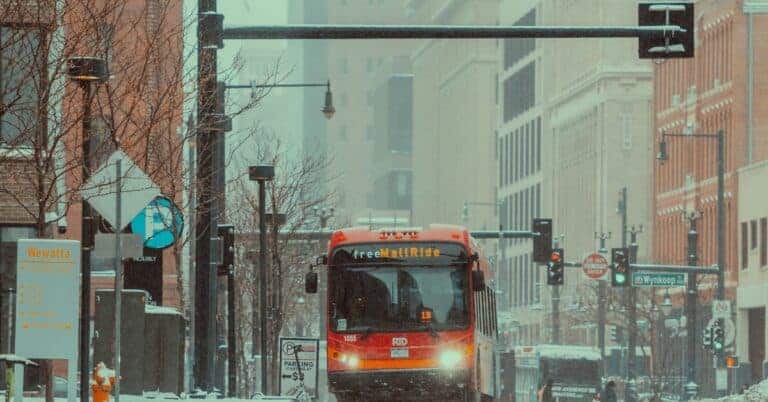
RTD bus accidents are the highest-volume category of government vehicle cases we handle. The RTD fleet covers the Denver metro and produces crashes routinely.
Bus-pedestrian crashes at intersections. Buses making turns through pedestrian crossings, particularly in downtown Denver and along East Colfax, produce a steady volume of pedestrian injury cases.
Bus-vehicle crashes at intersections. Buses running stop signs, failing to yield on left turns, and rear-ending stopped traffic during commute hours.
Bus-cyclist crashes. Buses passing cyclists too closely, turning across cyclist paths, and merging into bike lanes.
Passenger injury claims. Passengers thrown by sudden braking, doors closing on passengers, and slip-and-fall injuries on bus floors.
RTD’s claims process is well-established but unforgiving. The 182-day notice deadline applies, and RTD employs experienced claims professionals who handle volume and know exactly what is required to defeat untimely or improperly served notices.
The Snowplow Cases We See Most
Snowplow crashes are seasonal but consistent. The combination of poor visibility, large vehicles operating in conditions that make even normal driving difficult, and the public’s unpredictable behavior around active snowplows produces a recurring pattern.
Snowplow rear-end crashes. A motorist following a slow-moving plow misjudges the closing distance and rear-ends the plow.
Snowplow merge and lane-change crashes. Plows changing lanes or merging during active operations strike vehicles in adjacent lanes.
Snowplow-pedestrian crashes. Plows operating in residential areas or near school zones strike pedestrians, often during early-morning or late-evening operations when visibility is limited.
Snowplow-parked vehicle crashes. Plows clearing residential streets clip parked vehicles, often when the operator is focused on the plow path rather than the vehicle line.
The liability analysis in snowplow cases often involves the question of whether the plow operator was complying with applicable safety procedures, whether the plow was properly equipped with required lights and warnings, and whether the operator’s view was unreasonably obstructed.
What to Do Immediately After a Government Vehicle Crash
The standard accident advice applies, with one critical addition.
Document everything that identifies the vehicle as a government vehicle. The agency name, the vehicle number, the operator’s name and badge number, the license plate, photographs of any logos or markings on the vehicle. This information is essential for the notice of claim and for identifying which government entity is the proper defendant.
Get the police to the scene and obtain the official report. Government vehicle crashes generate official reports that include identification of the vehicle and operator.
Seek medical attention. The medical record is the foundation of the case, and the timeline considerations that apply to all serious accidents apply here too.
Call a lawyer immediately. Not because every minor crash with a government vehicle requires representation, but because the notice deadline is so unforgiving that even a quick consultation can determine whether action is needed and start the process if it is. We do not charge for the initial conversation.
Do not give a recorded statement to any government claims adjuster. The same principles apply that we discuss in our complete guide to Colorado auto insurance after an accident.
Do not accept any early settlement offer without legal review. Government claims professionals sometimes offer quick settlements with releases that bar all future claims. The offers are almost always far below the actual value, and the releases are aggressive.
Frequently Asked Questions
What is the deadline to file a claim against a government entity in Colorado?
182 days from the date of the injury under CRS 24-10-109. The notice must be in writing, properly served, and contain specific required information. Missing the deadline is fatal to the claim regardless of the merits.
Does the Governmental Immunity Act apply to RTD bus accidents?
Yes. RTD is a special district and is a public entity for purposes of the Act. The 182-day notice deadline and the damage caps both apply.
Are there damage caps in government vehicle cases?
Yes, under CRS 24-10-114. The caps apply per person and per occurrence and are adjusted periodically. They are substantially lower than damages typically available in private-party cases.
Can I sue the city, the county, and the state for the same accident?
Each entity has its own notice requirements, and notices must be served on the correct entity. In a crash involving multiple government actors, multiple notices may be required.
What if I do not know whether the vehicle that hit me was a government vehicle?
Call us. We can usually determine the answer quickly through the police report, the operator information, and other available data. If the vehicle was a government vehicle, we will start the notice process immediately. If it was a private vehicle, the deadline is three years rather than 182 days, but the case still warrants prompt attention.
Can I recover punitive damages in a government vehicle case?
No. The Act bars punitive damages against government entities, even in cases involving conduct that would support punitive damages in a private-party case.
What if a government employee was driving their own personal vehicle when they hit me?
If the employee was acting within the scope of employment, the Act applies. If they were on personal time, it does not, and the claim proceeds under the standard private-party rules. The scope of employment analysis is fact-specific.
What if I am the passenger in a government vehicle that crashes?
Passenger injury claims against government entities are subject to the same notice requirements and damage caps. The 182-day deadline applies.
Sources
Colorado Revised Statutes 24-10-101 et seq.: Colorado Governmental Immunity Act, leg.colorado.gov
Colorado Revised Statutes 24-10-109: Notice of Claim, leg.colorado.gov
Colorado Revised Statutes 24-10-114: Limitations on Judgments, leg.colorado.gov
Colorado Revised Statutes 13-21-102: Exemplary Damages, leg.colorado.gov
Colorado Revised Statutes 13-80-101: Three-Year Limitation for Motor Vehicle Tort Actions, leg.colorado.gov
Federal Tort Claims Act, 28 U.S.C. 2671 et seq., uscode.house.gov
Regional Transportation District, Public Information and Claims Resources, rtd-denver.com
If you have been hit by a city vehicle, a county vehicle, an RTD bus, a state vehicle, or any other government vehicle, please call us today. The deadline is real, the cases require fast action, and the conversation is free. Reach Samantha Flanagan and the Flanagan Law team at 720-928-9178. We are a Colorado boutique firm. We answer our own phones. And we do not get paid unless we win your case.