Broomfield Head-On Crash on US-36 or Interlocken: Why These Claims Are Different
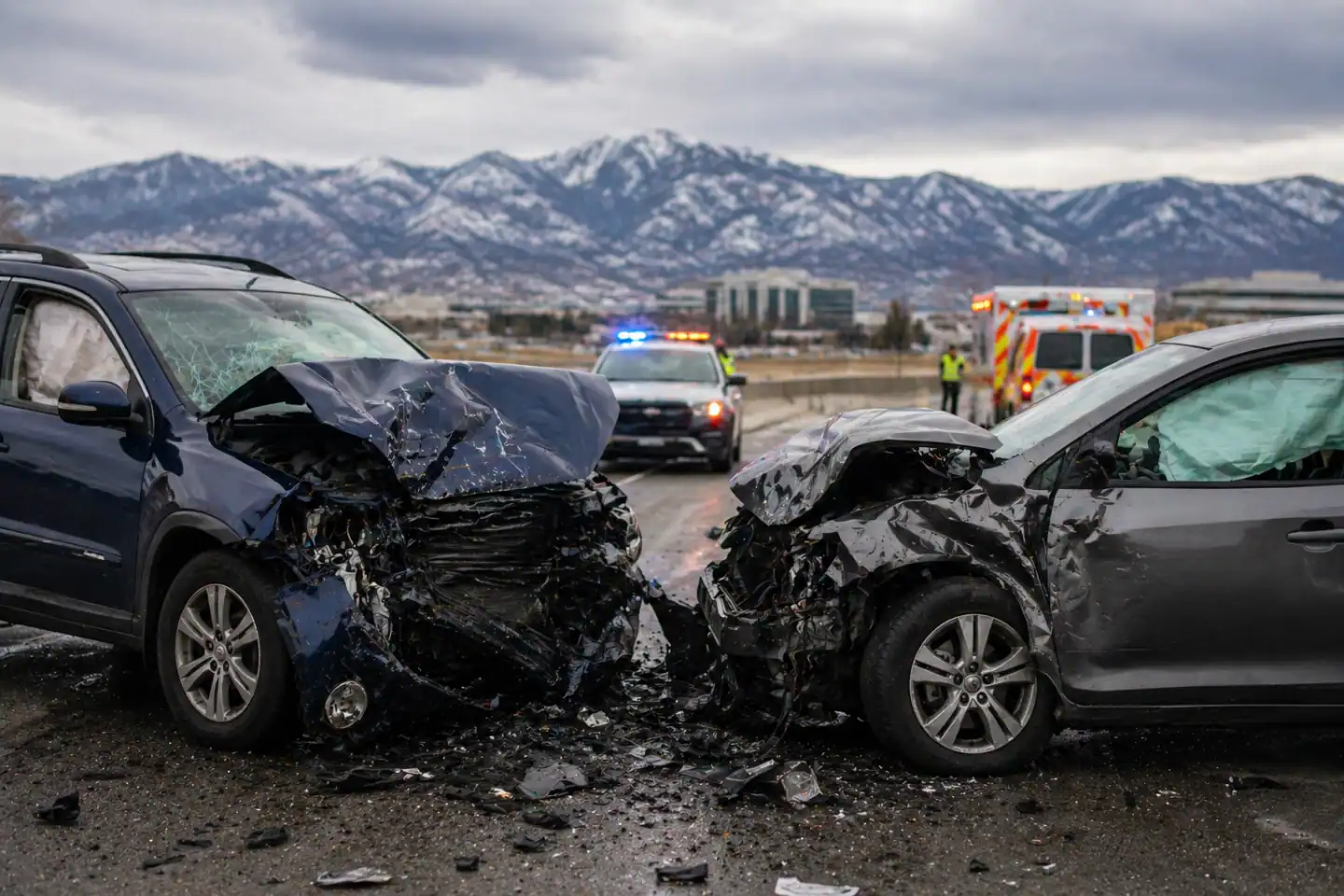
A head-on collision is the worst kind of crash you can have on a Colorado highway. The closing speed of two vehicles meeting nose-to-nose is the sum of both speeds, which on US-36 between Denver and Boulder routinely exceeds one hundred and forty miles per hour of combined energy delivered into both vehicles in a fraction of a second. The injuries are severe. The claims are complex. The insurance companies treat these cases differently than they treat fender-benders, and so should the lawyer you call.
In our practice we handle head-on crashes from across the Front Range, and Broomfield generates more than its share. The corridor along US-36, the Interlocken business district, and the connection points where commuter traffic, business travel, and through-traffic mix at high speeds all create the conditions where a single moment of inattention or impairment can produce a catastrophic head-on collision. This article explains why these crashes are different, what to do if you have been hurt in one, and how to think about the insurance and legal picture that follows.
If you have been involved in a head-on crash in Broomfield, call us at 720-928-9178. The conversation is free, there is no obligation, and there is no fee unless we win your case.
Why Head-On Crashes Produce the Most Severe Injuries
Head-on collisions are physics problems with human consequences. The energy released in a head-on crash is exponentially greater than in a rear-end or side-impact crash, because both vehicles are contributing kinetic energy to the impact rather than one vehicle striking a stationary or same-direction target.
The injuries that follow are predictable. Severe traumatic brain injury, because the head whips forward and back violently against restraint systems and any interior surface within reach. Spinal injuries throughout the cervical, thoracic, and lumbar regions. Chest injuries from steering wheel and seat belt loading. Lower extremity injuries from the floor pan and pedals deforming inward. Internal organ injuries from compression. In severe cases, fatal injury or wrongful death.
The medical reality is why these cases carry the value they do. A severe TBI alone can produce lifetime care needs in the millions of dollars. Spinal cord injury can produce care needs higher still. Catastrophic head-on injuries warrant aggressive, technically sophisticated representation, and the lawyer’s familiarity with how spinal cord injury settlements are calculated in Colorado and the lifelong costs of TBI for Colorado families directly affects the ultimate recovery.
Where Broomfield Head-On Crashes Happen Most
US-36 is the highest-volume corridor in Broomfield and produces the majority of the head-on crashes we see in the city. The corridor’s design, with high speeds, dense merging traffic, and extended stretches where median separation is the only thing keeping opposing-direction traffic apart, creates conditions where a single driver crossing the median produces immediate, catastrophic consequences.
The Interlocken area generates a different pattern of head-on crashes. The internal road network, the high volume of commercial and business traffic, the access points to and from US-36, and the visitor traffic to the office park and conference facilities mean drivers unfamiliar with the area making last-minute lane decisions, missing turns, and occasionally entering traffic from the wrong direction. We have handled cases involving exactly these patterns.
The state highway connections, including Highway 287 through Broomfield and the connection points where Broomfield’s road network meets Westminster, Boulder County, and Adams County, also produce head-on crashes, particularly at intersections where left-turn movements across opposing traffic have failed.
The Most Common Causes of Head-On Crashes
Head-on crashes do not happen by accident in any meaningful sense. They are almost always caused by specific identifiable conduct.
Drunk and drugged driving. A driver impaired enough to cross the median or drift into oncoming traffic is the single most common cause of head-on crashes we see. Colorado allows punitive damages under CRS 13-21-102 in cases involving willful and wanton conduct, and DUI cases routinely qualify.
Distracted driving. A driver looking at their phone for two seconds at sixty miles per hour travels nearly two hundred feet without looking at the road. On a curving highway like US-36, that is enough time to drift entirely across a lane.
Wrong-way driving. Drivers entering exit ramps, missing one-way signs, or becoming disoriented in unfamiliar areas occasionally enter the highway against the direction of traffic. These cases are rare but catastrophic.
Drowsy driving. Drivers falling asleep at the wheel drift, and on a highway with median separation the drift can become a crossing.
Medical events. Heart attacks, strokes, seizures, and other medical events at the wheel cause loss of vehicle control. These cases involve a different liability analysis but the same injury profile.
Mechanical failure. Tire blowouts, steering failures, and brake failures can cause loss of control. When these occur, the question shifts to whether the failure was foreseeable and who is responsible for the maintenance and condition that allowed it to happen.
What to Do Immediately After a Head-On Crash
The aftermath of a head-on crash is rarely something the people involved can navigate themselves. The injuries are typically severe enough that emergency responders take over the scene and the immediate medical decisions. What family members and the injured person can do, in the days that follow, makes a substantial difference.
Get to a Level I or Level II trauma center if at all possible. Broomfield’s location gives access to several of Colorado’s strongest trauma facilities. The quality of the trauma evaluation in the first hours shapes the medical record and the outcome.
Preserve evidence. The vehicles, the scene, and any electronic data on the vehicles are evidence. Vehicles involved in head-on crashes are often impounded and held for accident reconstruction, but the data on the event data recorder (“black box”) in modern vehicles can be overwritten if the vehicle is moved, started, or repaired. We send preservation letters within hours of taking on a serious head-on case to ensure this evidence is held.
Notify your own insurance carrier promptly. Even if the at-fault driver is identified and their carrier is involved, your own coverages, including UM/UIM, MedPay, and any umbrella policy, may all play a role. Our complete guide to Colorado auto insurance after an accident walks through how these coverages work together.
Do not give recorded statements to the at-fault driver’s insurance carrier. They will request one, often within days. You are not obligated to provide one.
Do not sign anything from the at-fault driver’s carrier without legal review. Releases, authorizations, and settlement offers in head-on cases often arrive faster than you would expect, and the carrier’s goal is to close the file at a discount before the medical picture has fully developed.
Call a lawyer who handles serious injury cases. Head-on crashes are among the cases where the difference between average and exceptional representation produces the largest difference in recovery.
The Insurance Picture in a Head-On Crash
A serious head-on crash almost always exhausts the at-fault driver’s liability coverage. Even drivers carrying 100/300 limits, which are well above the Colorado state minimum, often do not have enough coverage to compensate the catastrophic injuries that result from these crashes. The recovery picture then depends on layered coverages.
UM/UIM coverage on your own policy, particularly stacking across multiple household vehicles, often becomes the largest single source of recovery in a serious head-on case. The stacking analysis is technical but worth doing thoroughly, because the difference between assumed available coverage and actual available coverage is often hundreds of thousands of dollars.
Umbrella policies, on either side of the case, can also play a role. Drivers with umbrella policies often carry one million to five million dollars of additional liability coverage, and that coverage is available to compensate serious injury claims.
Commercial coverage, if the at-fault driver was operating in the course of employment, can produce one million dollar policies or higher. The employer liability analysis in these cases is critical.
How These Cases Are Valued
Severe head-on crash claims are valued under the same Colorado damages framework that applies to any vehicle accident, but the categories tend to fill out more completely than in lighter cases.
Economic damages include past and future medical expenses (often substantial), lost wages, lost earning capacity (often complete or near-complete in catastrophic cases), and the costs of long-term care, equipment, and home modifications.
Non-economic damages include pain and suffering, emotional distress, and loss of enjoyment of life. Colorado caps these damages under CRS 13-21-102.5, but the cap does not preclude meaningful recovery.
Physical impairment and disfigurement is a separate category not subject to the non-economic damages cap. In catastrophic cases, this category is often the largest single line item.
Punitive damages are available in cases involving willful and wanton conduct, including DUI and certain other reckless behaviors.
The value of the claim is built from these categories, supported by life care plans, vocational expert opinions, and economist projections. Our Colorado car accident settlement guide walks through how the math is built and what the realistic timeline looks like.
Frequently Asked Questions
How long do I have to file a head-on crash claim in Colorado?
Three years from the date of the accident under CRS 13-80-101. If a governmental entity is involved, the notice deadline is 182 days. Wrongful death claims have a two-year deadline. The deadlines are unforgiving, and serious cases should be evaluated by counsel well before any deadline approaches.
What if the at-fault driver was killed in the crash?
A claim against the at-fault driver’s estate is still possible if the driver carried liability insurance, which would respond to the claim. The estate’s exposure beyond insurance limits depends on the assets of the estate, but most head-on cases involving fatalities still produce meaningful recovery through insurance coverages.
What if the at-fault driver was DUI?
DUI cases support punitive damages under CRS 13-21-102, which meaningfully increases settlement value. Carriers price punitive damages exposure as additional risk and often settle for more than they would in comparable non-DUI cases.
What if the head-on crash involved a commercial vehicle?
Commercial vehicles typically carry liability coverage of one million dollars or higher. Employer liability and federal motor carrier regulations also apply. Our coverage of why commercial vehicle accident claims work differently addresses this in detail.
What if I cannot work because of my injuries?
Lost wages and lost earning capacity are recoverable damages. In serious cases, vocational experts and economists are typically retained to project the lifetime impact of the injury on earning capacity, and these projections become a significant component of the claim value.
How long will my head-on crash case take?
Serious cases typically take eighteen months to three years from the date of the accident, longer if litigation is required. The timeline is set by the medical recovery and the complexity of the damages analysis.
Do head-on crash cases go to trial?
Most settle. The carrier knows the trial risk in catastrophic cases is enormous, and most cases that should settle do settle, often after suit is filed. We do not file suit unnecessarily and we do not take cases to trial without reason, but when a case calls for it, we are ready.
Sources
Colorado Revised Statutes 13-21-102: Exemplary Damages, leg.colorado.gov
Colorado Revised Statutes 13-21-102.5: Limitations on Damages for Noneconomic Loss or Injury, leg.colorado.gov
Colorado Revised Statutes 13-21-111: Comparative Negligence, leg.colorado.gov
Colorado Revised Statutes 13-80-101: Three-Year Limitation for Motor Vehicle Tort Actions, leg.colorado.gov
Colorado Revised Statutes 10-4-609: Uninsured Motorist Coverage, leg.colorado.gov
National Highway Traffic Safety Administration, Head-On Collision Statistics and Safety Resources, nhtsa.gov
Centers for Disease Control and Prevention, Traumatic Brain Injury Resources, cdc.gov
Colorado Department of Transportation, US-36 Corridor and Crash Data, codot.gov
If you or a family member has been involved in a head-on crash in Broomfield or anywhere on the Front Range, please call us. The conversation is free, there is no obligation, and we will tell you honestly what we see, what the realistic recovery looks like, and what we recommend. Catastrophic cases warrant experienced counsel, and the decisions made early in the case shape everything that follows. Reach Samantha Flanagan and the Flanagan Law team at 720-928-9178. We are a Colorado boutique firm. We answer our own phones. And we do not get paid unless we win your case.