Hunting Season Traffic on Colorado Rural Highways: Trucks, Trailers, and Dawn Crashes
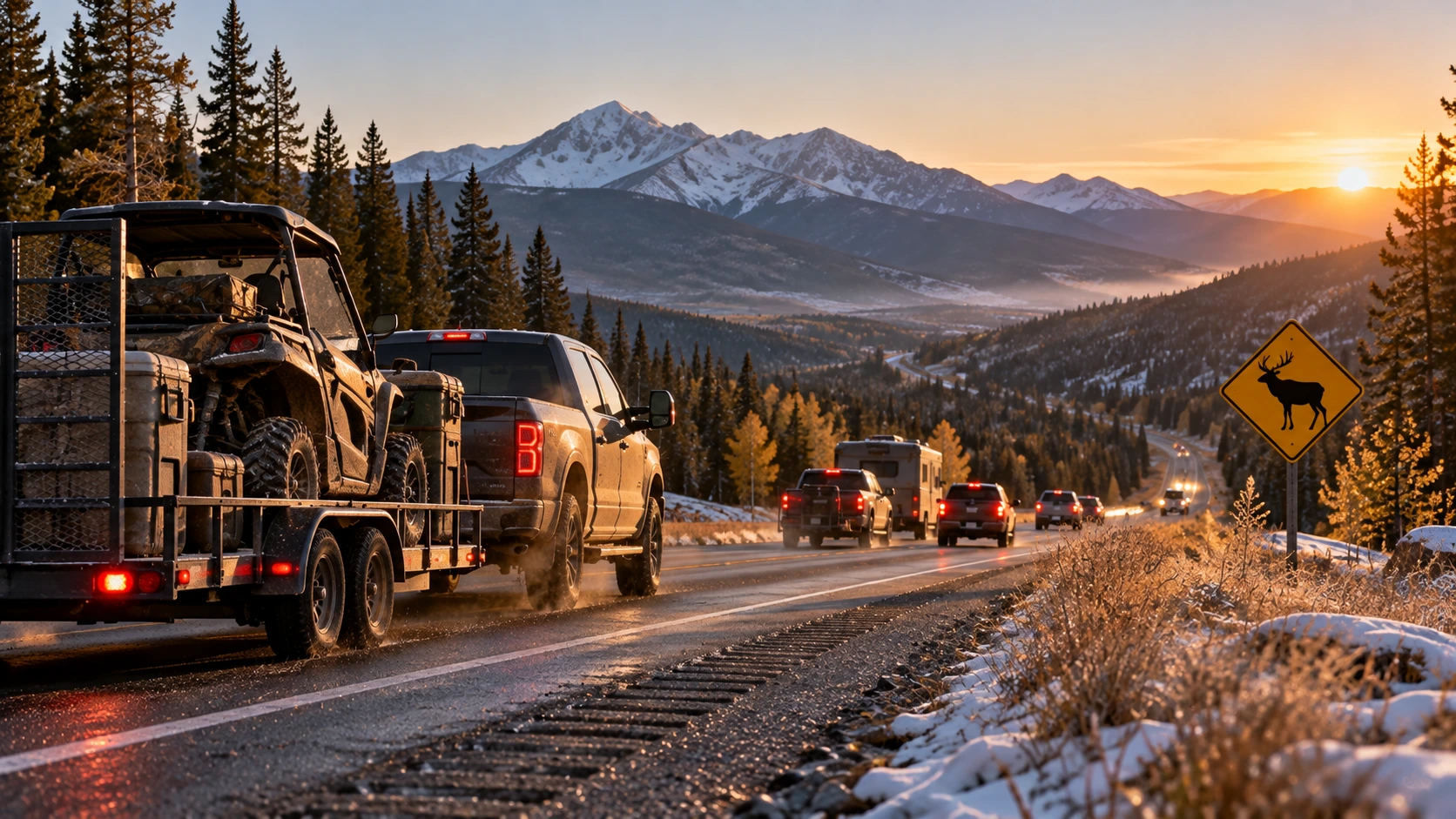
Every fall, Colorado’s big game rifle seasons bring tens of thousands of hunters onto rural roads across the state. They come from the Front Range and from out of state, many towing trailers loaded with ATVs, campers, or gear. They drive two-lane highways in the dark before sunrise, pull off on narrow shoulders near trailheads, and head home tired after long days in the field. For anyone who lives along those routes or drives them in October and November, hunting season changes the traffic in ways that raise the risk of a serious crash.
Why does hunting season increase crash risk on rural roads?
Hunting season increases crash risk because it puts heavy vehicles, unfamiliar drivers, and early morning darkness on roads built for light local traffic. Many rural Colorado highways are two lanes with limited shoulders, few passing zones, and long stretches without lighting. Add pickups towing trailers, drivers who don’t know the curves, and travel before dawn when wildlife is moving, and the margin for error shrinks quickly.
What makes trucks and trailers dangerous on two-lane highways?
Trucks towing trailers take longer to stop, swing wider through curves, and are harder to pass safely. A loaded trailer can add thousands of pounds behind a pickup, which stretches braking distances and makes the combination prone to sway on downgrades or in crosswinds. Drivers stuck behind a slow trailer on a two-lane road may attempt risky passes on curves or hills. When a trailer comes loose because of an improper hitch or missing safety chains, it can cross into oncoming traffic with no driver controlling it.
Who is responsible when a trailer causes a crash?
The driver towing the trailer is usually responsible when the trailer causes a crash, because the driver controls the hitch, the load, and the speed. A trailer that detaches, sways out of the lane, or loses part of its load points to how it was connected, loaded, or driven. Colorado law prohibits driving with a load that isn’t secured to prevent it from falling or spilling onto the road. In some cases, a rental company, a repair shop, or a trailer manufacturer may share responsibility if faulty equipment played a role. Our truck accidents practice page covers how heavy vehicle claims are handled.
Why are dawn and dusk the most dangerous hours?
Dawn and dusk are the most dangerous hours because hunters, commuters, and wildlife are all moving in the poorest light of the day. Hunters often leave camp or home well before sunrise to reach their spots, and they head back as the light fades. Deer and elk are most active at those same hours. Low sun angles create glare, and dark animals or dark vehicles parked on shoulders are hard to see. Our article on animal strike accidents in Colorado explains how wildlife collisions are handled.
What about vehicles parked on the shoulder near trailheads?
Vehicles parked on narrow shoulders create a hazard for passing traffic and for the people getting in and out of them. Hunters often park wherever there is room near public land access, sometimes partly in the travel lane or just past a blind curve. A driver who parks in a dangerous spot without hazard lights may share responsibility if another driver hits the vehicle. Drivers passing those areas still have a duty to slow down and watch for people and open doors.
What should you know about head-on crashes on rural highways?
Head-on crashes are among the most serious crashes on two-lane rural highways, and hunting season traffic creates more of the situations that cause them. Impatient passes behind slow trailers, drowsy drivers drifting across the center line after a long day, and swerves to avoid wildlife can all put a vehicle in the oncoming lane. Our article on head-on collisions in Colorado explains how fault is determined and why injuries are so severe.
Does it matter if the at-fault driver is from out of state?
It matters for paperwork, but not for your right to recover. An out-of-state driver’s liability insurance still applies to a crash in Colorado, and Colorado law generally governs a crash that happens here. The challenges are practical: getting information from an insurer in another state and preserving evidence before the driver goes home. If the other driver’s coverage is too small for your injuries, your own uninsured and underinsured motorist coverage may help, as our complete guide to Colorado auto insurance after an accident explains.
How can you stay safer on rural highways during hunting season?
Slow down before dawn and after dusk, and scan the shoulders for parked vehicles, people, and animals. Leave extra room behind trucks with trailers, and pass only where you have a long, clear view of oncoming traffic. If you are towing, check your hitch, safety chains, lights, and load before every trip, and pull over to let traffic pass when a line builds behind you. If you are tired after a long day in the field, stop and rest before driving home.
Frequently Asked Questions
When is hunting season traffic heaviest in Colorado?
Traffic tied to big game hunting is heaviest during the rifle seasons, which run from October into November. Each season opening brings a surge of trucks, trailers, and campers onto rural highways, especially on the first and last days of a season and on weekends. Exact season dates change each year and are set by Colorado Parks and Wildlife.
Who is at fault if a trailer comes loose and hits my car?
The driver towing the trailer is usually at fault, because that driver is responsible for securing the hitch, safety chains, and load. Depending on the facts, a rental company, repair shop, or equipment manufacturer may also share responsibility. Photos of the hitch and trailer taken at the scene are important evidence.
Can I make a claim against an out-of-state driver who hit me in Colorado?
Yes. An out-of-state driver’s liability insurance applies to crashes in Colorado, and Colorado law generally governs the claim. The process can involve an insurer based in another state, which is why gathering the driver’s insurance information, license, and plate at the scene matters.
Is a driver responsible for parking on a narrow highway shoulder?
A driver who parks in a dangerous spot, such as partly in the lane, on a blind curve, or without hazard lights, may share responsibility for a crash involving that vehicle. Passing drivers also have a duty to slow down and watch for parked vehicles and people. Fault depends on what each driver did.
What should I do after a crash on a rural Colorado highway?
Move to safety if you can, turn on your hazards, and call 911. Cell coverage can be limited, so note your mile marker or nearest landmark. Photograph the vehicles, any trailer and hitch, the road, and the lighting conditions. Get the other driver’s information and see a doctor promptly, then call a lawyer if you were hurt.
When should I contact a lawyer after a hunting season crash?
Contact a lawyer when you were injured, when a truck or trailer was involved, or when the other driver lives out of state. Those claims involve more evidence and more parties. Flanagan Law offers free consultations at 720-928-9178.
If you were hurt in a crash on a Colorado rural highway this hunting season, call Flanagan Law at 720-928-9178 for a free consultation.