Memorial Day Weekend Crashes in Colorado: What the Data Shows and What Drivers Can Do
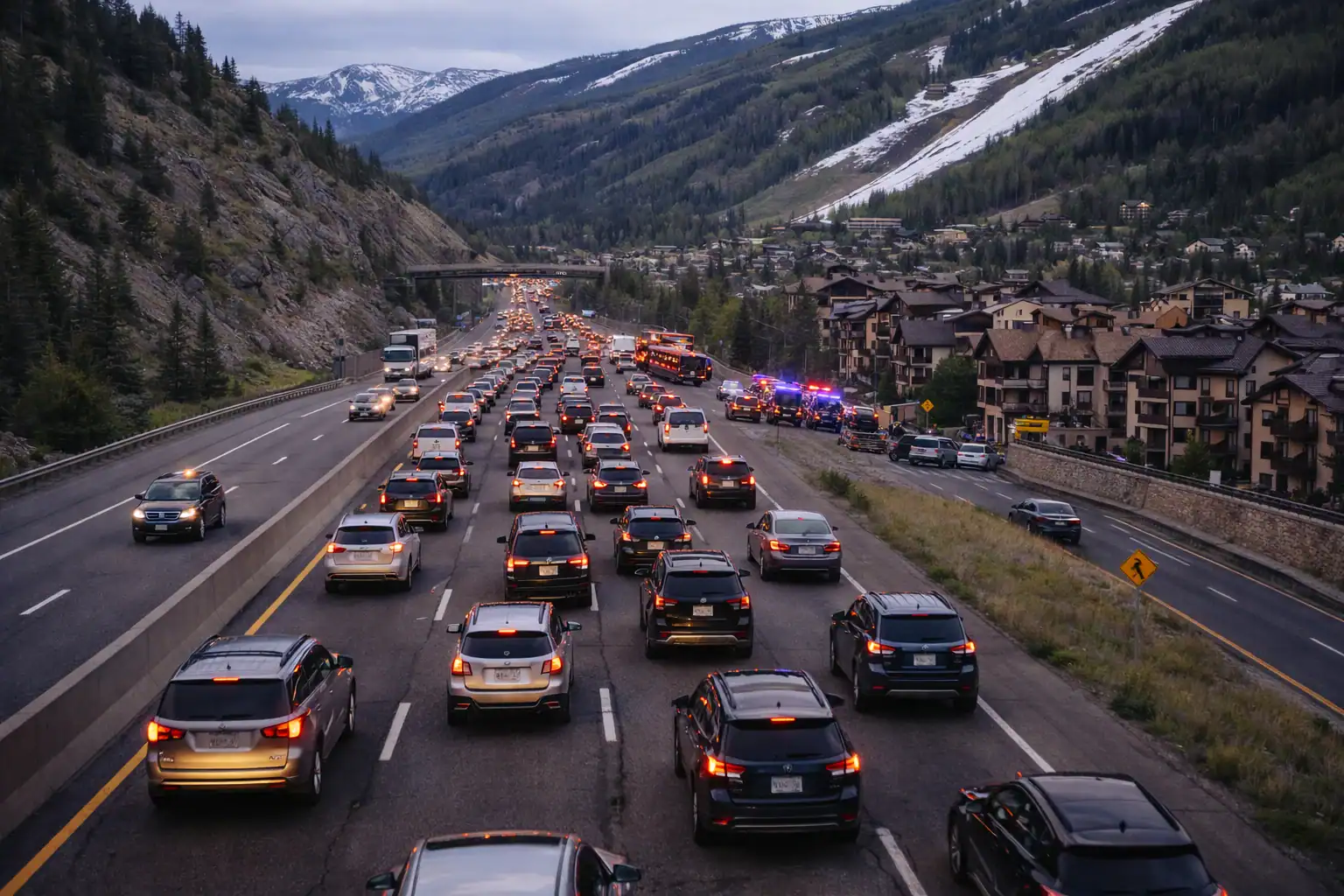
Memorial Day weekend marks the unofficial start of Colorado’s summer travel season, and the roads reflect it. I-70 westbound on the Friday before Memorial Day carries some of the highest single-day vehicle volumes of the entire year as Front Range residents head to mountain destinations. I-25 northbound toward Fort Collins and southbound toward Pueblo sees corresponding surges as family travel and holiday recreation traffic saturates both directions of the state’s primary north-south corridor. And the surface street network in Denver, Aurora, and the surrounding suburbs carries elevated DUI traffic on three consecutive nights at the peak of spring social activity.
The combination produces a predictable outcome. NHTSA data consistently shows Memorial Day weekend as one of the deadliest traffic periods of the year nationally, with drunk driving, speeding, and distracted driving all elevated above their already-concerning baseline levels. CDOT’s own holiday traffic data shows Colorado-specific patterns that reflect the state’s unique geography: mountain corridor congestion that creates rear-end crash conditions, alcohol-related crashes that concentrate in the Denver metro on Saturday and Sunday nights, and a meaningful number of serious crashes involving out-of-state drivers unfamiliar with Colorado mountain highway driving conditions.
This article examines what the data shows, where Colorado’s Memorial Day crash risk concentrates, and what legal rights victims have when a holiday weekend driver’s negligence changes everything.
What Colorado’s Memorial Day Traffic Data Actually Shows
CDOT publishes holiday traffic and crash data that allows year-over-year comparison of Memorial Day weekend crash patterns. Several consistent findings emerge from this data.
Impaired driving is the dominant contributing factor in Memorial Day weekend fatal crashes in Colorado. The three-day weekend creates multiple consecutive nights of elevated alcohol consumption in entertainment districts across the Front Range, and CDOT and law enforcement data shows that DUI arrest rates and alcohol-involved crash rates are both meaningfully higher during Memorial Day weekend than on comparable non-holiday weekends.
Speed is the second major factor, particularly on I-70 and the mountain state highway corridors. Drivers who are late departing for mountain destinations, frustrated by congestion, or simply accustomed to treating mountain highways as higher-speed roads than their design supports are overrepresented in the serious crash data for this corridor during holiday weekends.
Fatigue plays a role that is difficult to quantify precisely but is consistently identified by NHTSA as a significant factor in holiday weekend crashes. Drivers who began a long travel day early and are returning late after a full day of outdoor recreation are operating at meaningfully reduced alertness levels. The I-70 eastbound return traffic on Sunday evening and Monday represents one of the highest-fatigue driving environments in the state during Memorial Day weekend.
Out-of-state drivers unfamiliar with Colorado mountain driving conditions contribute to the mountain corridor crash statistics. Altitude effects on vehicle performance, the behavior of mountain weather that can change conditions dramatically within minutes, and the specific demands of extended downhill driving on overheated brakes are all factors that drivers from flat-state origins may not fully appreciate.
I-70: Colorado’s Memorial Day Danger Zone
The I-70 corridor between Denver and the ski resort communities is the single most significant Memorial Day traffic environment in Colorado. Vail, Breckenridge, Keystone, Arapahoe Basin, and Winter Park all see their final ski season weekends coincide with Memorial Day, creating bidirectional pressure: ski traffic outbound Friday through Saturday and return traffic Sunday through Monday.
CDOT deploys additional enforcement resources on I-70 during Memorial Day weekend, and commercial message boards on the corridor regularly display real-time crash and delay information. But enforcement and information alone dont prevent crashes when the fundamental conditions of high volume, high speed, driver fatigue, and alcohol all converge on a road with limited emergency access points and significant geographic hazards.
The most dangerous stretch of I-70 for Memorial Day weekend crashes is the corridor from the US-6 junction near Golden through the Eisenhower Tunnel, a section where speeds are high, grades are significant, and the transition from metro highway driving conditions to mountain highway demands happens over a relatively short distance. Drivers who have not recalibrated to mountain conditions before reaching this stretch are at elevated risk.
Denver Metro DUI Crashes Over Memorial Day Weekend
While mountain corridor crashes attract the most visible attention, the Denver metro’s Memorial Day weekend DUI crash pattern is responsible for a significant share of the serious injury and fatality numbers. Saturday and Sunday nights of Memorial Day weekend consistently produce elevated DUI arrest and crash data in Denver, Aurora, Lakewood, Westminster, and Thornton.
The bar and restaurant district activity that generates this traffic is concentrated in predictable areas: Larimer Square and LoDo in Denver, the Colfax corridor, South Broadway, and the suburban entertainment corridors in Aurora near I-225 and in Westminster near Federal Boulevard. The crash activity that follows concentrates on the routes connecting these districts to residential areas.
Colorado’s DUI laws under CRS 42-4-1301 establish the legal framework, and the dram shop liability provisions of CRS 12-47-801 extend potential accountability to establishments that serve visibly intoxicated patrons. Both avenues may be relevant in Memorial Day weekend DUI crash cases.
Your Legal Rights After a Memorial Day Weekend Crash in Colorado
If another driver’s negligence caused your Memorial Day weekend accident, Colorado’s at-fault system gives you the right to recover your full damages from their liability insurance. Drunk driving cases may support punitive damages under CRS 13-21-102 in addition to compensatory damages. Dram shop claims against the serving establishment, where applicable, provide an additional source of compensation and carry a one-year statute of limitations under CRS 13-80-102 that is shorter than the standard three-year window.
If the at-fault driver was uninsured or underinsured, your own UM/UIM coverage under CRS 10-4-609 applies. Holiday weekend accidents frequently involve out-of-state drivers whose coverage may be governed by their home state’s minimum requirements, which vary significantly and may be lower than Colorado’s.
Call us at 720-928-9178 if you were hurt in a Memorial Day weekend crash in Colorado. The consultation is free, confidential, and there is no fee unless we win.
Frequently Asked Questions
Is drunk driving more common over Memorial Day weekend in Colorado?
Yes. CDOT and law enforcement data consistently shows elevated DUI arrest rates and alcohol-involved crash rates during Memorial Day weekend compared to non-holiday weekends. The three consecutive nights of elevated social activity on a holiday weekend contribute to this pattern.
What should I do if I was hit by a drunk driver on I-70 over Memorial Day weekend?
Seek medical attention immediately, call 911, document the scene, obtain the police report, and contact an attorney before giving any recorded statement to the at-fault driver’s insurer. DUI accident cases involve specific evidence, including BAC results and potential dram shop claims, that require prompt attention.
Can I sue a bar that served the drunk driver who hit me?
Potentially yes, under Colorado’s dram shop law at CRS 12-47-801, if the establishment served alcohol to someone who was visibly intoxicated and that person then caused your injuries. The statute of limitations for dram shop claims is one year under CRS 13-80-102. Act quickly.
What if the driver who caused my Memorial Day weekend accident was from out of state?
Out-of-state drivers are subject to Colorado law for accidents occurring in Colorado. Their home state’s insurance minimum requirements apply to their policy, which may differ from Colorado’s minimums. An attorney can investigate coverage and identify all available sources of compensation including your own UM/UIM coverage.
How does fatigue factor into a Memorial Day weekend crash claim?
Driver fatigue is a form of impairment that can support a negligence finding when a driver knew or should have known they were too tired to drive safely. Evidence of fatigue includes the driver’s travel history, time awake before the crash, and any admissions at the scene. Fatigue is harder to prove than alcohol impairment but is a recognized basis for negligence claims.
What if I was injured in a Memorial Day weekend crash on I-70 and the other driver fled?
A hit-and-run accident on I-70 is handled through your own uninsured motorist coverage under CRS 10-4-609. CDOT traffic cameras on I-70 may have captured the fleeing vehicle. Colorado State Patrol accident investigation includes camera footage review as a standard component of hit-and-run investigation on the interstate system.
Is there a higher legal standard for drunk drivers who cause Memorial Day weekend accidents?
The legal standard for DUI negligence is the same regardless of the day. However, the availability of punitive damages under CRS 13-21-102 depends on whether the conduct constituted willful and wanton disregard for others’ safety. High-BAC driving on a crowded holiday weekend, particularly on a mountain corridor with known hazards, presents a strong factual case for meeting this standard.
Sources
Colorado DUI and DWAI Statute, CRS 42-4-1301 Colorado Dram Shop Act, CRS 12-47-801 Punitive Damages Statute, CRS 13-21-102 Dram Shop Statute of Limitations, CRS 13-80-102 General Negligence Statute of Limitations, CRS 13-80-101 Uninsured and Underinsured Motorist Coverage, CRS 10-4-609 Colorado Department of Transportation, Holiday Traffic and Crash Data: https://www.codot.gov National Highway Traffic Safety Administration, Holiday Crash Statistics: https://www.nhtsa.gov Colorado State Patrol, Memorial Day Enforcement Data: https://www.csp.state.co.us
If you were hurt in a Colorado Memorial Day weekend crash, call Samantha Flanagan at 720-928-9178. The consultation is free, confidential, and comes with no obligation. Your recovery comes first.