Christmas Trees on the Car Roof: Unsecured Load Crashes and Who Pays in Colorado
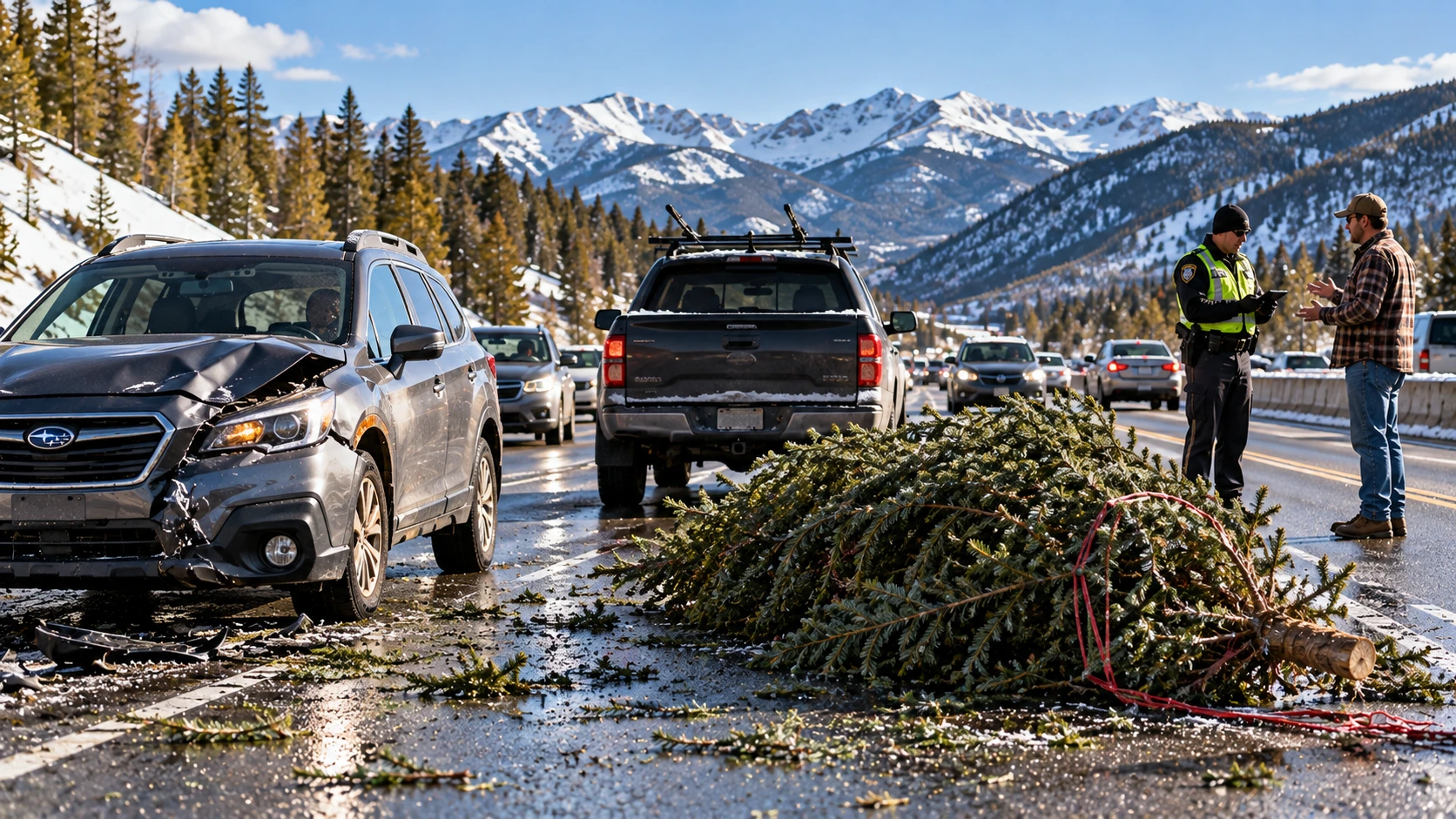
Thanksgiving weekend is when Colorado families go get their Christmas trees. Some cut their own in the national forests with a permit, others pick one at a lot, and most drive it home strapped to the roof of an SUV or tossed in the bed of a pickup. At highway speeds, a tree that seemed secure in the parking lot can shift, slide, and come off entirely. For the driver behind it, a six-foot fir in the lane at 60 miles per hour is no small hazard. When an unsecured load causes a crash, Colorado law is clear about who is responsible.
How do Christmas trees cause crashes?
Christmas trees cause crashes when they shift or fall off a vehicle and land in traffic, or when the driver carrying them loses control. A tree tied with twine instead of proper straps can work loose at highway speed, slide off the roof, and tumble into the next lane. Drivers behind it may hit the tree, swerve into other vehicles, or brake suddenly and get rear-ended. A tree that hangs over the windshield or out the back can also block the driver’s view or catch the wind and pull the vehicle sideways.
What does Colorado law say about unsecured loads?
Colorado law prohibits driving a vehicle unless its load is secured to prevent it from dropping, shifting, leaking, or escaping onto the road. Under C.R.S. 42-4-1407, drivers are responsible for making sure whatever they carry stays in or on the vehicle. That rule applies to a Christmas tree on a roof rack the same way it applies to construction debris in a dump truck. Violating it can bring a citation, and it can also serve as strong evidence of negligence if the load causes a crash.
Who pays when a tree falls off a car and causes a crash?
The driver who carried the unsecured tree is usually responsible for the harm it causes, and their auto liability insurance pays for injuries and property damage to others. Because the law places the duty to secure the load on the driver, there is rarely much debate about fault when a load comes off. The main questions tend to be practical: identifying the driver and proving that the debris came from their vehicle.
Can the tree lot that tied the tree share responsibility?
A tree lot or seller that ties trees to customers’ vehicles may share responsibility if it did the job carelessly, such as tying a large tree to a car with no roof rack using a single loop of twine. The driver still has the final duty to check that the load is secure before driving away. Whether a seller shares fault depends on what it did, what it told the customer, and whether the failure came from its tie-down or from something the driver changed later.
What if the driver who lost the tree kept going?
If the driver who lost the tree kept going, the crash is treated much like a hit and run. Write down anything you saw about the vehicle, including make, color, plate, and direction, and call police. Your own uninsured motorist coverage may help pay for your injuries when the responsible driver can’t be found, though policies often require prompt reporting and some evidence that another vehicle was involved. Dashcam footage is especially valuable in these cases. Our article on uninsured driver accidents explains how those claims work.
What if you hit a tree that was already lying in the road?
If you hit a tree that was already in the road, damage to your car is usually paid by your own collision coverage, and you may still have a claim against the driver who lost it if they can be identified. A driver who swerves to avoid road debris and hits another car can also face questions about whether they were following too closely or driving too fast to react. Our complete guide to Colorado auto insurance after an accident explains how each coverage applies.
How should you secure a Christmas tree for the drive home?
Use a roof rack whenever possible, lay the tree with the trunk facing forward, and secure it with ratchet straps or strong rope tied to the rack, not just looped through the doors. Wrap the tree in netting or an old blanket to keep branches from catching wind. Tug on it hard from several directions before you leave. Avoid highways if you can, keep your speed down, and pull over to check the straps after the first few miles. If you’re carrying the tree in a pickup bed, strap it to tie-down points so it can’t slide or blow out.
Frequently Asked Questions
Is it illegal to drive with an unsecured load in Colorado?
Yes. Colorado law requires drivers to secure their loads so nothing drops, shifts, or escapes onto the road. That includes Christmas trees, furniture, and anything else carried on a roof or in a truck bed. Violations can lead to a citation and liability for any crash the load causes.
Who pays if a Christmas tree falls off a car and hits me?
The driver who carried the tree is usually responsible, and their auto liability insurance pays for injuries and property damage. If that driver can’t be identified, your own uninsured motorist coverage may help with injuries, and your collision or comprehensive coverage may help with your car.
Can I sue the tree lot if they tied the tree badly?
Possibly. A seller that tied the tree carelessly may share responsibility for a crash, but the driver still has the duty to check the load before leaving. Fault depends on the facts, including who secured the tree and whether anything changed afterward.
What should I do if debris from another car caused my crash?
Pull over safely, call 911 if anyone is hurt, and note everything you can about the vehicle that lost the load. Photograph the debris, your vehicle, and the scene, and save any dashcam footage. Report the crash to police and your insurer promptly.
Does insurance cover hitting road debris in Colorado?
Collision coverage typically pays for damage when you hit debris lying in the road. Damage from an object that falls or flies onto your car is often treated under comprehensive coverage. Injuries may be covered by the responsible driver’s liability coverage or your own uninsured motorist coverage.
When should I call a lawyer after an unsecured load crash?
Call when you were injured, especially if the responsible driver drove away or several vehicles were involved. Early action helps preserve video and witness evidence. Flanagan Law offers free consultations at 720-928-9178.
If you were hurt by a tree or other unsecured load on a Colorado road, call Flanagan Law at 720-928-9178 for a free consultation.