Halloween Night in Denver Metro Neighborhoods: Child Pedestrian Crashes and Driver Liability
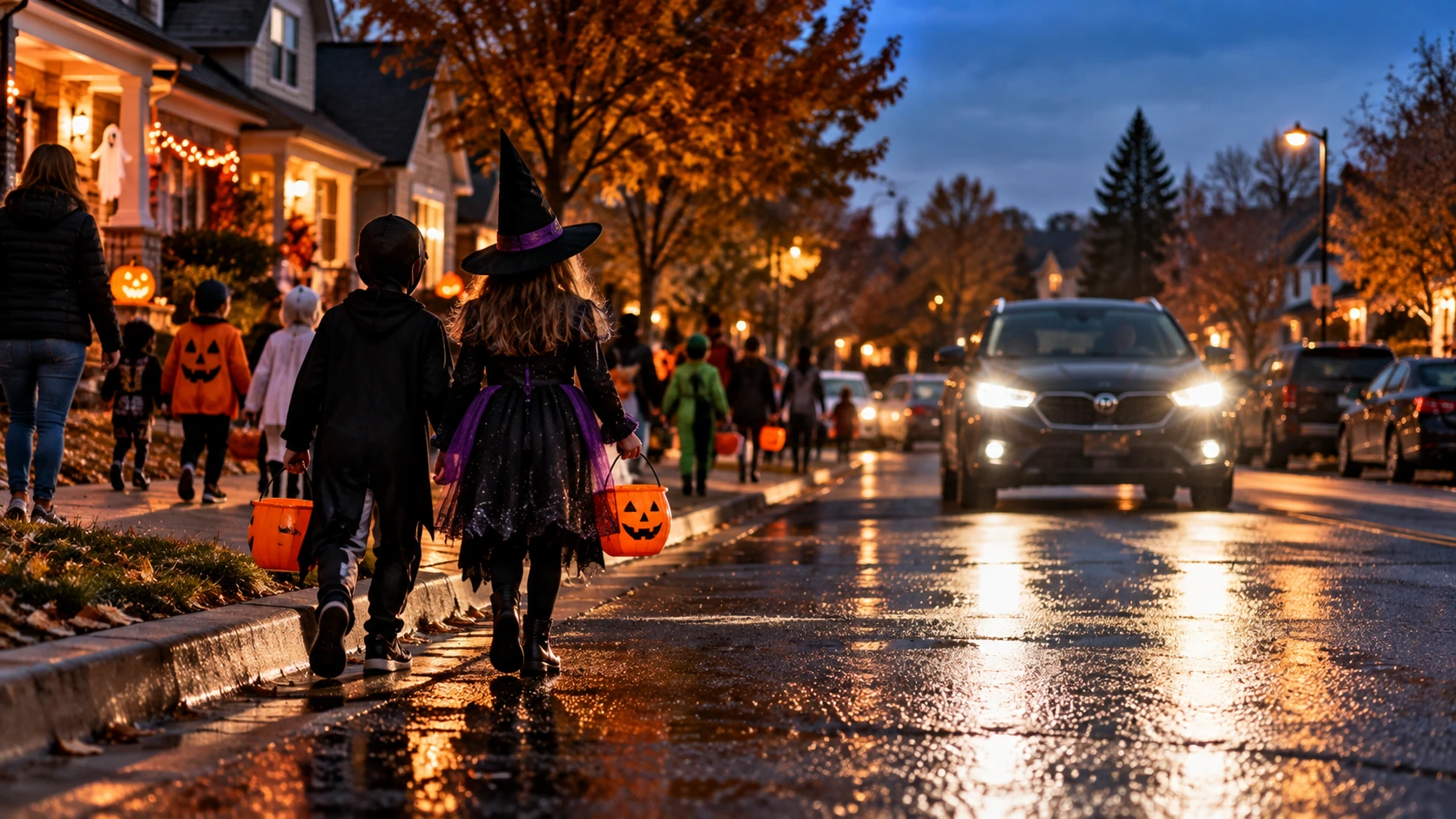
Halloween falls on a Saturday this year, which means a full evening of trick-or-treaters on Denver metro sidewalks, streets, and driveways, followed by a night of parties and drivers heading home late. Children are excited, wearing dark costumes and masks, and darting between houses and across streets in the dark. For drivers, it is one of the most demanding nights of the year. For parents, it is a night when knowing how Colorado law treats child pedestrian crashes can matter long after the candy is gone.
Why is Halloween so dangerous for child pedestrians?
Halloween is dangerous for children because it puts more kids on residential streets after dark than any other night of the year. Trick-or-treating peaks right around dusk, when light is fading and drivers’ eyes are adjusting. Costumes are often dark, masks block peripheral vision, and children cross mid-block between parked cars instead of at corners. Young children don’t judge vehicle speed or distance well, and in the excitement of the night they rarely stop to look.
What duty does a driver owe to children on Halloween?
Colorado law requires every driver to exercise due care to avoid hitting any pedestrian, and to use extra caution when a child is visible or likely to be nearby. Under C.R.S. 42-4-807, that duty applies even when the pedestrian is crossing outside a crosswalk. On Halloween night, children in the street are not a surprise. They are expected. A driver who travels at the normal posted speed through a neighborhood full of trick-or-treaters, or who looks at a phone while turning onto a residential street, is not using the care the situation demands.
Is a driver liable if a child ran into the street?
A driver can still be liable even if a child ran into the street, because the question is whether the driver could have avoided the crash by driving with appropriate care. Insurers often argue that a child darted out with no warning. That argument is weaker on Halloween, when drivers know children are moving between houses in costumes. Speed, attention, and lighting all come into play. If a driver going 15 miles per hour could have stopped and a driver going 30 could not, the faster driver’s choice is the cause.
How does Colorado treat a child’s own fault?
Colorado judges a child’s conduct by what a reasonable child of the same age, experience, and intelligence would do, not by adult standards. A five-year-old running into the street is not held to the judgment of an adult. Older children may be found partly at fault in some cases, and under Colorado’s comparative negligence rule, any share of fault reduces recovery. In practice, insurers have a much harder time blaming young children than they do blaming adults.
What other drivers create risk on Halloween night?
Impaired drivers leaving Halloween parties create risk later in the evening, and with the holiday on a Saturday, parties will run late across the metro area. Drivers backing out of driveways while children walk behind them, rideshare and delivery drivers rushing between stops in unfamiliar neighborhoods, and teens driving with friends to parties all add to the danger. Each of those drivers owes the same duty of care to pedestrians.
Who pays a child’s medical bills after a pedestrian crash?
The at-fault driver’s liability insurance is the main source of payment for a child’s injuries, including medical bills, future care, and pain and suffering. Your family’s own auto policy may also help. Medical payments coverage often covers household members struck as pedestrians, and uninsured and underinsured motorist coverage can step in when the driver had no insurance, too little insurance, or fled the scene. Our article on when your child is injured in another person’s vehicle explains how claims for children differ from adult claims.
What should parents do right after a child is struck?
Call 911, keep the child still if there is any chance of head, neck, or back injury, and stay with them until help arrives. Get the driver’s name, insurance, and license plate, and the names and phone numbers of any witnesses. Photograph the scene, the lighting, and the child’s costume. Have your child examined even if they seem fine, because head injuries and internal injuries in children are not always obvious right away. Do not give a recorded statement to the driver’s insurance company before speaking with a lawyer.
How can drivers and families stay safer this Halloween?
Drivers should slow to well below the posted limit in residential neighborhoods from late afternoon through the evening, put phones away, enter and exit driveways slowly, and watch for children between parked cars. Families can add reflective tape or glow sticks to costumes, choose face paint instead of masks, carry flashlights, and cross at corners together. Our article on Colorado school zone law and what happens when a child is struck covers related protections for children near roads.
Frequently Asked Questions
Is a driver always at fault for hitting a child on Halloween?
Not always, but drivers bear a heavy duty of care on Halloween night. Colorado law requires drivers to exercise due care to avoid pedestrians and to take extra caution around children. A driver who was speeding, distracted, or not watching for trick-or-treaters will usually be found at fault, even if the child entered the street unexpectedly.
Can a child be found at fault for a pedestrian crash in Colorado?
A child’s conduct is judged against what a reasonable child of the same age and experience would do. Very young children are rarely found at fault. Older children may share some responsibility in certain cases, which can reduce recovery under Colorado’s comparative negligence rule.
Does my auto insurance cover my child if they’re hit while walking?
Often, yes. Medical payments coverage on your family’s auto policy typically covers household members injured as pedestrians by a vehicle, and uninsured and underinsured motorist coverage can apply if the driver had no insurance, too little insurance, or fled. Check your declarations page to see which coverages you have.
What if the driver who hit my child left the scene?
Call 911 immediately and give police every detail you can, including the vehicle description and direction of travel. Your family’s uninsured motorist coverage may pay for your child’s injuries in a hit and run. Look for doorbell and security cameras on nearby homes, since footage is often overwritten within days.
What if a drunk driver hit my child after a Halloween party?
The impaired driver is responsible for the crash, and Colorado’s dram shop and social host laws may also allow a claim against whoever served alcohol in limited situations. Our article on Colorado dram shop and social host liability explains those claims. Call a lawyer quickly so evidence is preserved.
How soon should we call a lawyer after our child is hurt?
Call as soon as your child is receiving care. Claims involving children often include future medical needs that take time to understand, and early evidence like video footage disappears fast. Flanagan Law offers free consultations at 720-928-9178.
If your child was hurt by a driver on Halloween night or any time in a Colorado neighborhood, call Flanagan Law at 720-928-9178 for a free consultation.