Medical Massage After a Colorado Car Accident: What Soft Tissue Care Can Do for Your Recovery
Two weeks after the crash, something strange happens to a lot of people. The adrenaline is long gone. The car is in the shop or already totaled out. Everyone has stopped asking how you are doing. And you are still waking up at three in the morning because your neck will not let you sleep on that side anymore. In our practice, we see this moment over and over, and it is usually the moment people start wondering whether the pain is just something they live with now.
It is not. Soft tissue injuries from a collision are real injuries, they respond to real treatment, and the sooner you get the right hands on them the better the outcome tends to be. Your recovery comes first, and this is one of the paths that recovery often takes.
What Actually Happens to Soft Tissue in a Collision
A crash puts force through your body in a fraction of a second, faster than any muscle can brace against. Muscles, tendons, ligaments, and fascia absorb that force by stretching past what they were built for. The result is microtearing, inflammation, and a nervous system that responds by locking things down to protect the area.
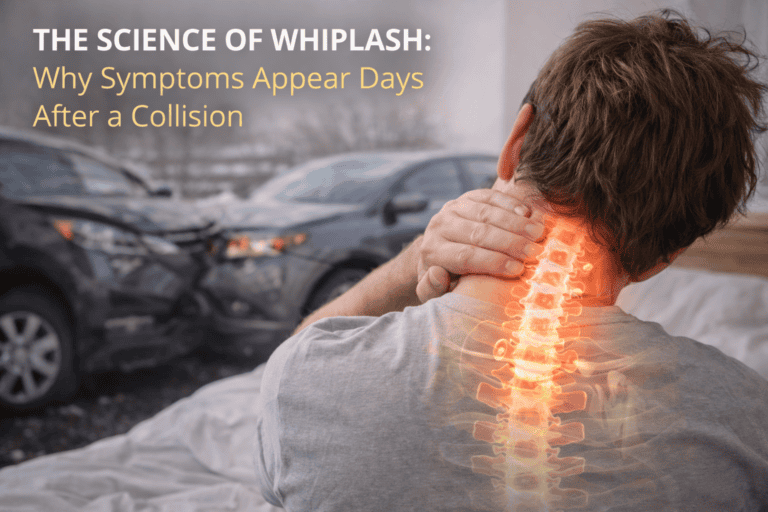
That protective guarding is why the pain often gets worse before it gets better. Your body tightens around the injury. Tight muscle restricts circulation, restricted circulation slows healing, and slow healing means the tightness stays. It is a loop, and it does not always break on its own. This is also why whiplash and disc irritation frequently show up days after a wreck rather than at the scene, something we have written about in more depth in our piece on the science of whiplash.
Where Medical Massage Fits
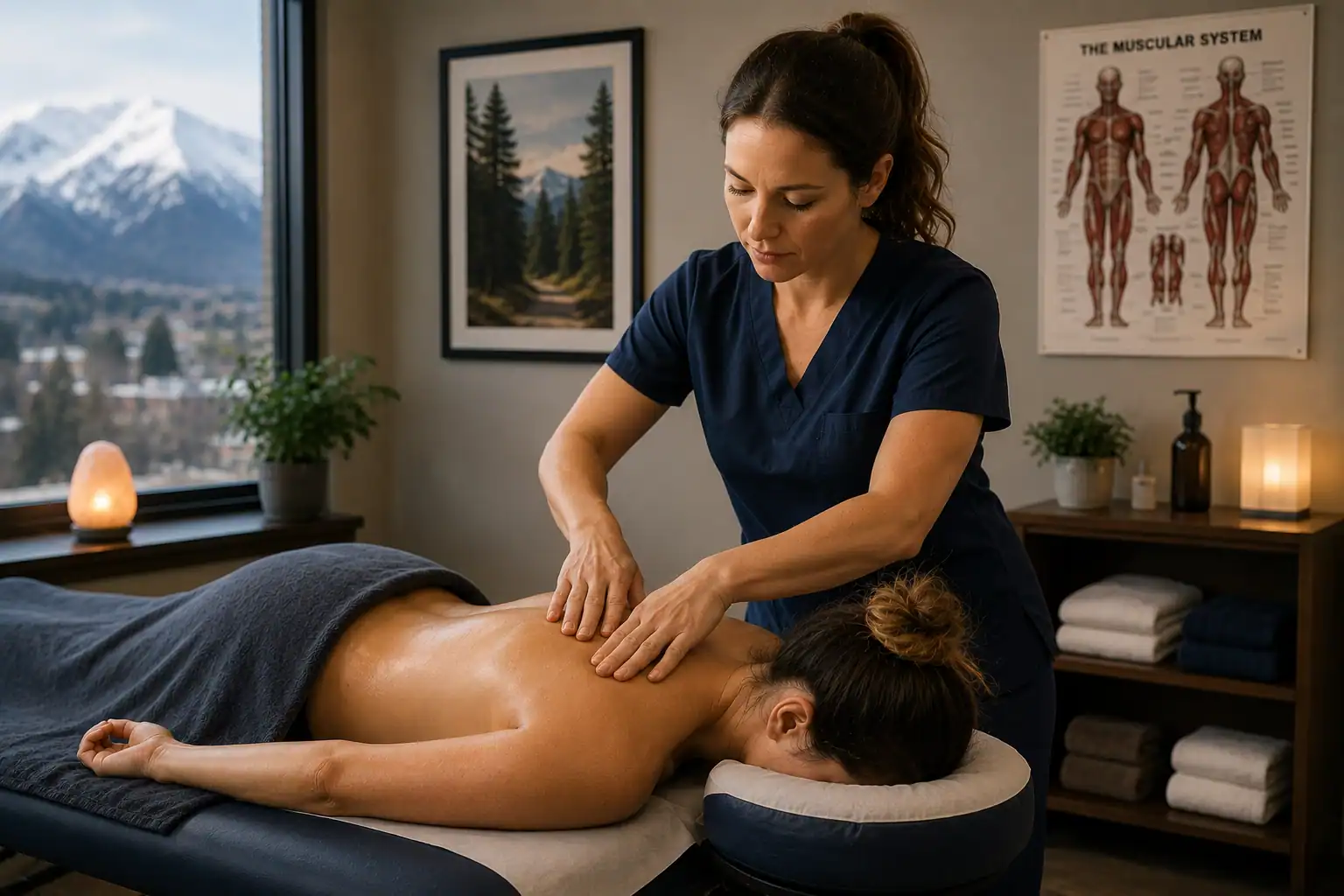
Medical massage is not the hour of quiet music you book for your birthday. It is targeted clinical work aimed at a specific injury, usually as part of a treatment plan alongside your physician, chiropractor, or physical therapist. A certified medical massage therapist works on the tissue that is actually restricted, with the goal of reducing pain, calming inflammation, restoring circulation, and giving you back the range of motion the crash took away.
For crash injuries specifically, that often means addressing the neck and shoulders after a rear-end impact, the lower back after a side impact, and the headaches that trail behind a whiplash injury for weeks. It is hands-on, it is documented, and it is part of a legitimate recovery.
We want to be careful here. We are not your doctors, and we are not going to tell you what treatment your body needs. That conversation belongs to you and a licensed provider who has examined you. What we can tell you is what we watch happen: the clients who get consistent, appropriate care recover better than the ones who wait it out.
A Broomfield Practice We Trust
Healing Solutions Inc. in Broomfield is one of the practices we point people toward, and one of our Power Partners. Founder Suzette Skidmore is a Licensed Massage Therapist and Certified Medical Massage Therapist who has been at this for more than twenty years, and the way she came to the work says a lot about how she does it. After brain surgery in 2003, she went looking for a way to heal without leaning entirely on pain medication. What she found for herself turned into a practice, and that practice is now a seven-person team.
Their medical massage work is built specifically for auto injury recovery: whiplash, neck and back pain, headaches, muscle strain, and the stiffness that settles in later. They coordinate with your other providers and with insurance, which matters more than it sounds like it should, because fragmented care is one of the quiet ways recovery goes sideways. They also offer craniosacral therapy, lymphatic massage, cupping, and assisted stretching. You can find them at healingsolutionsinc.com.
We mention them by name because we know them, not because anyone paid for the mention. Nobody buys a place on our Power Partners page. Where you get your care is your decision and always will be.
Why Your Treatment Record Matters
Here is the part that connects your recovery to the legal side, and it is worth understanding early rather than late.
The medical record your providers build is the backbone of any injury claim in Colorado. It ties the injury to the collision, shows how serious it is, and traces the road back. Consistent treatment tells a clear and honest story. Long unexplained gaps give an insurance adjuster room to argue you were never really hurt, or that whatever hurt you happened somewhere else. That is not fair, but it is how the claims process works, and knowing it lets you protect yourself.
So go to your appointments. Tell your therapist about every symptom, even the ones that feel too small to mention. Follow through on the plan your provider recommends. None of that is about building a case. Its about healing, and the record simply reflects the truth of what you went through. We go deeper on this in our article on how treatment decisions shape a Colorado claim.
Who Pays for It
This is the question that stops people from getting care, so let’s take it head on. Colorado is a fault-based state, which means the driver who caused the crash is generally responsible, through their insurance, for the harm they caused. But that payment usually comes at the end of a claim, not while you are in treatment.
In the meantime, a few things commonly cover care. Medical Payments coverage, or MedPay, is a no-fault benefit on many Colorado auto policies that pays for treatment regardless of who caused the crash. Your health insurance may cover it. Some providers work with accident patients on arrangements that let treatment continue while a claim is pending. Which of these applies to you depends on your policy and your situation, and it is exactly the kind of thing worth asking about before you decide you cannot afford to heal.
If you are hurt and unsure how to pay for the care you need, call us at 720-928-9178. There is no obligation, no pressure, and no fee unless we win your case. We can walk through what coverage you actually have.
The Colorado Rules Worth Knowing
You generally have three years from the date of a motor vehicle accident to bring an injury claim in Colorado under CRS 13-80-101. That is longer than the general negligence deadline and it still passes faster than anyone expects once treatment and ordinary life fill up the calendar.
Colorado also follows modified comparative negligence under CRS 13-21-111. If you are found partly at fault, your recovery is reduced by your share, and if your share reaches fifty percent or more you may recover nothing at all. This is one more reason an accurate, well-documented medical story matters so much.
As a female-owned boutique firm in Commerce City, we handle vehicle accident cases across the Denver metro and the Front Range, and we coordinate directly with our clients’ providers so the health side and the legal side move together instead of against each other.
Frequently Asked Questions
Does massage therapy help after a car accident?
For many soft tissue injuries, yes. Medical massage targets the muscle, tendon, and fascia damage common after a collision, working to reduce pain and inflammation, restore circulation, and recover lost range of motion. It is most effective as part of a treatment plan coordinated with your physician, chiropractor, or physical therapist rather than as a standalone fix.
What is the difference between medical massage and regular massage?
Medical massage is clinical treatment aimed at a diagnosed injury, performed by a certified therapist and documented as part of your care. Relaxation massage is for general wellness. After a crash, the distinction matters both for your recovery and for your medical record, since medical massage produces treatment documentation tied to your specific injury.
How soon after a crash can I start massage therapy?
Get evaluated by a licensed provider first, ideally within a day or two of the collision. They can rule out fractures, disc injury, or anything requiring imaging before hands-on soft tissue work begins. Once you have been cleared, many providers recommend starting soft tissue treatment early, because the sooner you break the pain and guarding cycle the better.
Will my insurance pay for massage therapy after an accident?
It depends on your coverage. Medical Payments coverage, or MedPay, on your Colorado auto policy pays for treatment regardless of fault, and many health insurance plans cover prescribed medical massage. The at-fault driver’s insurance typically reimburses at the end of a claim rather than during treatment. Check your specific policy or ask us and we will help you read it.
Can getting massage therapy hurt my injury claim?
No. Consistent, documented treatment from a licensed provider generally strengthens a claim, because it ties your injury to the crash and shows its severity over time. What weakens a claim is untreated injuries or long gaps in care that let an insurer argue you were not seriously hurt. Follow your provider’s plan and keep your appointments.
Why does a law firm recommend medical providers?
Because recovery and legal claims are connected, and people ask us constantly who they should see. We keep relationships with providers who take crash injuries seriously and communicate well with the rest of a patient’s care team. These are not paid placements, and you always choose your own providers.
My car barely had a scratch. Can I really be injured?
Yes. The force that injures a human body is not always reflected in visible vehicle damage, and low-speed collisions regularly produce real whiplash and spinal injuries. Modern bumpers are designed to absorb impact and spring back, which can transfer force to occupants. What matters is how you feel and what a provider finds, not the estimate on your bumper.
Sources
- Colorado Revised Statutes 13-80-101, limitation of actions. Colorado General Assembly, leg.colorado.gov
- Colorado Revised Statutes 13-21-111, comparative negligence. Colorado General Assembly
- Colorado Division of Insurance, automobile insurance coverage information. Colorado Department of Regulatory Agencies, doi.colorado.gov
- National Highway Traffic Safety Administration, crash injury research, nhtsa.gov
- Healing Solutions Inc., Broomfield, Colorado, healingsolutionsinc.com
Take Care of Yourself First
If you are still hurting weeks after a collision, that is your body telling you something, not a character flaw and not something to push through quietly. Get evaluated. Get treated. Let the people who do this work help you heal.
And when you are ready to understand what the legal side looks like, we are here. The call costs nothing and commits you to nothing. Call us at 720-928-9178. There is no obligation, no pressure, and no fee unless we win your case.