Parking Lot Accidents in Aurora or Thornton: Who Pays When There Are No Traffic Signals?
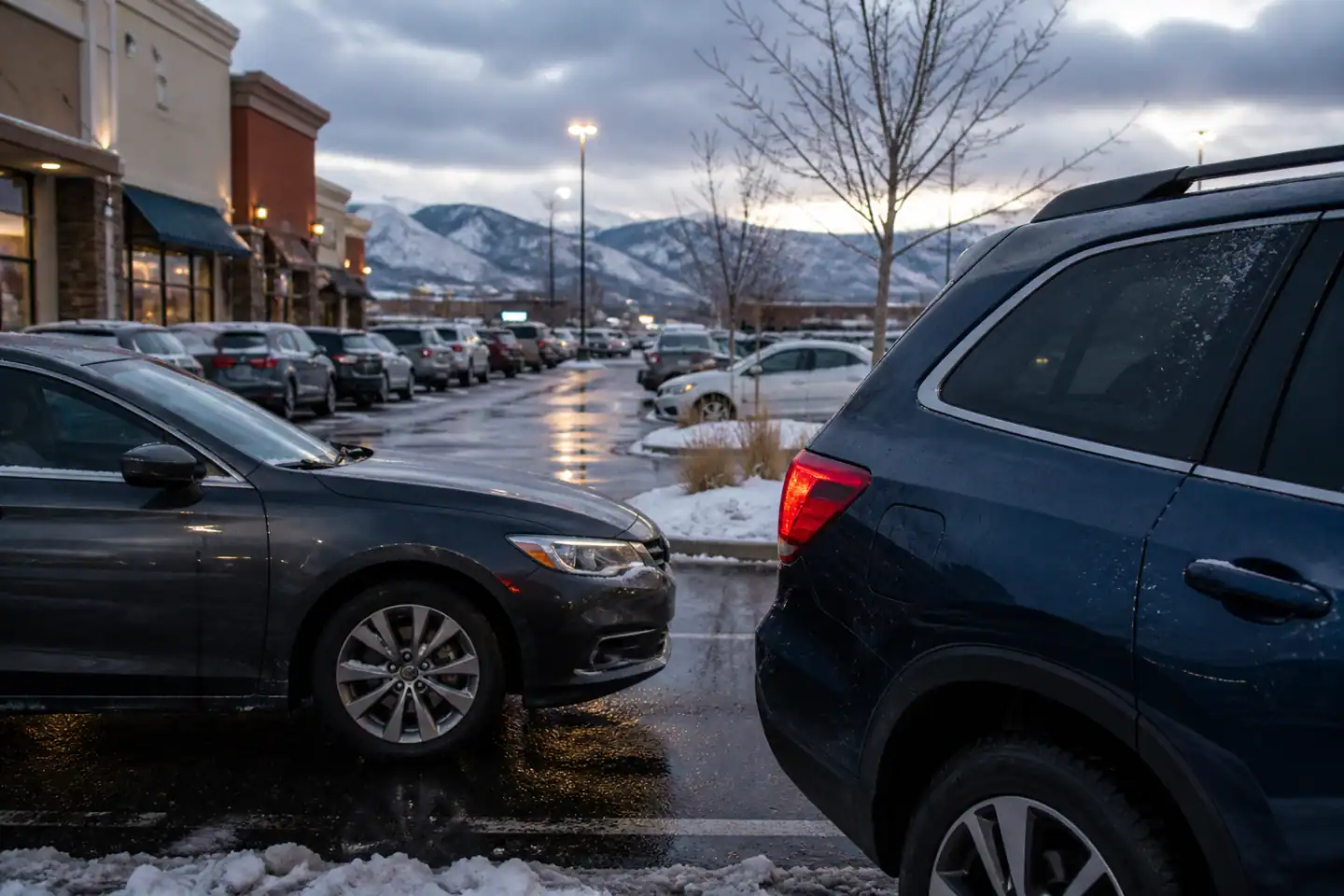
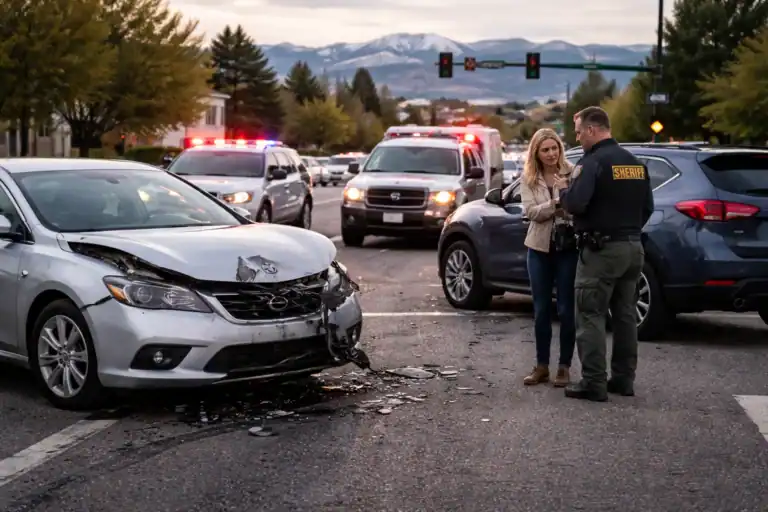
Parking lot accidents are the crashes nobody takes seriously until they have one. There are no traffic signals to settle the question of who had the right of way. There is rarely a police officer who comes to the scene. The other driver often acts like the whole thing is a misunderstanding that can be handled without involving insurance. And then a few days later, your neck starts hurting, your shoulder will not move the way it used to, and the friendly driver from the parking lot is suddenly nowhere to be found.
In our practice we see these cases every week, especially in Aurora and Thornton, where the major shopping centers and big-box retail corridors generate a constant volume of low-speed crashes that turn into real injuries. The cars look fine. The bodies do not. Insurance companies know this and use it against claimants who do not have anyone advocating for them. This article explains how parking lot accidents work under Colorado law, why these claims are harder than they look, and what you should do if you have been hit in a parking lot in the Denver metro.
If you were just hit in an Aurora or Thornton parking lot, call us at 720-928-9178. There is no charge for the conversation, no obligation, and no fee unless we win your case.
Why Parking Lot Accidents Are Different From Road Accidents
A parking lot is private property. The traffic laws that govern public roadways still inform how fault is assigned, but parking lots operate under a different practical framework. There are usually no painted lanes that legally separate one driver from another. There are no traffic signals. The yield lines, when they exist, are often faded and inconsistent. And the layout of the lot itself, designed for parking volume rather than safe traffic flow, creates conflict points that no other type of crash setting produces at the same density.
The result is that fault in parking lot accidents is decided primarily through general negligence principles rather than through traffic statutes. Who was paying attention. Who had the better view of the conflict. Who was traveling through a thoroughfare versus pulling out of a parking space. Who was reversing without checking. These questions look simple from a distance and become complicated quickly when an insurance carrier is trying to assign fifty-one percent of the fault to you so they can pay nothing under Colorado’s modified comparative negligence rule.
The other practical reality is that police often will not respond to a parking lot accident unless someone is injured. That means no police report, no neutral witness account at the scene, and a much heavier reliance on whatever evidence the parties themselves preserve. Photographs. Witness statements. Surveillance footage from the lot, if it exists and if you act fast enough to request it before it is overwritten on the standard 24-to-72-hour cycle most retail security systems use.
The Aurora Lots Where We See These Crashes Most
Aurora is one of the highest-volume retail markets on the Front Range, and the parking lots that handle that volume produce a steady stream of crashes. The Town Center at Aurora corridor, the Southlands shopping district off E-470, the Stanley Marketplace parking layout, and the dense retail along East Mississippi Avenue near Havana Street all see frequent low-speed collisions involving everything from distracted reversing to thoroughfare-to-cross-aisle conflicts.
Aurora’s grocery and big-box parking lots, particularly along Iliff Avenue, Alameda Parkway, and Mississippi Avenue, see a disproportionate share of pedestrian-involved parking lot incidents because the lots are dense, the entrances are busy, and drivers approaching the storefront are often looking at the building rather than at people walking between cars. We have represented clients hit in these lots while loading groceries, while walking back to their car after pickup, and while crossing what looked like a clear pedestrian path.
The Thornton Lots Where We See These Crashes Most
Thornton’s retail corridor along 104th Avenue, particularly between I-25 and Washington Street, generates many of the parking lot crashes we handle in the city. The big-box clusters near 120th and the Thornton Town Center area both see consistent volume, and the access points where drivers leave the parking lot to merge back onto 104th or 120th are particularly hazardous because the speed transition from parking-lot pace to arterial-road pace creates collision conditions that drivers are not prepared for.
The Larkridge shopping district off I-25 near 160th, while technically straddling Thornton and unincorporated Adams County, draws Thornton-area shoppers and produces crashes that involve the mix of high-volume retail traffic and confusing internal lot circulation that defines modern Colorado shopping center design.
How Fault Is Decided in a Parking Lot Accident
When a parking lot crash occurs, insurance carriers look at the conflict geometry first. The general framework, which Colorado adjusters and courts apply consistently, is this.
A driver in a thoroughfare lane (the main travel lane of the parking lot) generally has the right of way over a driver pulling out of a parking space or crossing from one aisle to another. A driver backing out of a parking space has the highest duty to look and yield, because they have the most limited view and are entering a space others legitimately occupy.
Two drivers backing out of opposing spaces at the same time generally share fault. This is one of the most contested fact patterns we see, and the allocation almost always depends on which driver started reversing first and which driver had the better opportunity to stop.
A driver hitting a parked, unattended vehicle is almost always at fault. This is the classic hit-and-run parked car scenario, and Colorado law treats leaving the scene of any accident, including parking lot accidents, as a serious matter under CRS 42-4-1601 et seq.
Pedestrians struck in parking lots are almost always not at fault. Parking lots are foreseeable pedestrian environments, and drivers owe a heightened duty of care. We have handled cases where the carrier tried to argue the pedestrian should have been “more aware,” and these arguments rarely hold up under Colorado law.
What Insurance Carriers Do in Parking Lot Cases
Carriers know parking lot crashes are usually low-speed. They know the property damage is often minor. They use both facts to argue that any injury claim is exaggerated. The phrases we hear in claim notes and adjuster conversations are predictable.
“This was a low-impact collision.”
“The vehicle damage is inconsistent with the injuries claimed.”
“The claimant was able to drive away from the scene.”
“Why did the claimant wait three days to seek medical treatment?”
Each of these arguments sounds reasonable in isolation. None of them are good faith arguments under Colorado law or under the medical literature on whiplash, soft tissue injury, and delayed-onset trauma. The science is clear that low-speed collisions can and do cause real, lasting injury, and we have written extensively about the science of why whiplash symptoms appear days after a collision.
The challenge is that an unrepresented claimant often cannot rebut these arguments effectively. The carrier knows this, which is why they push hard on low-property-damage cases against unrepresented people. Representation changes the dynamic immediately because the carrier knows we will document the claim properly, retain medical expert opinions where needed, and litigate if litigation is what it takes.
What to Do Immediately After a Parking Lot Accident
The minutes after a parking lot accident are when the strongest evidence is available. Use them.
Take photographs. The vehicles, the damage, the position of the cars, the surrounding lot, any signs or yield lines, the lighting, the weather. Wide shots and close-ups. Photograph the other driver’s license plate, license, and insurance card. Photograph any visible injuries.
Get witness contact information. People in parking lots see crashes happen at a higher rate than people on roads, because the speeds are slower and the visibility is better. Witnesses often leave the scene within minutes. Get their names and phone numbers before they go.
Call the police. Even if officers will not come to a parking lot scene, the call itself creates a record. If anyone is injured, an officer will respond and a report will be generated.
Identify the property owner or manager. Surveillance footage exists in many Colorado parking lots. The retention windows are short, often 24 to 72 hours. A request to preserve footage made through the right channel within that window can save the case. We routinely send preservation letters within hours of taking on a parking lot case.
Seek medical attention. Even if you feel fine. Adrenaline masks soft tissue injury, and the medical record created in the first 24 hours is the foundation of any future claim. A gap between the accident and the first medical visit is one of the most common arguments insurance carriers use to discount injury claims. Do not give them that argument.
Do not give a recorded statement to the other driver’s insurance company. Their adjuster will call, sometimes within hours, and ask you to describe what happened on a recorded line. You are not obligated to provide one. We address this in detail in our complete guide to Colorado auto insurance after an accident.
When the Other Driver Drives Away
Hit-and-run in parking lots is far more common than people realize. Drivers ding parked cars and leave. Drivers reverse into another driver and then drive off when they realize there is damage. Drivers convince themselves the contact was so minor that “no real damage was done” and leave the scene without exchanging information.
Under Colorado law, leaving the scene of a parking lot accident with damage is still a criminal offense under CRS 42-4-1602. It is also a civil matter that triggers your own uninsured motorist coverage if the driver cannot be identified.
If you return to find your car has been hit and the driver is gone, document the scene thoroughly, ask the property manager about surveillance footage, file a police report, and notify your own insurance carrier under your collision and UM coverages. If the driver is later identified, your carrier may pursue subrogation against them. If they are never identified, your UM coverage steps in. We walk through this in our resource on hit-and-run rights under Colorado law.
What Your Parking Lot Accident Claim Is Worth
The value of a parking lot injury claim depends on the severity and permanence of the injury, the quality of the medical documentation, the strength of the liability picture, and the carrier you are dealing with. The same neck injury can settle for very different amounts depending on these factors.
Parking lot cases are usually undervalued by carriers in the early stages because the property damage is minor and the carrier assumes the claimant cannot rebut the low-impact argument. Cases where the medical documentation is strong, the treating physician supports the injury connection clearly, and the claim is professionally presented routinely settle for substantially more than the early offers suggested. We discuss the broader framework for valuing Colorado vehicle accident claims in our Colorado car accident settlement guide.
Frequently Asked Questions
Do I need to call the police for a parking lot accident in Aurora or Thornton?
You should call. Even if officers do not respond to the scene, the call creates a record. If anyone is injured, officers will typically respond. If only property damage is involved, you may be directed to file a counter report at the local police station.
What if the parking lot has no signs or markings showing right of way?
Most parking lots do not. Colorado courts apply general negligence principles in these cases, looking at who had the better opportunity to avoid the collision, who was traveling through a thoroughfare versus crossing it, and who had the heightened duty of care given the layout.
Can I file a claim if my car was parked and the other driver hit it?
Yes. A driver hitting an unattended vehicle is almost always at fault. If the driver left the scene without identifying themselves, your own uninsured motorist or collision coverage steps in, and your carrier may pursue subrogation if the driver is later identified.
How long do I have to file a parking lot accident claim in Colorado?
Three years from the date of the accident under CRS 13-80-101 for personal injury claims arising from a motor vehicle. The deadline applies regardless of whether the accident occurred on a public road or in a private parking lot.
What if the other driver is uninsured?
Your uninsured motorist coverage applies. UM is your own first-party coverage and pays you when the at-fault driver has no insurance. We strongly recommend every Colorado driver carry meaningful UM coverage.
Can I get surveillance footage of the parking lot accident?
Sometimes. Most retail and shopping center surveillance systems retain footage for 24 to 72 hours before automatic overwriting. A preservation request made through the right channel within that window can secure the footage. Acting quickly is essential.
Why is my body sore after a low-speed parking lot crash?
Low-speed collisions can and do cause real soft tissue injury, whiplash, disc injuries, and joint trauma. The medical literature on this is clear. The vehicle damage is not a reliable proxy for the bodily injury, particularly because modern vehicles are designed to absorb low-speed impacts without visible damage while still transmitting force to the occupants.
Should I let the other driver “handle it without insurance”?
No. Verbal agreements to “just take care of it” almost always fall apart once the cost of repair is known. By the time you realize the other driver is not paying, evidence has been lost and the claim is harder to make. Always exchange insurance information and document the scene.
Sources
Colorado Revised Statutes 13-21-111: Comparative Negligence, leg.colorado.gov
Colorado Revised Statutes 13-80-101: Three-Year Limitation for Motor Vehicle Tort Actions, leg.colorado.gov
Colorado Revised Statutes 42-4-1601 et seq.: Accidents and Accident Reports, leg.colorado.gov
Colorado Revised Statutes 42-4-1602: Accidents Involving Unattended Vehicles, leg.colorado.gov
Colorado Revised Statutes 10-4-609: Uninsured Motorist Coverage, leg.colorado.gov
Colorado Department of Transportation, Crash Data and Reports, codot.gov
If you were hit in a parking lot in Aurora, Thornton, or anywhere in the Denver metro, please call us before you talk to the other driver’s insurance company. The conversation is free, there is no obligation, and we will tell you honestly what we think of your situation. Reach Samantha Flanagan and the Flanagan Law team at 720-928-9178. We are a Colorado boutique firm. We answer our own phones. And we do not get paid unless we win your case.