Spring Cycling Safety in Colorado: The Legal Rights Every Denver-Area Cyclist Should Know
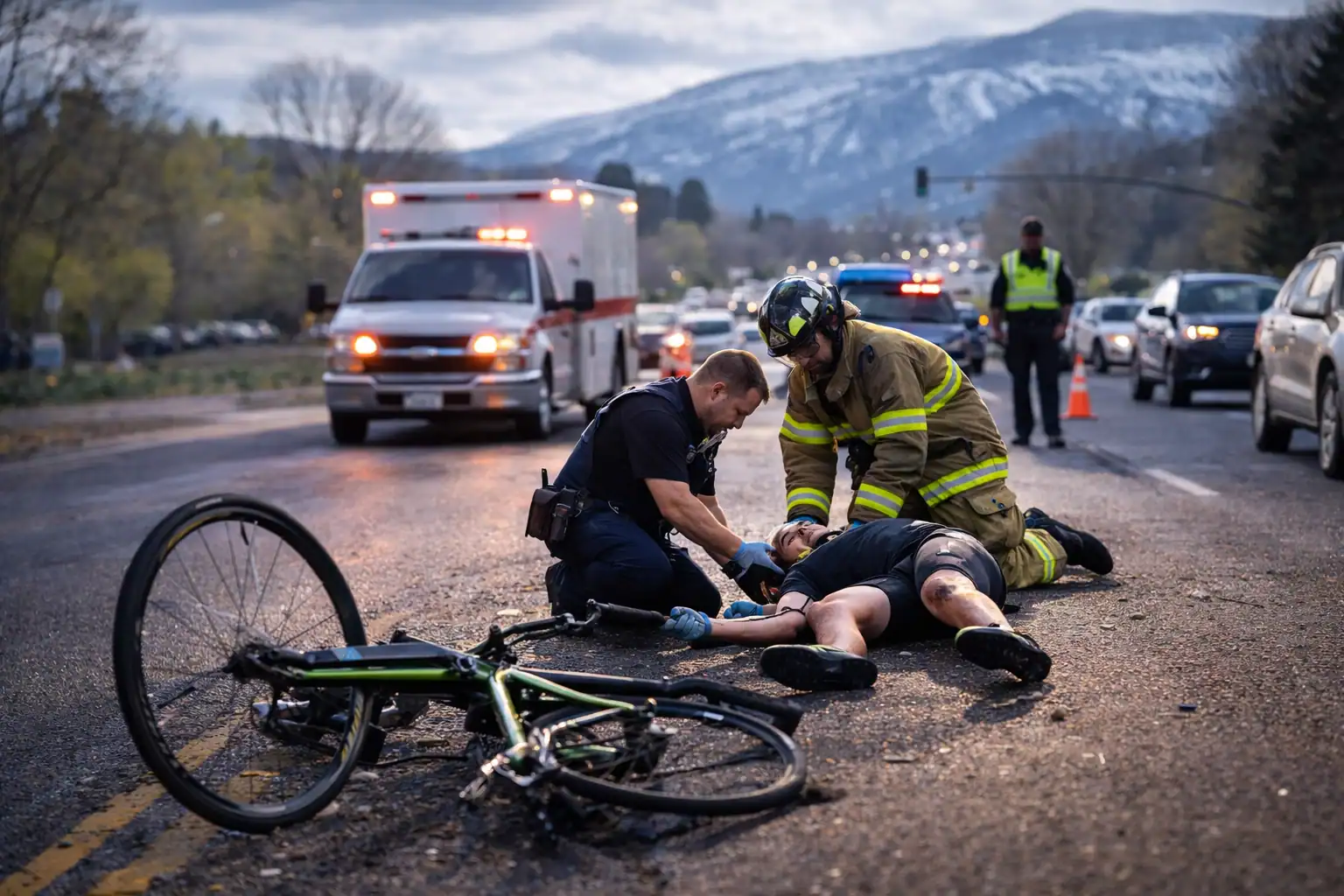
Every April, tens of thousands of cyclists return to the roads and trails of the Denver metro after a winter indoors. The Front Range cycling culture is genuine and deep — the region has world-class infrastructure in places, a committed advocacy community, and a population that treats cycling as both transportation and recreation. But spring cycling also coincides with drivers who havent shared the road with cyclists in months, increased distraction, and a Distracted Driving Awareness Month that exists precisely because April is when the problem peaks.
If you ride in the Denver area, knowing your legal rights is as important as knowing the roads. This article explains what Colorado law requires of drivers around cyclists, what you can do if you are hurt, and why spring is the moment to understand this before you need it.
What Colorado Law Requires of Drivers Around Cyclists
Colorado law treats bicycles as vehicles on the road. Under CRS 42-4-1412, cyclists operating on a roadway have the same rights and are subject to the same duties as motor vehicle drivers, with specific exceptions for the physical nature of cycling.
Drivers in Colorado are required to give cyclists a minimum of three feet of clearance when passing under CRS 42-4-1003. This is not a suggestion. It is a statutory requirement, and a driver who passes a cyclist with less than three feet of clearance and causes an accident has likely violated this standard in a way that supports a finding of negligence per se.
Drivers must yield to cyclists in bike lanes and must not drive or park in a designated bike lane under CRS 42-4-1007. A driver who enters a bike lane and strikes a cyclist has violated this statute directly.
At intersections, cyclists in a bike lane have the right of way when proceeding straight through an intersection, and drivers making right turns must yield to them under CRS 42-4-1007(3). Right-hook collisions, where a driver turns right across a cyclist’s path, are among the most common and serious intersection accident types involving cyclists.
Where Denver-Area Cyclists Face the Highest Spring Risk
The Denver metro has significant cycling infrastructure gaps, and spring is when those gaps claim the most victims. In our practice, we see certain corridors and intersection types appearing repeatedly in serious cycling accident cases.
Colfax Avenue through Denver and Aurora carries high traffic volume, numerous intersections, and a mix of cyclists, pedestrians, and commercial traffic that creates constant conflict. The door zone along parked cars is a persistent hazard on sections without protected bike lanes.
The Broadway corridor through Denver and into Englewood mixes high-speed through traffic with cyclists navigating an incomplete and inconsistent bike lane network. Gaps in protection at major intersections force cyclists into unprotected positions at exactly the points where conflict with turning vehicles is highest.
Wadsworth Boulevard through Lakewood and Arvada presents similar challenges on the west side. Kipling Street, Quebec Street, and Peoria Street in Aurora and Commerce City all carry significant cycling activity on roads that were designed without meaningful cyclist accommodation.
The Clear Creek Trail, Cherry Creek Trail, and South Platte Trail are relatively protected environments but their at-grade road crossings remain high-risk, particularly where trail crossings are unmarked or poorly signed.
What Happens When a Driver Hits a Cyclist in Colorado
If a driver’s negligence causes your cycling accident, you have the same personal injury rights as any other accident victim in Colorado. You can recover medical expenses, lost wages, pain and suffering, and property damage from the at-fault driver’s liability insurance.
The at-fault driver’s minimum liability coverage under CRS 42-7-103 is $25,000 per person. Serious cycling accidents, which frequently involve orthopedic injuries, head trauma, and extended rehabilitation, routinely produce damages that exceed minimum policy limits. If the driver carries inadequate coverage, your own uninsured or underinsured motorist coverage under CRS 10-4-609 may apply even when you were on a bicycle and not in a vehicle, depending on your policy terms.
Colorado’s comparative negligence statute at CRS 13-21-111 allows a defendant to argue that the cyclist contributed to their own injury. Helmet use, light equipment on nighttime rides, compliance with traffic signals, and lane positioning are all factors that may be raised. Document your equipment and conduct carefully after any accident.
Call us at 720-928-9178 if you were hurt while cycling in Colorado. Cycling accident claims require specific expertise. There is no fee unless we win and the consultation is free.
Distracted Driving Awareness Month and the April Cycling Surge
April is both the peak of the spring cycling season and the national Distracted Driving Awareness Month, a designation that reflects how serious the problem has become. NHTSA data shows that distracted driving is a factor in hundreds of thousands of crashes annually nationwide. For cyclists, a distracted driver is a lethal threat. A vehicle traveling at 35 miles per hour covers the distance of a typical bike lane gap in approximately one second, leaving no time for a cyclist to react to a driver who looked away from the road.
Colorado’s distracted driving statute at CRS 42-4-239 prohibits the use of a handheld mobile device while driving. A driver who was texting or using a phone at the time of your cycling accident has violated this statute. Evidence of phone use, including cell records obtained through discovery, can establish both the violation and the distraction as a cause of the crash.
Frequently Asked Questions
Do cyclists have the right of way over cars in Colorado?
Cyclists have the same legal rights as motorists on the road under CRS 42-4-1412. In a bike lane, cyclists have the right of way over vehicles entering the lane. At intersections, standard right-of-way rules apply. Drivers must yield to cyclists when making turns across a cyclist’s path of travel.
What is the three-foot passing law in Colorado?
CRS 42-4-1003 requires drivers to provide a minimum of three feet of clearance when passing a cyclist on a roadway. A driver who passes with less clearance and causes an injury has likely violated this statute, which can support a negligence per se finding in a personal injury claim.
Can I make a personal injury claim if I was hurt on a bike path rather than a road?
Potentially yes, depending on who caused the accident and how. If a motor vehicle entered a trail crossing and struck you, the driver’s negligence applies. If a trail defect caused your crash, a government liability claim against the trail-maintaining entity may be available, subject to the 182-day notice requirement under CRS 24-10-109.
Does my auto insurance cover me when I’m on a bicycle?
It depends on your policy. Uninsured motorist coverage under CRS 10-4-609 may extend to bicycle accidents involving an uninsured driver, but policy language varies. Health insurance covers your medical treatment regardless of how the injury occurred. An attorney can review your coverage and identify all available sources of compensation.
What evidence should I gather after a cycling accident?
Photograph your injuries, your bicycle, the accident scene, the road or intersection configuration, and any visible damage to the vehicle that hit you. Get the driver’s name, license plate, and insurance information. Request the police report. If witnesses stopped, get their contact information. Note whether the driver was using a phone.
What if the driver who hit me claims I ran a red light?
Disputed liability is common in cycling accident cases. Traffic camera footage, witness statements, the officer’s observations at the scene, and physical evidence of impact direction can all help establish what actually happened. An attorney can gather this evidence quickly before it is lost.
Is there a deadline to file a cycling accident claim in Colorado?
Three years from the date of injury under CRS 13-80-101 for standard negligence claims. If a government entity is involved, the 182-day notice requirement under CRS 24-10-109 applies first. Act quickly regardless of the deadline because evidence becomes harder to obtain over time.
Sources
Colorado Bicycle as Vehicle Statute, CRS 42-4-1412 Three-Foot Passing Law, CRS 42-4-1003 Bike Lane Rights and Duties, CRS 42-4-1007 Colorado Distracted Driving Statute, CRS 42-4-239 Colorado Minimum Auto Insurance Requirements, CRS 42-7-103 Uninsured and Underinsured Motorist Coverage, CRS 10-4-609 Colorado Comparative Negligence Statute, CRS 13-21-111 Personal Injury Statute of Limitations, CRS 13-80-101 National Highway Traffic Safety Administration, Cyclist Safety Data: https://www.nhtsa.gov Colorado Department of Transportation, Bicycle Safety: https://www.codot.gov
You are not alone in this. If you were hurt while cycling in Colorado, call Samantha Flanagan at 720-928-9178. The consultation is free, confidential, and comes with no obligation. Your recovery comes first.