US-36 Between Boulder and Denver: Growth, Speed, and Rising Accident Rates
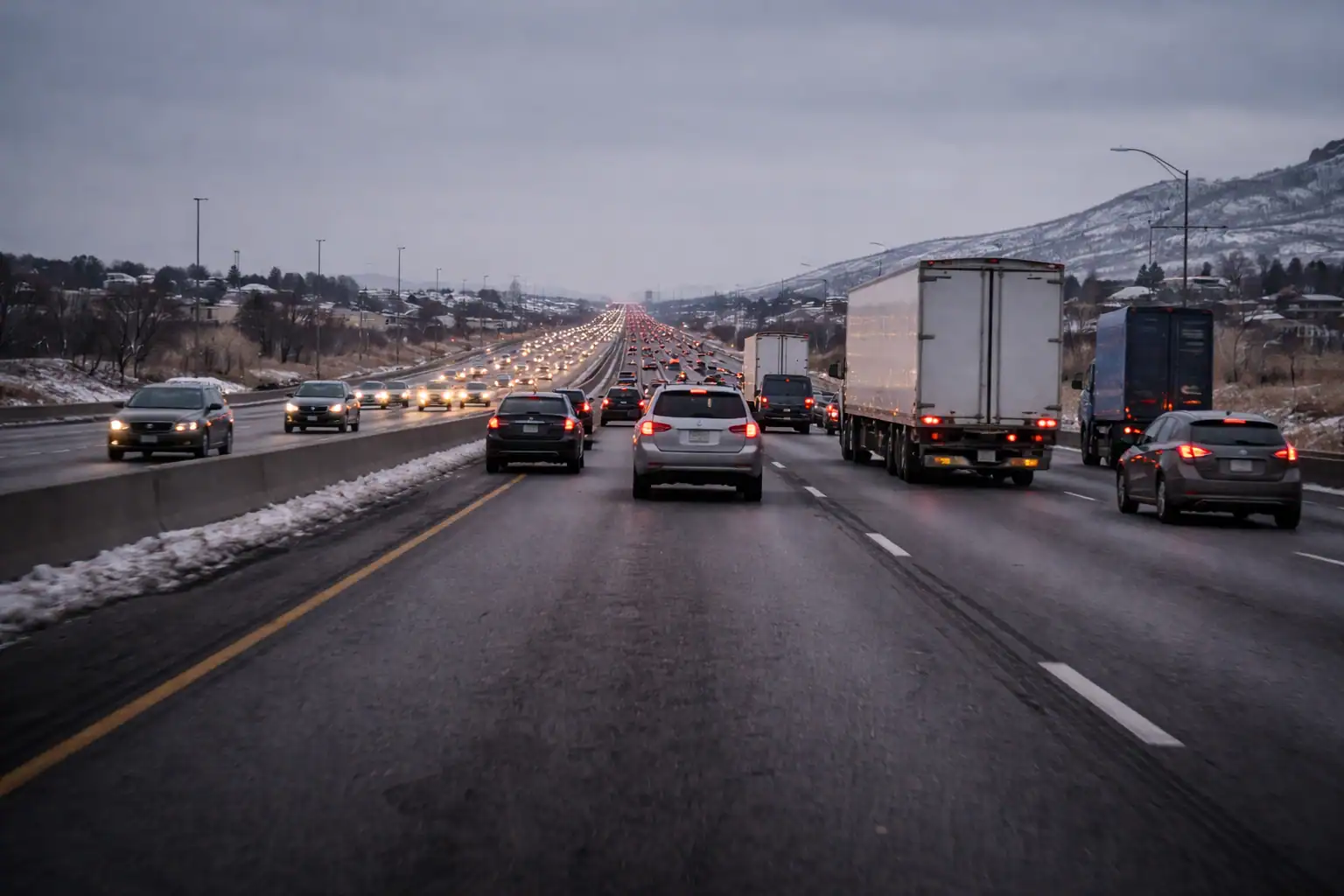
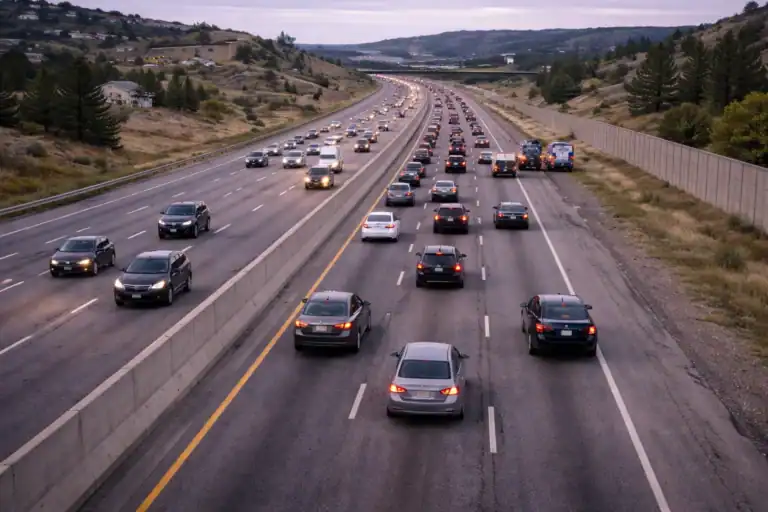
Every weekday morning, tens of thousands of Colorado drivers merge onto US-36 heading southeast toward Denver or northwest toward Boulder. They do it in the dark during winter months. They do it in construction zones that seem to shift weekly. They do it alongside semi trucks, commuter buses, and cyclists sharing the shoulder, all moving at speeds that leave almost no margin for error on a highway that was fundamentally redesigned within the last decade and still cannot keep up with the demands placed upon it.
US-36 between Boulder and Denver is not just a commuter route. It is a case study in what happens when population growth outpaces infrastructure, when highway redesigns introduce new hazards alongside the ones they were meant to fix, and when the daily pressure of getting to work on time pushes otherwise careful drivers into decisions that end in emergency rooms.
The Highway That Was Supposed to Get Better
The US-36 Express Lanes project, completed in phases between 2015 and 2016, was designed to solve the corridor’s chronic congestion problems. The project added express toll lanes managed by a public-private partnership, rebuilt interchanges, added bus rapid transit infrastructure, and reconfigured the roadway to accommodate more vehicles.
In many ways the project succeeded. Commute times for toll lane users improved. Bus service along the corridor expanded. The physical roadway was modernized.
But the redesign also introduced new complexities that drivers navigate daily. The express lanes are separated from general purpose lanes by a narrow buffer, sometimes just a painted stripe, sometimes a thin concrete barrier. Merging in and out of the express lanes requires crossing this buffer at designated access points, creating weaving patterns in traffic that did not exist before the redesign.
The tolling system itself contributes to dangerous behavior. Drivers who miss their intended access point or who decide at the last moment to enter or exit the express lanes make abrupt lane changes across the buffer. These maneuvers, performed at highway speed in heavy traffic, are a recurring factor in sideswipe and rear-end collisions along the corridor.
Where the Crashes Happen
Accident data along US-36 reveals consistent hotspots that experienced drivers recognize instinctively.
The Broomfield and Superior interchanges see high concentrations of merge-related accidents. These interchanges serve rapidly growing communities whose populations have increased significantly in recent years. Morning on-ramp volumes now exceed what the merge zones were designed to handle, producing the accordion effect where vehicles alternately accelerate and brake as they attempt to enter the flow of highway traffic. Rear-end collisions during this process are a daily occurrence.
The McCaslin Boulevard interchange in Louisville and Superior serves as a major access point for commuters and commercial traffic. The intersection of highway speeds and local traffic creates conflict points where speed differentials are highest. Left-turning vehicles, highway on-ramp traffic, and through traffic on McCaslin all compete for space in a compressed area.
The Flatiron Crossing area in Broomfield combines commercial traffic, residential development access, and highway interchange traffic in a stretch where driver attention is divided between navigation decisions and the vehicles around them. Distracted driving rates are likely elevated in this area simply because the roadway demands more cognitive processing than a straight highway segment.
The approach to Boulder near the Foothills Parkway interchange presents its own challenges. Westbound traffic decelerates from highway speed as it approaches Boulder, while eastbound traffic accelerates onto the highway from surface streets. This transition zone between highway driving and urban driving produces rear-end collisions when following drivers do not anticipate the speed reduction ahead.
Growth That Outpaces Everything
The communities along US-36 have experienced explosive growth. Broomfield, Superior, Louisville, and Lafayette have all added thousands of residents in recent years. The Marshall Fire in December 2021 destroyed over 1,000 homes in Superior and Louisville, and the rebuilding effort brought additional construction traffic and temporary residents navigating unfamiliar roads during recovery.
New residential and commercial development continues throughout the corridor. Each new subdivision, each new retail center, each new office park adds vehicles to a highway that is already operating at or above capacity during peak hours. The incremental nature of this growth means that no single development triggers a major infrastructure response, but the cumulative effect is a corridor that gets slightly more dangerous with every passing year.
School traffic adds another layer. The communities along US-36 are family-oriented, with high concentrations of elementary and secondary schools near the highway corridor. Morning and afternoon school traffic coincides exactly with commuter peaks, adding buses, parent vehicles, and teenage drivers to an already stressed system.
Weather and the US-36 Corridor
The US-36 corridor sits at the base of the Front Range where weather conditions can change rapidly and dramatically. The corridor is particularly susceptible to sudden wind events that affect vehicle stability, especially for high-profile vehicles and empty trucks. Crosswinds funneling through gaps in the foothills can push vehicles laterally without warning.
Winter storms moving down from the mountains hit the western end of the corridor first, meaning a driver who left Boulder in light snow may encounter significantly worse conditions by the time they reach Broomfield or Westminster. The reverse is equally true. A morning that starts clear in Denver can deteriorate into whiteout conditions approaching Boulder as elevation increases and the storm system takes hold.
Black ice forms readily along the corridor during temperature inversions and overnight freezing. Bridge decks and overpasses freeze before the road surface does, creating invisible hazards at interchange ramps and overpasses that drivers encounter at highway speed. The US-36 corridor has numerous elevated roadway sections where this risk is persistent from November through March.
Bicycle and Pedestrian Vulnerability
The US-36 redesign included improved bicycle and pedestrian infrastructure along the corridor. The US-36 Bikeway runs parallel to the highway, and at several points cyclists and pedestrians cross or travel adjacent to highway traffic at interchange ramps and access roads.
These crossing points create conflict zones where a cyclist traveling at 15 miles per hour intersects with vehicles entering or exiting the highway at 45 to 55 miles per hour. Right-turning drivers focused on merging with highway traffic may fail to see a cyclist approaching from behind in the bike lane. Left-turning drivers crossing the bikeway to access local streets face the same conflict from the opposite direction.
Pedestrian accidents near US-36 interchanges tend to occur in the early morning and evening hours when commuters are moving through interchanges in low-light conditions and pedestrians are less visible. The combination of speed, distraction, and limited visibility makes these accidents particularly severe.
Your Legal Options After a US-36 Crash
Accidents on US-36 can involve multiple potentially liable parties depending on the specific circumstances.
If another driver caused the crash through distracted driving, aggressive lane changes, impaired driving, or failure to adjust speed for conditions, that driver bears primary liability under Colorado negligence law. Their auto insurance responds first.
If the highway design, maintenance, or construction zone conditions contributed to the accident, CDOT or the public-private partnership that manages the express lanes may share liability. The express lane operator has duties related to lane markings, buffer zone maintenance, signage, and the overall safety of the managed lane system. If failures in any of these areas contributed to your crash, the managing entity may bear responsibility.
If a commercial vehicle was involved, the trucking company and their insurer become parties to the claim. Federal motor carrier regulations and Colorado commercial vehicle laws impose additional duties on commercial operators that can strengthen your case if those duties were violated.
The 182-day notice requirement for government entity claims applies to any claim involving CDOT or other public entities. If there is any possibility that road design, maintenance, or construction zone conditions played a role in your accident, this deadline must be respected regardless of how your investigation ultimately unfolds.
If you have been injured in an accident on US-36 between Boulder and Denver, the cause may be more complex than a single driver’s mistake. Call Flanagan Law at 720-928-9178 for a free consultation. We understand this corridor, we know where the danger points are, and we will investigate every factor that contributed to your crash.
Frequently Asked Questions
Are express lane accidents handled differently than regular lane accidents?
The liability analysis is similar, but express lane accidents may involve additional parties. The public-private partnership managing the express lanes has obligations related to lane safety, signage, and barrier maintenance. If the express lane design or management contributed to your accident, the managing entity may share liability alongside any at-fault driver.
What if wind caused a truck to swerve into my lane on US-36?
High winds are a known hazard along the US-36 corridor. Trucking companies and commercial drivers have a duty to monitor weather conditions and adjust their driving accordingly. If a truck driver continued operating at full highway speed during a high wind advisory, or if the trucking company failed to restrict travel during dangerous conditions, they may be liable for resulting accidents even though wind was the immediate physical cause.
Can I file a claim if a construction zone on US-36 contributed to my accident?
Yes. Entities responsible for construction zones have legal duties to maintain safe traffic flow through work areas. This includes adequate signage, proper lane markings, safe merge distances, and traffic control that accounts for the speeds and volumes on the affected highway. If construction zone conditions contributed to your crash, the responsible entities may share liability.
I commute on US-36 daily and was injured during my normal drive to work. Does workers compensation affect my car accident claim?
If you were commuting to or from work, workers compensation typically does not apply because the regular commute is generally not considered within the scope of employment. However, if you were running a work errand, traveling between job sites, or performing any work-related task during the drive, workers compensation may be triggered alongside your personal injury claim. The interaction between these two systems requires careful analysis to maximize your total recovery without jeopardizing either claim.