What If the Other Driver Who Hit You Doesn’t Have Insurance?
If you’re hurt in a crash and discover the at-fault driver doesn’t have insurance, you might assume you’re out of luck. You’re not. Colorado law provides several paths to compensation, and understanding your options can mean the difference between absorbing thousands in medical bills and recovering what you’re owed.
Colorado’s Uninsured Driver Problem
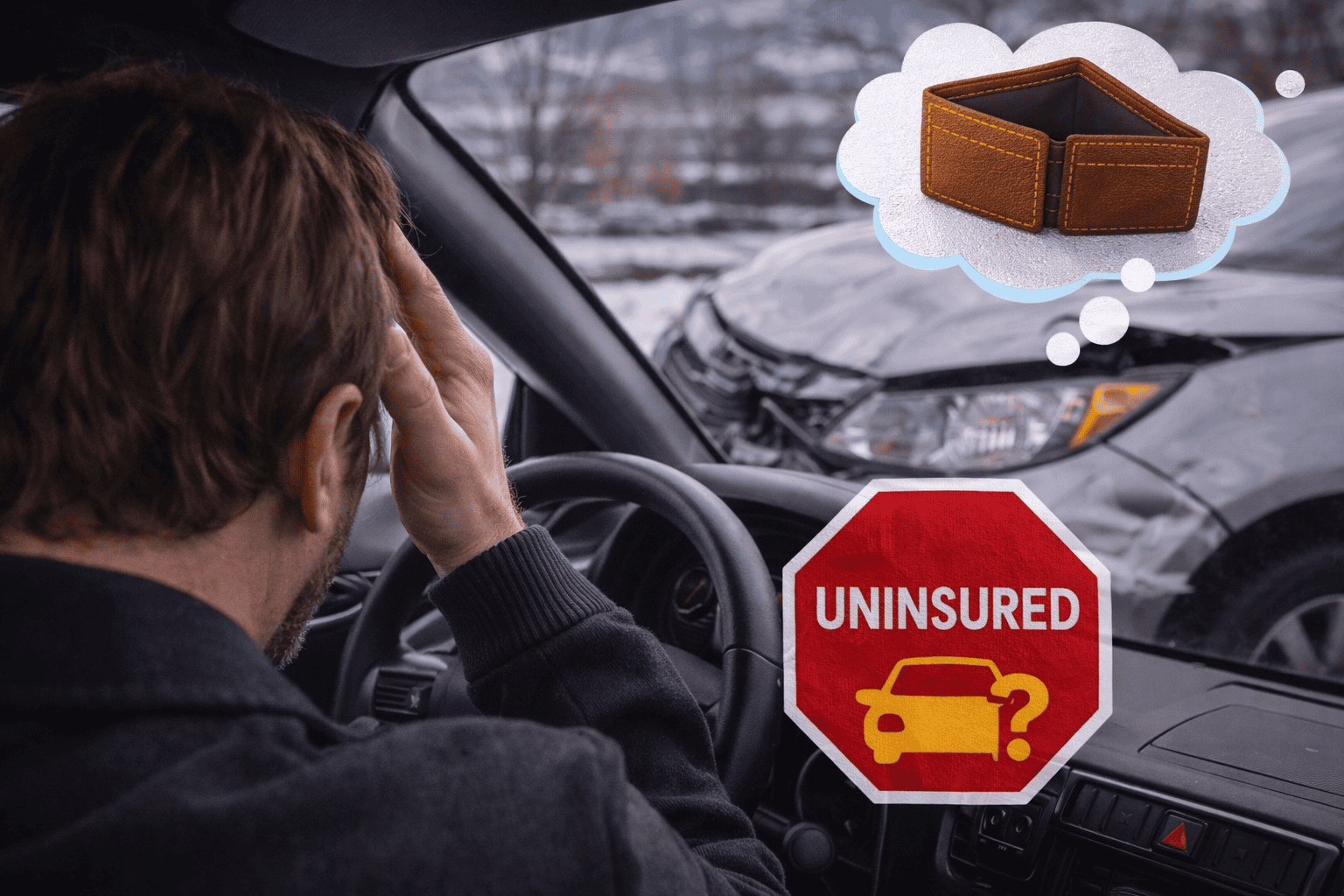
Colorado requires drivers to carry minimum liability coverage of $25,000 per person and $50,000 per accident. But not everyone follows the law. Estimates suggest roughly 16% of Colorado drivers are uninsured at any given time—one of the higher rates in the country.
When an uninsured driver causes an accident, their victim faces a frustrating reality: there’s no liability policy to file a claim against. But that doesn’t mean there’s no path forward.
Your Own Policy May Cover You
This is where uninsured motorist (UM) coverage becomes essential. Under Colorado Revised Statutes § 10-4-609, insurance companies must offer UM coverage to every policyholder. If you declined it in writing, you may not have it. But many Colorado drivers carry UM coverage without realizing it.
UM coverage pays for your injuries and damages when the at-fault driver has no insurance—or when they flee the scene and are never identified. It essentially steps into the shoes of the coverage the other driver should have had.
In our practice, we’ve seen UM claims recover six figures for clients who initially believed they had no options. The key is understanding what your policy actually provides.
What UM Coverage Typically Includes
- Medical expenses related to the crash
- Lost wages if you can’t work during recovery
- Pain and suffering compensation
- Long-term care costs for serious injuries
Your UM coverage limits matter. If you carry $100,000 in UM coverage and your damages exceed that, the policy pays up to the limit. This is why we often recommend clients carry UM limits that match their liability limits.
What About Underinsured Drivers?
Sometimes the at-fault driver has insurance but not enough to cover your damages. A driver carrying Colorado’s minimum $25,000 policy won’t come close to covering a serious injury.
Underinsured motorist (UIM) coverage addresses this gap. Under CRS § 10-4-609, UIM is also required to be offered by insurers. If the at-fault driver’s policy pays out its limit and your damages exceed that amount, your UIM coverage can make up the difference.
Can You Sue the Uninsured Driver Directly?
Yes, but it’s often not practical. You can pursue a civil lawsuit against an uninsured driver, and if you win, the court will enter a judgment in your favor. The problem is collecting on that judgment.
Someone who doesn’t carry legally required insurance often lacks assets to pay a judgment. You might win in court and still recover nothing. In our experience, pursuing the uninsured driver directly makes sense only in specific circumstances—such as when they have significant assets or when the judgment could be collected through wage garnishment over time.
Most clients are better served pursuing their own UM coverage first.
Hit-and-Run Accidents
If the driver who hit you fled the scene and was never identified, Colorado law treats this similarly to an uninsured motorist situation. Your UM coverage can apply to hit-and-run accidents, allowing you to file a claim even when there’s no other driver to pursue.
The catch: for property damage only claims (no injuries), UM coverage may not apply. But for any crash involving physical injury, your UM policy should respond.
What to Do After an Accident With an Uninsured Driver
The steps you take immediately after the accident matter for any future claim:
Exchange information anyway. Get the other driver’s name, contact information, and vehicle details. Even without insurance, this information is necessary for your UM claim and any potential lawsuit.
Call police and get a report. The police report documents the accident and often confirms the other driver’s lack of insurance. This becomes evidence for your claim.
Document everything. Photos of vehicle damage, the accident scene, visible injuries, and the other driver’s vehicle and plates all support your case.
Seek medical attention promptly. Delaying treatment creates gaps that insurance companies use to minimize claims. Get evaluated even if you feel fine initially.
Contact your own insurance company. Report the accident and begin the UM claim process. Be factual but don’t give recorded statements or accept quick settlements without understanding the full extent of your injuries.
Why Legal Help Matters in UM Claims
Here’s something that surprises many clients: your own insurance company isn’t necessarily on your side in a UM claim.
When you file a UM claim, you’re asking your insurer to pay out money. They have financial incentive to minimize that payout, just as any insurance company would. The adjuster works for them not for you.
In our practice, we’ve seen insurers undervalue UM claims, delay payments, or dispute medical necessity of treatment. Having an attorney levels the playing field and often results in significantly higher recoveries.
The Statute of Limitations
You don’t have unlimited time to act. Under CRS § 13-80-102, personal injury claims in Colorado must be filed within three years of the accident. Miss that deadline and you lose the right to pursue compensation entirely.
For claims involving government vehicles or employees, deadlines can be much shorter. Some require notice within 180 days. If any government entity was involved in your accident, consult an attorney immediately.
Frequently Asked Questions
What if I declined UM coverage when I bought my policy?
If you signed a written waiver declining UM coverage, you likely don’t have it. However, insurers must offer this coverage properly—if they didn’t follow correct procedures, the waiver may be invalid. An attorney can review your policy documents to determine if coverage exists.
Does UM coverage increase my premiums?
UM claims can affect your rates, but the impact varies by insurer. The more important question is whether you can afford to absorb a serious injury’s costs without coverage. For most people, UM coverage provides essential protection.
What if the uninsured driver was driving someone else’s car?
The vehicle owner’s insurance may still apply. Colorado follows a “permissive use” doctrine—if the driver had permission to use the vehicle, the owner’s liability coverage may respond to the claim. This creates another potential source of recovery.
Can I stack UM coverage from multiple vehicles?
Possibly. If you have multiple vehicles on your policy or multiple policies in your household, you may be able to “stack” UM limits for greater coverage. Policy language determines whether stacking is allowed.
Sources
Colorado Revised Statutes § 10-4-609 (Uninsured and Underinsured Motorist Coverage)
Colorado Revised Statutes § 10-4-619 (Minimum Insurance Requirements)
Colorado Revised Statutes § 13-80-102 (Statute of Limitations—Personal Injury)
Insurance Research Council, Uninsured Motorist Statistics
Take Action Now
If you’ve been injured by an uninsured driver in Colorado, you have more options than you might think. Understanding your UM coverage and how to maximize it can make an enormous difference in your recovery.
Call Flanagan Law at 720-928-9178 for a free consultation. We’ll review your coverage, explain your options, and help you understand what compensation you may be entitled to. The call costs nothing, and it could change everything.