The I-25 and I-70 Interchange: Why Colorado’s Busiest Junction Keeps Failing Drivers
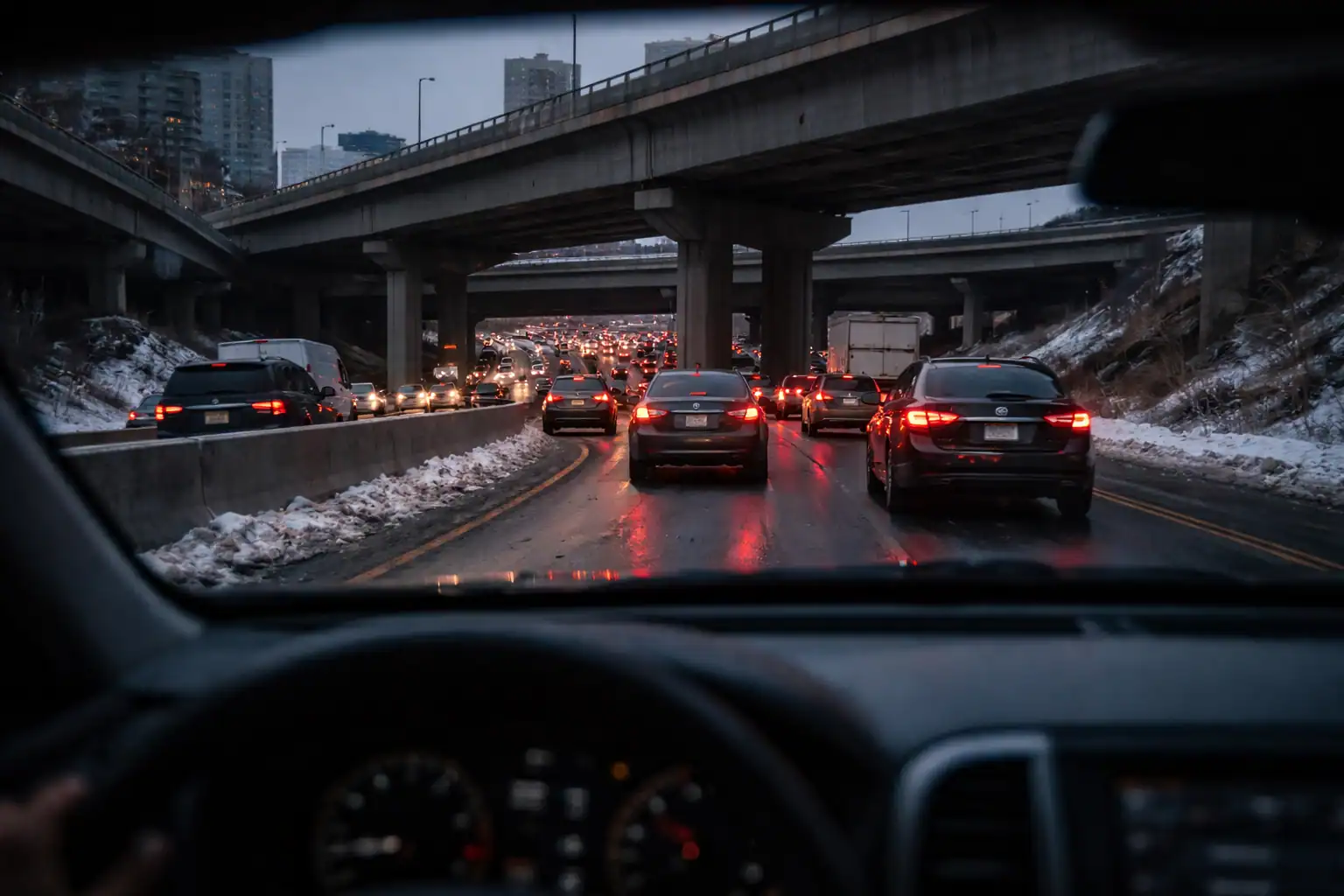
If you have driven through the I-25 and I-70 interchange in Denver, you already know. Your hands tighten on the wheel. You check your mirrors twice. You watch the vehicles around you with the kind of attention you reserve for situations where you genuinely believe something bad could happen at any moment.
Your instincts are correct. This interchange is one of the most dangerous stretches of highway in Colorado, and the reasons go far deeper than heavy traffic. The design of this junction, the volume it was never built to handle, and the driving behaviors it produces create a combination that has been injuring and killing Colorado drivers for decades.
A Highway Built for a Different Era
The I-25 and I-70 interchange was originally designed and constructed in the 1960s. Denver’s population at the time was roughly 500,000 in the city proper. The metropolitan area had fewer than a million residents. The highway engineers who designed this interchange planned for the traffic volumes of that era, with some projections for growth that turned out to be wildly optimistic in their conservatism.
Today the Denver metro area exceeds 2.9 million people. The interchange handles over 200,000 vehicles per day. The infrastructure designed for mid-century traffic volumes now absorbs three to four times the load it was engineered to carry.
The physical constraints are immediately apparent to anyone who drives through. The ramps are short, requiring aggressive acceleration and deceleration. Merge lanes are inadequate for the volume of vehicles attempting to enter the highway simultaneously. Sight lines are obstructed by the stacked design of the interchange, which places one highway directly above the other, creating blind spots that force drivers to make lane changes and merge decisions with incomplete information.
Why Accidents Happen Here
The accident patterns at this interchange are not random. They follow predictable patterns rooted in the physical design of the roadway and the human behaviors that design forces upon drivers.
Rear-end collisions are the most common crash type. Traffic flow through the interchange is unpredictable. Vehicles traveling at highway speed encounter sudden slowdowns when downstream congestion backs up into the interchange itself. A driver maintaining 65 miles per hour who crests the interchange and discovers stopped traffic ahead has seconds to react. When that driver is distracted, fatigued, or following too closely, the result is a rear-end collision at speed differentials that cause serious injuries.
Sideswipe accidents are the second most frequent pattern. The short merge zones and multiple lane changes required to navigate the interchange force drivers to change lanes in heavy traffic with limited space. A driver on I-70 eastbound who needs to exit onto I-25 southbound must cross multiple lanes of traffic in a compressed distance. Vehicles attempting the same maneuver simultaneously, often from adjacent lanes, produce the sideswipe collisions that occur here daily.
Multi-vehicle pileups represent the most catastrophic scenario. When one collision occurs in the interchange during peak traffic, the compressed spacing between vehicles and the limited escape routes for following drivers turn a two-car accident into a chain reaction involving five, ten, or more vehicles. Winter weather compounds this exponentially. A single patch of black ice on an interchange ramp can trigger a pileup that closes the junction for hours and sends dozens of people to the hospital.
The Construction Factor
The Colorado Department of Transportation has undertaken multiple improvement projects on this interchange over the years. The Central 70 project, which has been reshaping the I-70 corridor through Denver, has brought years of construction activity to the area. Construction zones create their own hazards including lane shifts, reduced lane widths, altered traffic patterns, and the confusion that comes from navigating a roadway that looks different every few months.
Construction zone accidents carry additional legal considerations. Liability may extend beyond the at-fault driver to include the construction company, the general contractor, CDOT, or subcontractors responsible for traffic control. If inadequate signage, confusing lane markings, or poorly designed traffic patterns contributed to your accident, the entities responsible for the construction zone may share liability.
Colorado imposes enhanced penalties for traffic violations in construction zones, and the presence of construction zone conditions can affect the analysis of fault in a civil injury claim. A driver who might be considered merely negligent for a lane change on open highway could face arguments of heightened negligence for the same maneuver in a clearly marked construction zone where extra caution was required.
What Makes These Claims Different
Accidents at the I-25 and I-70 interchange present unique challenges that distinguish them from crashes on simpler roadways.
Multiple liable parties are common. A single interchange accident might involve a distracted driver who caused the initial collision, a trucking company whose driver was following too closely and caused a secondary impact, and a government entity whose road design or maintenance failures contributed to the conditions that made the crash possible. Sorting out these layers of liability requires investigation, expert analysis, and an understanding of how Colorado law allocates fault among multiple defendants.
Evidence preservation is critical and time-sensitive. CDOT maintains traffic cameras throughout the interchange, but footage is not retained indefinitely. Nearby businesses may have security cameras that captured relevant traffic conditions. Electronic data from vehicle event data recorders, commonly called black boxes, can reconstruct speed, braking, and steering inputs in the seconds before impact. Securing this evidence quickly can make or break a complex interchange accident case.
The severity of injuries tends to be higher. Highway-speed collisions produce more severe injuries than crashes on surface streets. The interchange environment, where multiple speed differentials exist simultaneously, where escape routes are limited, and where secondary impacts are common, amplifies the forces involved. Traumatic brain injuries, spinal cord injuries, and multiple fractures are disproportionately represented in interchange accident cases.
Government Liability for Design Failures
When a road’s design contributes to accidents, the government entity responsible for that road may bear partial liability. This is a legally complex area governed by the Colorado Governmental Immunity Act, which waives sovereign immunity for dangerous conditions on public highways under certain circumstances.
To establish government liability for a road design deficiency, you must generally show that the design deviated from accepted engineering standards, that the deviation created a dangerous condition, and that the dangerous condition contributed to your accident. This requires expert testimony from traffic engineers who can analyze the specific design elements, compare them to applicable standards such as the Manual on Uniform Traffic Control Devices and AASHTO design guidelines, and explain how the deficiencies contributed to the crash.
Claims against government entities face strict procedural requirements. Colorado law requires written notice to the government entity within 182 days of the accident. Missing this deadline can extinguish your claim entirely regardless of how strong the evidence is. The Colorado Governmental Immunity Act also caps damages at $424,000 per person and $1,195,000 per occurrence, amounts that may fall short of actual damages in serious injury cases.
What to Do After an Interchange Accident
If you are involved in an accident at the I-25 and I-70 interchange or any major Colorado highway interchange, certain steps are particularly important.
Move to safety if you can. The continued flow of highway traffic through and around the accident creates an ongoing risk of secondary collisions. If your vehicle is drivable, move it to the shoulder or an emergency pull-off area. If it is not, turn on hazard lights, stay belted in your vehicle, and wait for emergency responders rather than standing on the highway.
Document everything you can safely capture. Photograph the positions of vehicles, the road conditions, any signage or lane markings, and the overall traffic environment. Note the specific location within the interchange including which ramp, which direction of travel, and which lane you were in. These details fade from memory quickly but matter significantly during investigation.
Get medical attention immediately. Highway-speed collisions produce forces that cause internal injuries, concussions, and spinal injuries that may not produce immediate symptoms. Emergency room evaluation after a highway interchange accident is not optional. It is essential for your health and for establishing a medical record that connects your injuries to the crash.
Contact an attorney before speaking with any insurance company. Interchange accidents involving multiple vehicles, potential government liability, and construction zone factors are among the most legally complex car accident cases in Colorado. What you say to an insurance adjuster in the days after the accident can affect your ability to recover from every responsible party.
If you have been injured in an accident at the I-25 and I-70 interchange or any dangerous Colorado highway junction, multiple parties may be responsible for your injuries. Call Flanagan Law at 720-928-9178 for a free consultation. We know these roads, we understand these cases, and we will investigate every angle to maximize your recovery.
Frequently Asked Questions
Can I sue CDOT if the interchange design contributed to my accident?
You can pursue a claim against CDOT under the Colorado Governmental Immunity Act if a dangerous road condition contributed to your crash. However, you must provide written notice within 182 days of the accident, and damages are capped. Proving that design deficiencies rather than driver error caused your accident typically requires expert traffic engineering analysis. These claims are complex but viable when the evidence supports them.
What if I was hit by a truck at the interchange?
Truck accidents at highway interchanges frequently involve the trucking company, the truck driver, and potentially other parties including cargo loaders and vehicle maintenance providers. Federal motor carrier regulations impose requirements on trucking companies that exceed those for passenger vehicles. Violations of these regulations can establish negligence and open additional avenues for recovery beyond what the driver’s personal conduct would support.
How do multi-vehicle pileups at the interchange get sorted out for liability?
Each driver’s conduct is evaluated independently. Colorado’s comparative negligence system allows fault to be allocated among all responsible parties including multiple drivers, government entities, and construction companies. Some drivers may bear significant fault while others bear little or none. Your percentage of fault, if any, reduces your recovery proportionally. If you are more than 50% at fault, you recover nothing under Colorado law.
Does construction on I-70 affect liability in my accident case?
It can. If construction zone conditions including lane shifts, reduced widths, confusing signage, or altered traffic patterns contributed to the accident, the entities responsible for the construction zone may share liability. CDOT, the general contractor, and traffic control subcontractors all have duties to maintain safe conditions for drivers navigating the work zone. Documenting the specific construction conditions at the time of your accident is critical for preserving this claim.