Snowstorms, Spinouts, and Denver Liability Rules
When Weather and Human Mistakes Collide
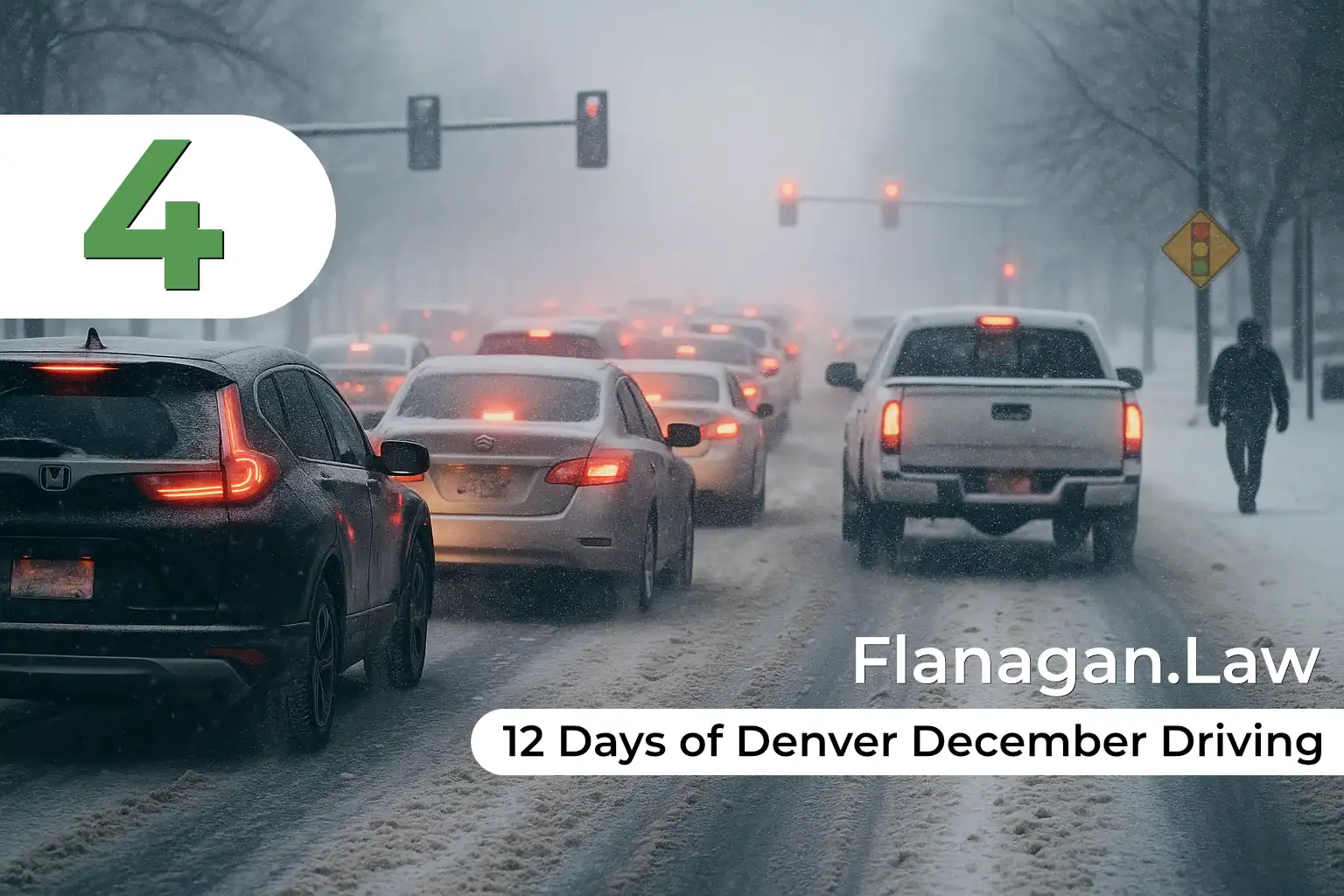
Denver snowstorms transform everyday driving into something closer to controlled chaos. Roads glaze over, visibility drops, and cars slide even at low speeds. But here’s the part most drivers don’t realize: winter weather doesn’t erase responsibility. Colorado law still looks closely at the human choices that led to the crash.
A storm may make driving harder, but it doesn’t remove a driver’s duty to be careful. And in many December collisions, the weather was only half the story.
Why Spinouts Happen in Denver
Spinouts usually result from a mix of winter conditions and driver behavior. Even skilled drivers get caught off guard. One man told me he barely touched the brake on Speer Boulevard and still spun nearly a full turn before stopping. It rattled him for days.
Spinouts often come from:
- Too much speed for icy conditions
- Sudden braking on packed snow
- Turning sharply on slick pavement
- Driving with balding tires
- Misjudging slush depth
Sometimes drivers assume they’re safe because they have AWD. Sadly, winter doesn’t care how many wheels get power; it cares how much traction your tires have on the ground.
How Colorado Determines Fault in Winter Collisions
The law expects drivers to adjust their behavior to conditions. Even in a storm, fault may fall on the driver who:
- Followed too closely
- Drove with worn-out tires
- Was distracted
- Failed to clear snow from windows
- Made unsafe lane changes
- Was going too fast for the weather
“Too fast for conditions” is one of the most common winter findings in Denver crash reports.
Why Winter Evidence Disappears Fast
Snow covers skid marks. Plows erase debris patterns. Ice melts and changes shape. Witnesses often vanish once they warm up and leave the scene. That’s why documentation matters—photos, notes, and even quick voice memos can make a surprising difference in a claim.
When Severe Weather Doesn’t Excuse Negligence
Colorado doesn’t allow drivers to blame the weather when they failed to drive safely for the conditions. A snowstorm doesn’t let anyone tailgate. Ice doesn’t justify speeding. Fog doesn’t excuse texting. The law separates what the storm did from what the driver did.
A Snowstorm Crash Doesn’t Have to Define Your Winter
You can’t control Denver’s storms, but you can control how you recover after a crash. Don’t downplay injuries. Don’t assume the insurance company will “understand.” Cold weather complicates everything, including healing.
Talk to a Denver Winter-Accident Lawyer Today
If a snowstorm or spinout left you injured this December, you deserve answers before the stress gets worse.
Call 720-928-9178 today for a free case review with Flanagan Law. We’ll guide you through winter-weather liability and help protect your rights from the start.
FAQs
How does Colorado define “too fast for conditions” in winter?
It means a driver was traveling at a speed that wasn’t safe for the amount of snow, ice, or visibility, even if they were below the posted limit.
Do insurance companies treat storm-related crashes differently?
Insurers often argue the weather was mainly to blame, which is why they sometimes downplay a driver’s negligence when they shouldn’t.
Can a driver be at fault even if they lost control on ice?
Yes. Loss of control can still be negligence if the driver was speeding, following too closely, or failing to adjust to conditions.
Does AWD or 4WD help with liability determinations?
Not really. These systems help with traction when accelerating, but not with stopping or turning. Drivers can still be negligent with AWD.
Why do winter crashes cause more multi-car pileups?
Reduced traction and slower stopping distances mean one mistake can create a chain reaction before the next driver can brake.
Should I still call police during a snowstorm crash?
Yes. Police reports remain valuable, and officers can document conditions that help support your version of events later.
Are snow-covered windshields a legal issue in crashes?
Driving with snow or ice blocking visibility can be considered negligent because it reduces reaction time and increases danger.