Black Ice in Denver: The Invisible December Threat
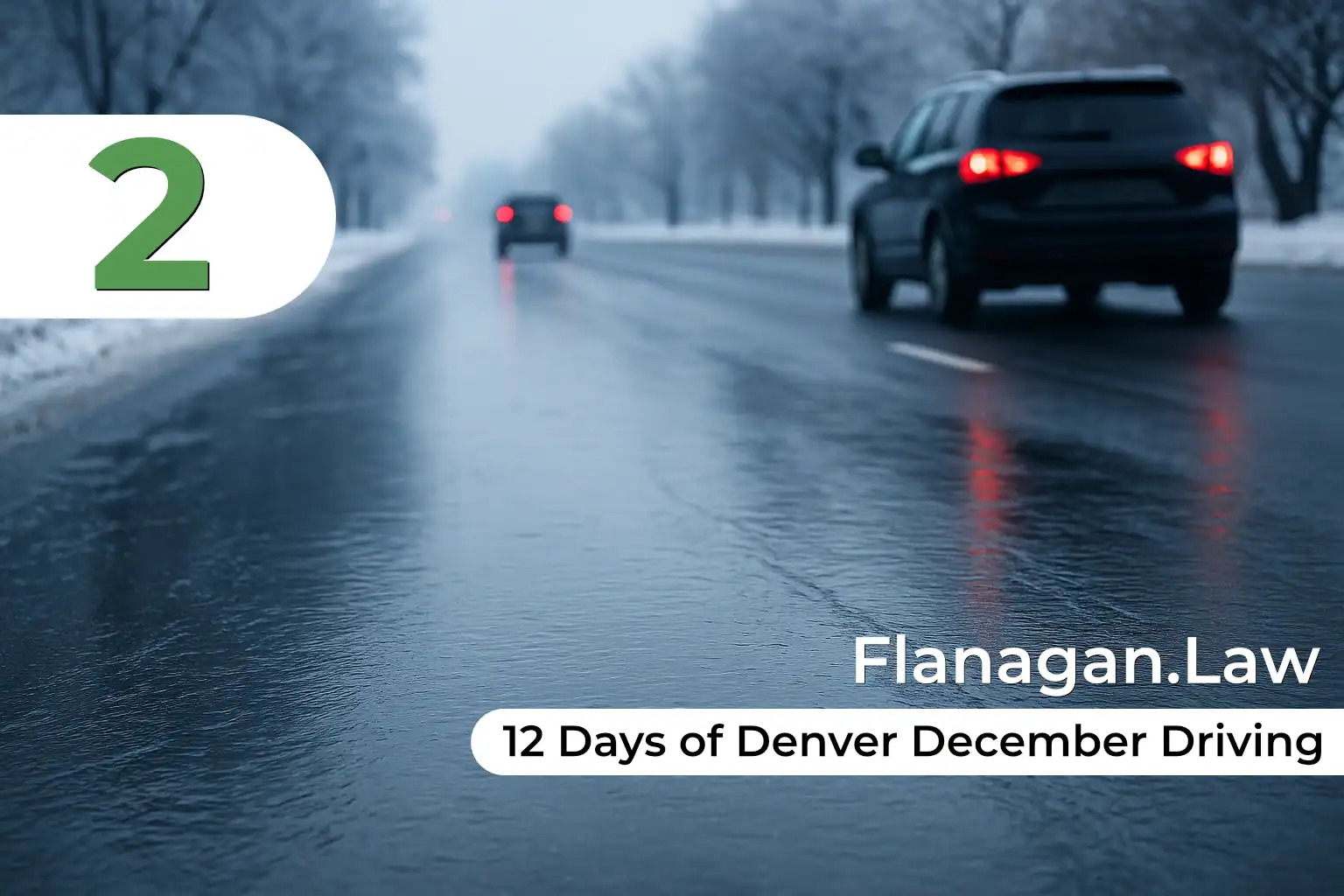
The Silent Danger Beneath Your Tires
Black ice is the winter hazard that surprises even experienced Denver drivers. It’s thin, transparent, and blends perfectly with the asphalt. By the time you realize you’re on it, your tires may already be sliding. Denver sees black ice every year, but December is when it appears most often.
Why Black Ice Forms So Easily in Denver
Colorado’s dry climate actually makes black ice more likely, not less. Low humidity allows roads to radiate heat quickly. A small amount of meltwater refreezes into a nearly invisible layer, especially on:
- Bridges and overpasses
- Shaded roads near parks or tall buildings
- Downhill approaches
- Intersections where tires polish the surface
- Highway ramps and merges
You can’t always see it, but you can predict where it forms.
What a Black-Ice Crash Feels Like
Most people describe the same moment: their steering feels light, the car doesn’t respond, and the world seems to slow down. It’s scary because you lose control without warning. One driver told me he thought something broke in his car before realizing the pavement was iced over.
Black ice doesn’t just cause spinouts—it causes chain-reaction crashes, especially when multiple cars hit the same frozen patch.
Who’s at Fault in a Black-Ice Crash?
Many drivers assume “weather caused it,” but Colorado law doesn’t work that way. Weather is a factor, but it doesn’t erase responsibility.
Drivers may still be negligent if they were:
- Speeding for conditions
- Following too closely
- Driving on worn tires
- Distracted
- Making unsafe lane changes
- Braking late on known freeze zones
Insurance companies often push the “it was just ice” narrative to reduce payouts. That’s why documenting what happened matters so much, even if the scene looked like a mess.
What to Do After a Black-Ice Accident
- Move to safety; secondary collisions are common.
- Take photos quickly—before traffic grinds it all up.
- Get checked by a doctor; adrenaline hides injuries.
- Avoid phrases like “I couldn’t help it” or “I didn’t see the ice.”
- Call a lawyer before speaking to an adjuster.
A winter claim can go sideways fast because small statements get twisted.
Free Legal Help After a Black-Ice Crash
If black ice caught you off guard and left you injured, you’re not alone. Winter roads fool everyone at some point, and no one deserves to fight an insurance company while they’re hurt.
Call 720-928-9178 today for a free winter-accident case review. We’ll explain your rights clearly and help protect your claim from the start.
FAQs
How can I tell if the road has black ice before I start driving?
If the temperature is at or below freezing and the pavement looks oddly glossy or darker than usual, black ice is likely present even if you can’t see distinct ice patches.
Why does black ice tend to form on bridges first?
Bridges lose heat from above and below, so they freeze faster than surface roads that sit on solid ground. Even short overpasses can hide dangerous ice layers.
Can worn tires make black-ice accidents more severe?
Yes. Tires with low tread have significantly reduced grip on slick surfaces, making it easier to lose control and harder to recover once a slide begins.
Is it safer to accelerate or brake when I think I’ve hit black ice?
Neither. The safest response is to ease off both pedals, keep the wheel straight, and let the vehicle glide until traction returns. Sudden braking can worsen the slide.
Why do multiple cars crash in the same spot during black-ice mornings?
Black ice often forms in localized patches. When one driver loses control, the drivers behind them hit the same invisible spot before they can react, causing chain reactions.
Can black ice form even when the sun is out?
Yes. Sunlight warms the air faster than the pavement. Meltwater refreezes when the pavement stays cold, creating black ice even on sunny December days.
Does Colorado law treat black-ice crashes differently from other winter collisions?
Not really. Weather is considered, but drivers are still expected to adjust their speed, following distance, and attention. Unsafe driving can still be negligent even on ice.