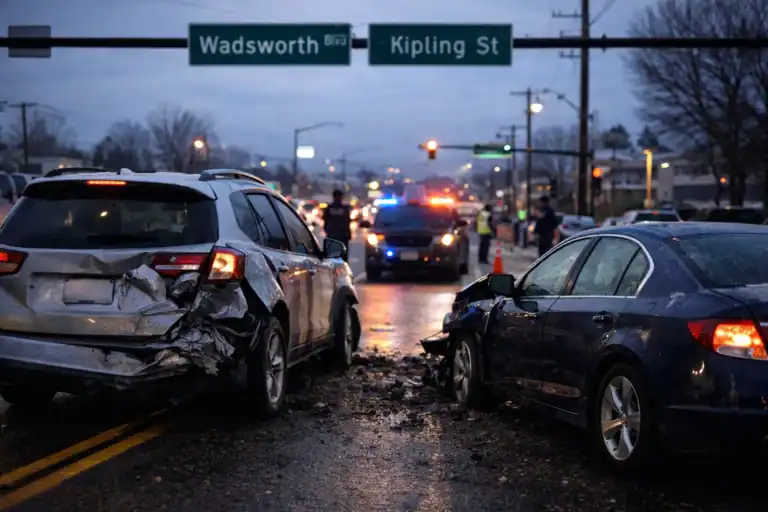
Uncovering Negligence: How to Use Logbooks and Black Box Data in Your Truck Accident Case

Truck Accident Evidence Hiding in Plain Sight
Every commercial truck on Colorado roads holds a digital witness: its black box. And just as crucial—its driver’s logbook. In serious truck accidents, these records often hold the key to uncovering negligence and proving liability. But trucking companies don’t hand over this evidence willingly. And if you wait too long, some of it could disappear. That’s why understanding how these tools work—and how a skilled attorney uses them—can make or break your case.
Why Black Box and Logbook Data Matter
Digital Footprints Don’t Lie
Commercial trucks are required by law to carry electronic control modules (ECMs) or event data recorders—commonly known as “black boxes.” These devices store real-time data about how the truck was operated, including: Speed Braking activity GPS location Sudden deceleration or impact forces Engine diagnostics Hours of service This data is captured automatically and can show whether a driver was speeding, failed to brake in time, or violated federal safety rules. Logbooks, on the other hand, are where truckers (now electronically in most cases) record their hours on duty and rest breaks. The Federal Motor Carrier Safety Administration (FMCSA) has strict rules on how many hours a driver can be on the road. If a driver went over their legal limit—or faked their logbook to appear compliant—your attorney can use that evidence to show fatigue, recklessness, and liability.
When Trucking Companies Try to Cover Their Tracks
Trucking companies and their insurers know this data is a liability. In some cases, they attempt to delay or deny access. In others, evidence mysteriously disappears. But with a skilled attorney, you can move fast to: Send a preservation of evidence letter (spoliation letter) to force the trucking company to retain and produce critical data. Secure data downloads from the ECM and ELD (electronic logging device) before it’s overwritten or deleted. Use subpoenas and court orders to compel reluctant carriers to comply. The sooner you act, the better your chances of preserving this evidence.
Real-World Impact: What the Data Reveals
Speeding and Reckless Driving
Was the driver going too fast for road or weather conditions? The black box records speed data every few seconds. If a crash occurred in heavy rain or on icy roads, this data could prove the driver was negligent.
Fatigue and Hours-of-Service Violations
Fatigue is one of the leading causes of catastrophic truck crashes. By comparing black box movement data and logbook entries, an attorney can detect: Skipped rest breaks Driving beyond the legal time limit Logbook tampering This type of evidence is especially powerful in building a claim for gross negligence.
Sudden Stops and Crash Reconstruction
ECM data shows when brakes were applied and how much force was used. Combined with impact force measurements and GPS location, experts can reconstruct the crash in detail—down to the second.
How Expert Witnesses Use This Data in Your Case
Attorneys work with accident reconstructionists, trucking safety experts, and data analysts who can: Translate raw black box data into courtroom-ready visual timelines Highlight violations of FMCSA rules Explain how fatigue, speeding, or equipment failure contributed to the crash Prove patterns of behavior or systemic issues with the trucking company When paired with medical evidence and economic loss analysis, this evidence helps paint a compelling picture of negligence—and lasting harm.
Federal Rules and Compliance Failures
The FMCSA requires electronic logging devices in nearly all commercial trucks. These devices: Automatically record driving time Help prevent tampering or falsification Must be maintained and available for review for 6 months If a carrier fails to install, maintain, or provide this data, they could face federal penalties—and civil liability in your case. Your attorney may also uncover violations like: Failure to properly train drivers Use of unqualified or previously sanctioned drivers Poor maintenance records Ignoring known safety risks Each of these failures increases liability—and the value of your case.
What to Do After a Serious Truck Accident
Time is the enemy of evidence. Here’s what to do immediately after a crash involving a commercial truck: Seek medical attention first. Get evaluated and treated. Document everything. Don’t speak to the trucking company or their insurer. They’re trained to protect themselves, not you. Contact an experienced truck accident attorney. They’ll move quickly to preserve evidence and start building your case. Follow all medical advice and treatment plans. Your recovery and your case depend on consistent documentation.
Why Flanagan Law Is the Right Firm for Your Case
At Flanagan Law, we don’t just investigate—we expose negligence. We know how to secure, interpret, and present black box and logbook evidence in a way that gets results. Our approach is relentless, precise, and driven by one goal: securing justice for you and your family. We’ve worked with accident reconstructionists, data analysts, and industry experts across Colorado to win complex trucking cases. And we’re ready to put that experience to work for you.
FAQs About Trucking Evidence and Negligence
How long is black box data stored?
It varies. Some devices overwrite data every 30 days. Others save only the last few hundred ignition cycles. That’s why acting fast is critical.
What if the trucking company refuses to hand over the data?
Your attorney can issue a formal preservation letter, followed by a subpoena. Courts take spoliation of evidence seriously.
Can this data really increase my settlement?
Yes. When negligence is proven with hard data, insurance companies know they’re exposed—and often settle for significantly higher amounts.
Is it legal to get a truck’s black box data?
Yes, through proper legal channels. Your attorney knows how to lawfully obtain and use this evidence.
Contact Flanagan Law Today
If you or someone you love suffered serious injuries in a truck accident, don’t wait. The black box and logbook hold the truth—and they won’t wait for you. Contact Us at Flanagan Law to preserve evidence, uncover negligence, and fight for the compensation you deserve.