Holiday Traffic in Denver: Surviving December Road Chaos
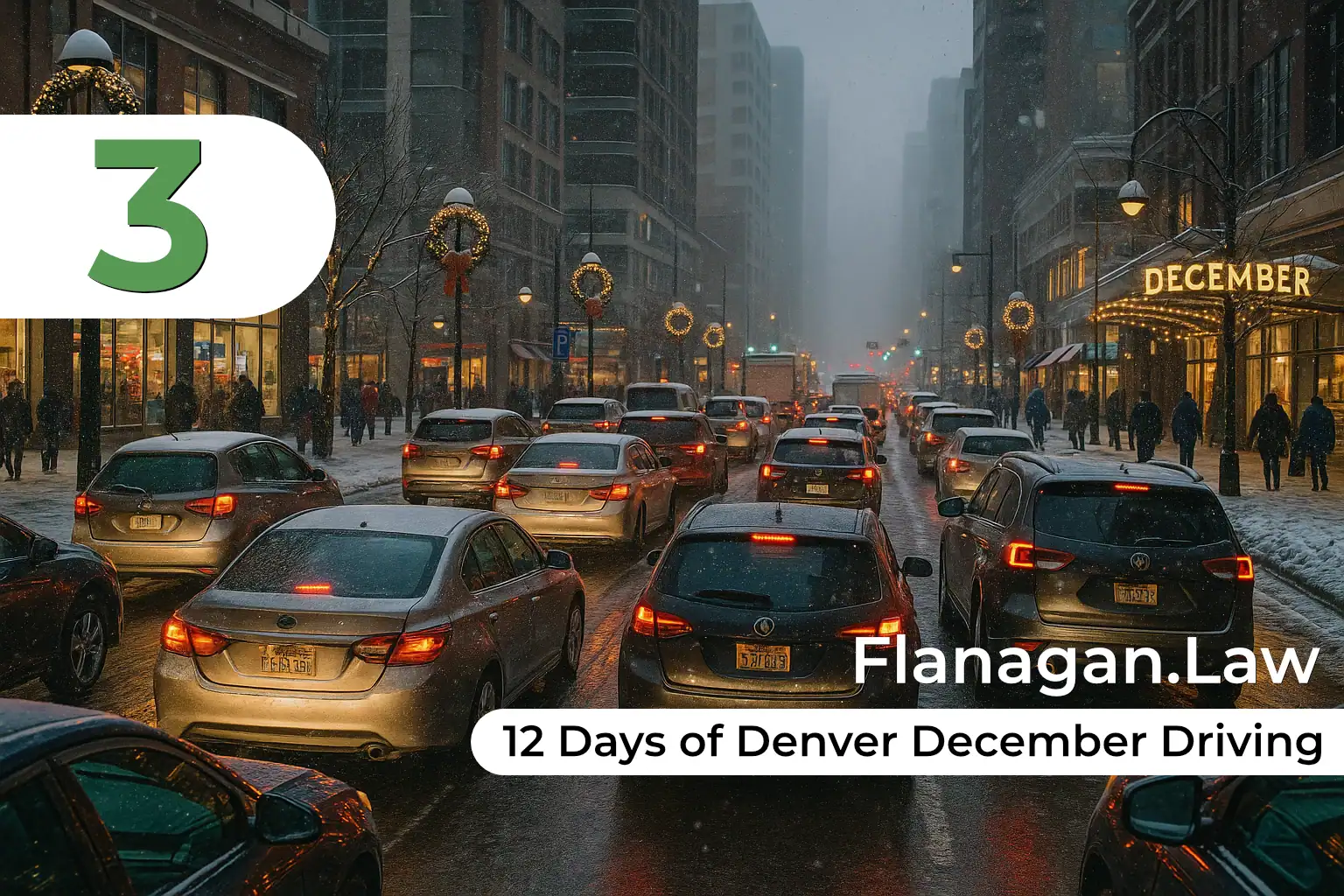
December Turns Denver Into a Different City
Traffic behaves differently in December. Shopping centers overflow. School events stack up. Visitors pour in. Delivery vans fill every block. You feel it the moment you pull out of your driveway—the city just moves differently.
And with more cars on the road, the margin for error shrinks. One distracted glance, one late brake, one impatient lane change can set off a crash that ruins someone’s entire month.
Why Holiday Traffic Causes So Many Crashes
Rushed Driving
People are late to events, squeezing errands into short windows, trying to juggle work, family, and travel. Rushing leads to rolling stops, quick merges, and tailgating.
Aggressive Braking
Cold tires + cold pavement = slower traction response. Rear-end collisions spike every December because drivers don’t account for winter stopping distance.
Delivery Surges
Denver sees thousands more commercial vehicles in December. Delivery drivers are under massive time pressure, making sudden stops and fast turns. They’re skilled, but they’re also human.
Mental Load and Distraction
Stress, planning, fatigue, and holiday noise add up. Even careful drivers slip once in a while.
The Emotional Cost Nobody Talks About
A December crash doesn’t just hurt. It disrupts family gatherings, time off work, and holiday plans. One mother said she didn’t even feel her injuries at first—just the stress of knowing Christmas was days away and now she was without a car. Humans don’t bounce back quite as fast in winter; our days are short, our routines are tight, and everything feels heavier than it should.
What to Do After a Holiday-Traffic Crash
- Call 911; rear-end injuries often show up hours later.
- Photograph everything, especially skid-free pavement.
- Get medical care, even if it feels minor.
- Don’t apologize or downplay injuries.
- Contact a lawyer before an adjuster gets your statement.
Insurance companies move fast in December because they know people are overwhelmed and tired.
Talk to a Denver Injury Lawyer Today
If a holiday-traffic crash blindsided you this December, you deserve clear answers and real support—not more stress. Call 720-928-9178 for a free consultation with Flanagan Law. We’ll help you understand your options and protect your claim while you focus on recovering and getting life back on track.
FAQs
Why do rear-end collisions spike specifically in December?
Stopping distances increase on cold pavement, and holiday traffic creates more sudden braking. Those two factors combine into the perfect conditions for rear-end crashes.
Are delivery vans more likely to cause crashes during the holidays?
Delivery volumes skyrocket in December, and drivers work under tight deadlines. Sudden stops, frequent turns, and fatigue all increase the risk of collisions.
Why does holiday stress make driving more dangerous?
People are distracted by plans, errands, time pressure, and emotional load. Cognitive overload reduces reaction time and increases driving mistakes.
Is it safer to avoid major shopping areas during peak December hours?
Yes. Parking lots and nearby intersections see significantly higher minor and moderate collisions during holiday weeks because of congestion and rushed decisions.
Do insurance companies treat holiday crashes differently?
They often scrutinize statements more closely because December claims are more frequent, and they may assume distractions or rushed driving contributed to the crash.
Can fatigue from holiday travel increase crash risk?
Absolutely. Long shopping days, events, and travel reduce alertness. Fatigue slows reflexes and increases the likelihood of drifting, late braking, or missed hazards.
Why do some December injuries feel worse a day or two after the crash?
Cold weather stiffens muscles and joints, which can amplify soreness or reveal injuries that didn’t feel severe immediately after the collision.