Head-On Collisions in Colorado: The Most Dangerous Crash You Can Survive
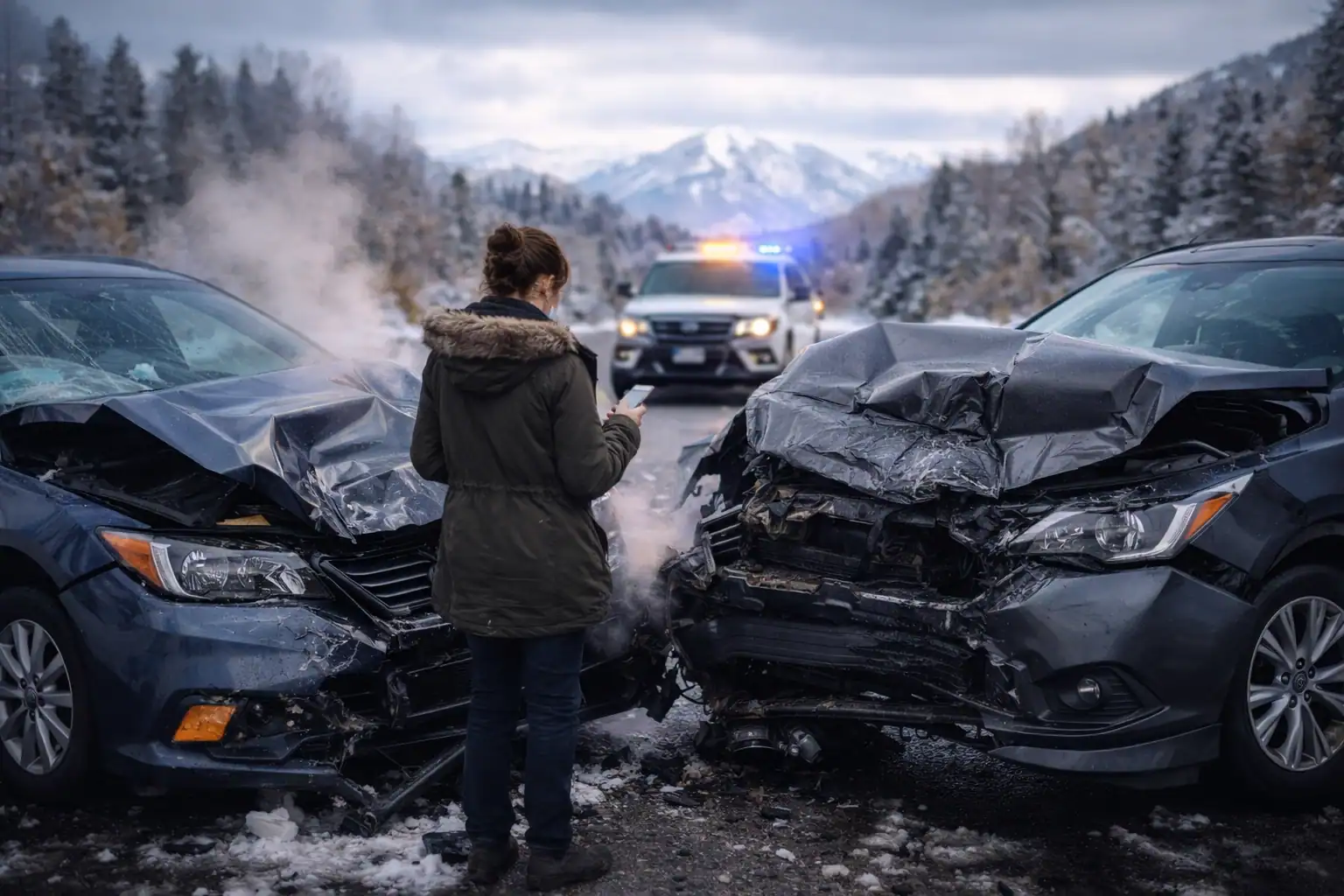
You see the headlights coming toward you in your lane and there is no time to think. Maybe a half second, maybe less. Your hands tighten on the wheel, your foot moves toward the brake, and then everything changes.
Head-on collisions are the deadliest type of crash on American roads. They account for roughly 10% of all accidents but more than half of all traffic fatalities. The physics are brutal and simple. When two vehicles traveling in opposite directions collide, their combined speeds multiply the force of impact in ways that other crash types simply dont match.
If you survived one, you already know. Nothing about it felt minor.
Why Head-On Crashes Cause the Worst Injuries
In a rear-end collision at 30 miles per hour, the energy your body absorbs is based on that single speed. In a head-on collision where both vehicles are traveling 30 miles per hour, the closing speed is effectively 60. The force doesn’t just double. The severity of injuries increases exponentially because human tissue, bone, and organs were never designed to absorb that kind of energy.
The most common injuries from head-on collisions reflect this reality. Traumatic brain injuries occur even when airbags deploy correctly because the brain continues moving inside the skull after the body stops. Chest injuries from seatbelt compression and steering wheel impact can fracture ribs, bruise lungs, and damage the heart. Lower extremity injuries including broken femurs, crushed knees, and shattered ankles happen when the engine compartment intrudes into the passenger cabin.
Spinal cord injuries in head-on crashes frequently result in permanent disability. The cervical spine absorbs enormous force during a front-impact collision, and the difference between a full recovery and a lifetime of paralysis can come down to millimeters.
Where Head-On Crashes Happen in Colorado
Colorado’s geography creates conditions that make head-on collisions more likely than in many other states. Two-lane mountain highways with minimal barriers between opposing traffic are a fact of life here. Highway 93 between Golden and Boulder, Highway 285 through the foothills, and dozens of canyon roads throughout the Front Range carry high-speed traffic with nothing but a painted yellow line separating you from oncoming vehicles.
But head-on crashes dont only happen in the mountains. Urban arterials in Denver, Aurora, and Lakewood see head-on collisions when drivers cross the center line while distracted, impaired, or drowsy. Intersection head-on crashes occur when a driver turns left into oncoming traffic at locations across the metro area.
Winter makes everything worse. Black ice, blowing snow, and reduced visibility on mountain passes contribute to crossover accidents every year. A driver who loses traction on a curve and slides into oncoming traffic may bear full liability under Colorado law regardless of road conditions.
Liability in Colorado Head-On Collision Cases
In most head-on crashes, liability is straightforward. The driver who crossed the center line caused the accident. Colorado Revised Statutes section 42-4-1005 requires drivers to stay on the right side of the roadway. Violating this statute creates a strong presumption of negligence.
But straightforward doesn’t always mean simple. Insurance companies still fight these claims aggressively, particularly when injuries are catastrophic and the potential payout is significant. Common defense strategies include arguing that road conditions rather than driver error caused the crossover, claiming the injured driver had time to take evasive action, or disputing the severity of injuries.
Colorado’s modified comparative negligence rule under CRS 13-21-111 allows a defendant to argue that the injured driver shares some percentage of fault. If you are found more than 50% at fault, you recover nothing. Even a small percentage of assigned fault reduces your recovery proportionally.
This is why evidence preservation matters enormously in head-on collision cases. Skid marks, vehicle damage patterns, electronic data from airbag control modules, and witness testimony all help reconstruct exactly what happened and who crossed that center line.
The Long Recovery Road
Survivors of head-on collisions face recoveries that often stretch across months or years. Multiple surgeries are common. Physical rehabilitation can consume hours every week for extended periods. Cognitive recovery from traumatic brain injury follows no predictable timeline.
The financial toll compounds quickly. A single day in a Colorado ICU can exceed $10,000. Spinal fusion surgery ranges from $80,000 to $150,000 before rehabilitation costs. Lost wages during recovery can devastate a family’s financial stability, and if injuries prevent a return to your previous career, the lifetime economic impact can reach seven figures.
Colorado law allows injured parties to recover both economic damages including medical expenses, lost wages, and future care costs, and non-economic damages including pain and suffering, loss of enjoyment of life, and emotional distress. In cases involving drunk driving or egregious negligence, exemplary damages may also be available under CRS 13-21-102.
What to Do After a Head-On Collision
If you are conscious and able to act after a head-on crash, certain steps protect both your health and your legal rights.
Do not refuse emergency medical transport. Head-on collision injuries frequently include internal bleeding and organ damage that may not produce immediate symptoms. Adrenaline masks pain. What feels like a bruised chest could be a cardiac contusion. What feels like a stiff neck could be a fractured vertebra.
If you are physically able, document the scene. Photograph the vehicles, the roadway, any skid marks, and the position of both vehicles relative to the center line. Note weather conditions and visibility. Get contact information from any witnesses.
Do not give recorded statements to the other driver’s insurance company before speaking with an attorney. Head-on collision claims involve significant compensation, and insurance adjusters are trained to obtain statements that minimize the company’s exposure.
When the Other Driver Didn’t Survive
Some head-on collisions are fatal for one or both drivers. If the at-fault driver died in the crash, you can still pursue a claim. Colorado law allows injury claims against the deceased driver’s estate and their insurance policy. The process involves additional legal steps, but your right to compensation is not extinguished by the other driver’s death.
Similarly, if you lost a family member in a head-on collision caused by another driver, Colorado’s wrongful death statute under CRS 13-21-202 provides a path to recover damages including funeral expenses, lost financial support, loss of companionship, and grief and suffering.
Head-on collisions change lives in an instant. If you or someone you love has been hurt in a front-impact crash on a Colorado road, you deserve an attorney who understands the severity of what you’re facing. Call Flanagan Law at 720-928-9178 for a free consultation. We’ll fight for every dollar your case is worth.
Frequently Asked Questions
Are head-on collisions always the other driver’s fault?
Not always, but the driver who crossed the center line bears a strong presumption of fault under Colorado law. Exceptions can include mechanical failures like a blown tire or steering malfunction, sudden medical emergencies, and road conditions that made the crossover unavoidable. However, insurance companies often raise these defenses even when the evidence doesn’t support them.
What if the head-on collision was caused by a driver passing on a two-lane road?
Passing in a no-passing zone is a traffic violation under Colorado law and creates strong evidence of negligence. Even in passing zones, the driver attempting to pass bears responsibility for ensuring the maneuver can be completed safely. If they misjudged the distance and caused a head-on collision, they are almost certainly liable.
How long will my head-on collision case take to resolve?
Cases involving catastrophic injuries from head-on collisions typically take longer than other accident claims because the full extent of injuries may not be known for months or even years. Settling before you reach maximum medical improvement risks undervaluing your claim significantly. Most serious head-on collision cases resolve within one to three years.
Can I recover damages if I wasn’t wearing a seatbelt during a head-on collision?
Colorado’s seatbelt law is a secondary offense, and failure to wear a seatbelt cannot be used to reduce your damages in a personal injury case under current Colorado law. However, wearing a seatbelt during a head-on collision dramatically improves survival odds, and medical records will reflect whether seatbelt injuries are present.