Distracted Driving Awareness Month: Colorado’s Real Numbers Behind the Crisis
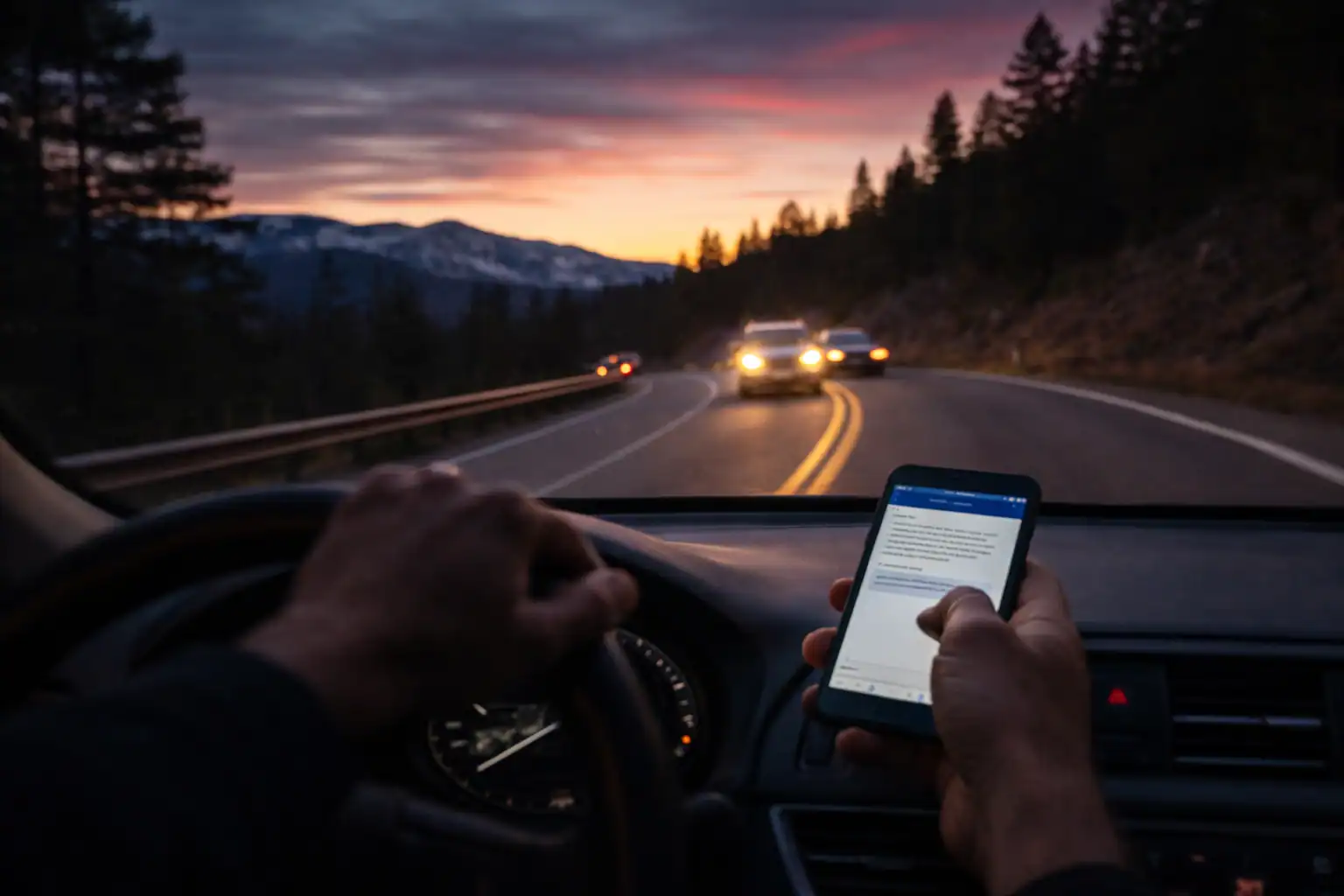
April is Distracted Driving Awareness Month. Here is what Colorado’s own data shows about the scope of the problem and what it means for victims on Front Range roads.
Every April, traffic safety organizations, law enforcement agencies, and public health researchers turn their attention to one of the most preventable causes of serious crashes on American roads. Distracted driving killed 3,308 people nationally in a single recent year according to NHTSA, and injured hundreds of thousands more. In Colorado, CDOT’s own data shows distracted driving as a contributing factor in thousands of crashes annually across the Front Range, with the Denver metro accounting for a disproportionate share of those incidents.
Distracted Driving Awareness Month exists because the numbers demand it. This article presents what Colorado’s data actually shows, what the law requires of drivers, and what victims of distracted driving accidents in Colorado can do to protect their legal rights.
What Colorado Data Shows About Distracted Driving Crashes
CDOT’s annual crash data documents distracted driving as a contributing circumstance in a significant percentage of reported crashes statewide. The challenge with distracted driving statistics is that they are almost certainly undercounted. Unlike impaired driving, which can be measured chemically, distraction is self-reported or inferred from the circumstances. Drivers who caused a crash while texting rarely volunteer that information to the responding officer. Researchers consistently note that the true prevalence of distraction in crashes is likely two to three times higher than official statistics suggest.
What the data does show clearly is where and when distracted driving crashes concentrate. Urban arterials with frequent signalization see high rates of rear-end collisions attributable to distracted following drivers. Colfax Avenue, Colorado Boulevard, Wadsworth Boulevard, and the surface street network connecting Denver’s suburbs see elevated distraction-related crash rates compared to rural highways. Paradoxically, low-speed urban environments sometimes produce more distraction because drivers perceive less risk and are more likely to glance at a device.
The 25-to-34 age demographic is overrepresented in distracted driving crash data nationally, reflecting both high smartphone use and high driving frequency. But CDOT data shows that distraction-related crashes span all age groups, and the severity of outcomes correlates more with the speed of the road than with the age of the driver.
Colorado’s Distracted Driving Law: What It Covers and What It Doesnt
Colorado’s primary distracted driving statute at CRS 42-4-239 prohibits the use of a handheld mobile telephone while driving. The law was strengthened in 2017 to make handheld phone use a primary offense, meaning an officer can stop a driver solely for phone use without needing another traffic violation as a basis.
A driver found to have been using a handheld device at the time of your accident has violated CRS 42-4-239. That statutory violation is directly usable in your civil personal injury claim. A violation of a traffic safety statute that causes injury can support a finding of negligence per se, which simplifies the liability analysis in your favor.
However, Colorado’s distracted driving law does not cover all forms of distraction. Eating, adjusting a radio or navigation system, reaching for objects, or being distracted by passengers are not covered by the handheld device statute. These forms of distraction can still support a negligence claim under general principles of reasonable care, but they require more evidence to establish than a statutory violation.
Hands-free phone use is permitted under Colorado law. However, research consistently shows that cognitive distraction from a phone conversation persists even when the driver’s hands are on the wheel. Hands-free use that contributes to an accident can still be relevant to a negligence analysis even if it doesnt constitute a statutory violation.
How Distracted Driving Evidence Is Obtained in a Colorado Accident Case
Proving distraction requires evidence, and the most powerful evidence is often the at-fault driver’s cell phone records. Through the civil discovery process, your attorney can subpoena the driver’s carrier for call, text, and data records showing device activity in the minutes before and during the crash. If records show an active text message or app use at the time of impact, that evidence is typically decisive.
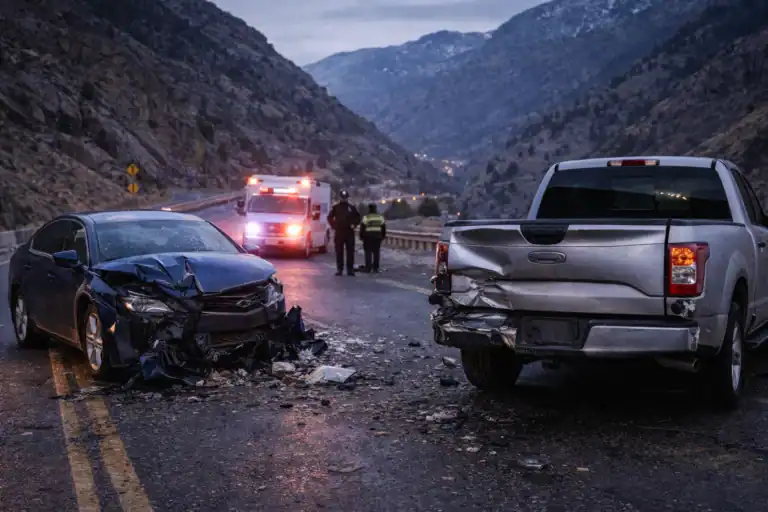
Other evidence sources include: the at-fault driver’s own admissions at the scene or to the investigating officer, witness observations of device use before the crash, traffic and surveillance camera footage capturing the driver’s attention and lane behavior in the seconds before impact, and the physical evidence of the crash itself. A rear-end collision with no skid marks on a clear dry road is circumstantially consistent with a driver who never saw the vehicle ahead.
Call us at 720-928-9178 if you were hurt by a distracted driver in Colorado. Distracted driving cases require swift evidence preservation. The consultation is free, confidential, and there is no fee unless we win.
The Legal Value of a Distracted Driving Claim in Colorado
Distracted driving cases carry specific legal value beyond standard negligence claims. A driver who violated CRS 42-4-239 by using a handheld device may be subject to punitive damages under CRS 13-21-102 if the conduct rises to the level of willful and wanton disregard for the safety of others. Colorado courts have found that repeated or egregious phone use while driving can meet this standard.
Punitive damages are awarded in addition to compensatory damages. They are not available in every case, and courts apply a meaningful threshold before allowing them. But in distracted driving cases involving serious injury and documented phone use, they represent a legitimate and sometimes significant component of the total recovery.
The availability of cell record evidence also affects settlement dynamics. When phone records clearly establish distraction at the time of impact, insurance companies face a much stronger case and often resolve claims more favorably in anticipation of what a jury would do with that evidence.
Colorado’s Distracted Driving Problem on Front Range Roads
The Front Range presents specific distracted driving risk factors that compound the statewide picture. The I-25 corridor through Denver and its suburbs carries the highest vehicle volume in the state and sees rear-end collision patterns consistent with distracted following behavior. The surface street network in Aurora, Thornton, Westminster, and Lakewood mixes high-speed arterial traffic with dense commercial development, creating an environment where drivers are simultaneously managing navigation, phone use, and complex traffic situations.
Construction zones on I-25, I-70, and C-470 add additional distraction risk. Drivers who are already managing unfamiliar lane configurations while checking navigation apps are operating at the outer edge of their attentional capacity.
Frequently Asked Questions
Is texting while driving illegal in Colorado?
Yes. CRS 42-4-239 prohibits the use of a handheld mobile telephone while driving. It is a primary offense, meaning officers can stop a driver solely for phone use. A violation that causes an accident supports a negligence per se finding in a civil claim.
Can I get the other driver’s phone records to prove they were texting?
Yes, through civil discovery. Your attorney can subpoena the at-fault driver’s cell carrier for records showing call, text, and data activity at the time of the crash. This evidence is frequently obtained in distracted driving cases and can be decisive in establishing liability.
What if the distracted driver claims they werent on their phone?
Phone records dont lie. Even if a driver denies phone use, the carrier records showing data or app activity at the time of the crash can contradict that denial. Combined with witness observations, traffic camera footage, and the physical evidence of the crash, phone records often tell a complete story independent of the driver’s account.
Can I recover punitive damages from a distracted driver in Colorado?
Potentially yes, if the distracted driving conduct constituted willful and wanton disregard for the safety of others under CRS 13-21-102. Documented phone use at high speed or in a school zone, or a driver with a prior distracted driving citation, strengthens the case for punitive damages.
What if the driver was using a hands-free device?
Hands-free use is legal under Colorado law. However, if cognitive distraction from the phone conversation contributed to the accident, it can still be relevant to a general negligence claim even without a statutory violation. Evidence of the conversation’s content and the driver’s reaction time supports this analysis.
How long do I have to file a distracted driving accident claim in Colorado?
Three years from the date of injury under CRS 13-80-101 for standard negligence claims. Cell phone records and surveillance footage are much harder to obtain as time passes. Early action by your attorney preserves the evidence that wins these cases.
What does April Distracted Driving Awareness Month mean for my claim?
Practically, it doesnt change your legal rights. But the increased public and media attention to distracted driving during April can be relevant to the cultural and legal context of your case. Juries in Colorado are aware of distracted driving as a serious public safety issue, and that awareness shapes how they evaluate cases involving device use.
Sources
Colorado Distracted Driving Statute, CRS 42-4-239 Punitive Damages Statute, CRS 13-21-102 Personal Injury Statute of Limitations, CRS 13-80-101 Colorado Comparative Negligence Statute, CRS 13-21-111 National Highway Traffic Safety Administration, Distracted Driving Data: https://www.nhtsa.gov Colorado Department of Transportation, Distracted Driving Statistics: https://www.codot.gov National Safety Council, Distracted Driving Research: https://www.nsc.org
If a distracted driver hurt you in Colorado, call Samantha Flanagan at 720-928-9178. The consultation is free, confidential, and comes with no obligation. Your recovery comes first.