What Bus Drivers Wish You Knew: A Guide to Sharing the Road Safely with RTD Public Transport
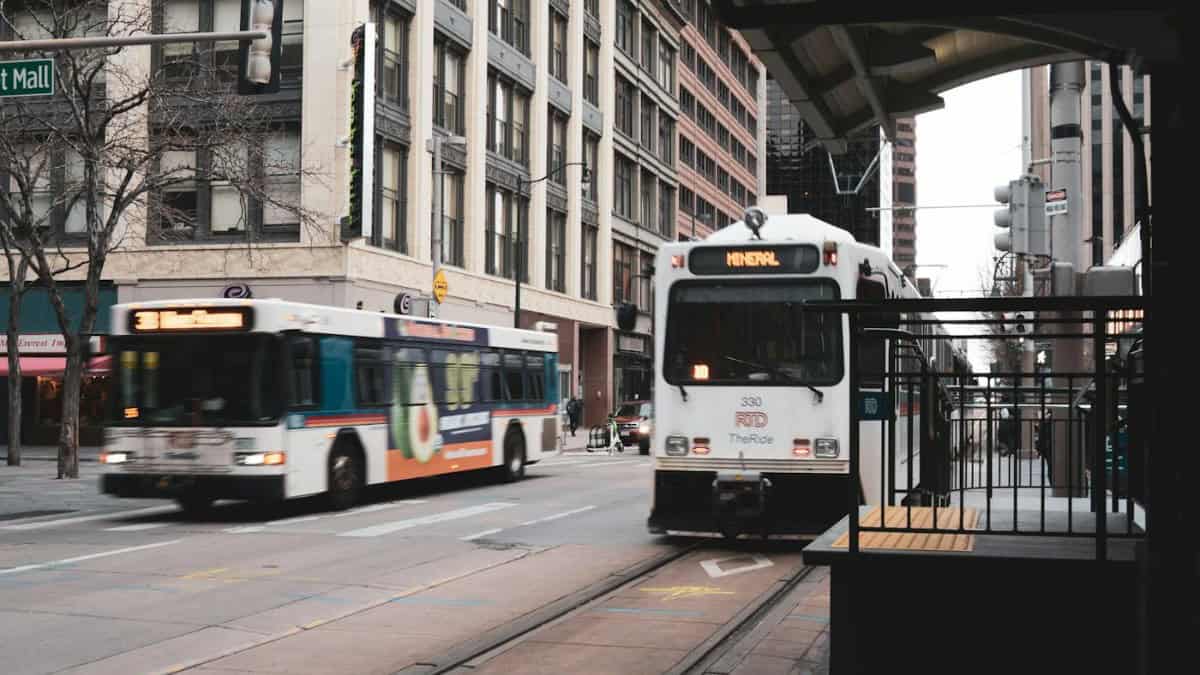
Every day on Denver’s streets, a simple misunderstanding between a driver and an RTD bus operator can lead to a devastating, life-altering accident.
At Flanagan Law, we’ve handled these complex cases and know that understanding the view from the driver’s seat is the first step toward preventing a tragedy. That’s why we’re sharing what every driver, cyclist, and pedestrian in the metro area needs to know to safely share the road. This isn’t just about traffic rules; it’s about mutual respect and awareness that can save a life.
1. The “No-Zone”: Their Blind Spots are Gigantic
A bus driver’s blind spots, often called “No-Zones,” are much larger than those of a passenger car. If you are driving or cycling in these areas, the bus driver literally cannot see you.
- Directly in Front: A bus driver sits high up. If you cut in too closely, your car can disappear from their view.
- Directly Behind: If you are tailgating a bus, the driver has no idea you are there.
- Alongside the Bus: The entire length of the bus on both sides is a massive blind spot, especially on the right side. Never assume a driver sees you when you are alongside them.
Pro Tip: If you can’t see the bus driver’s face in their side mirror, they can’t see you. Give them plenty of space.
2. They Make Frequent, Abrupt Stops. Expect It.
Unlike a regular car, a bus is designed to stop frequently and sometimes suddenly to pick up and drop off passengers. They can’t always pull completely out of the flow of traffic.
- Anticipate the Stop: Look for designated bus stops along your route. If you see one coming up, anticipate the bus will stop.
- Never Pass a Stopped Bus Unsafely: When a bus is stopped, be extremely cautious of pedestrians, especially children, who may be disembarking and crossing the street.
- Keep a Safe Following Distance: Following too closely is a primary cause of rear-end collisions with buses. Give yourself enough room to react when they brake.
3. Wide Turns Are Not a Suggestion, They’re a Necessity
A 40-foot bus cannot make the same tight turns as your car. To navigate a 90-degree turn, especially in downtown Denver, a bus driver must often swing wide, sometimes even encroaching on an adjacent lane.
- Stay Out of the Squeeze: Never try to “squeeze” past a turning bus on the right side. This is a common and extremely dangerous cause of T-bone collisions.
- Read the Signals: If a bus’s turn signal is on, give them the space they need to complete the turn safely. Do not try to accelerate past them.
What Happens When a Safe Day Turns into a Crisis?
Even the most careful drivers can find themselves involved in an accident. Because buses are operated by large public or private entities and carry complex insurance policies, the aftermath of a bus accident can be incredibly intimidating. You are suddenly facing a powerful legal team whose job is to minimize your claim.
If you or a loved one has been injured in an accident with an RTD or other commercial bus, you do not have to face them alone. You need an advocate who understands the specific laws governing common carriers in Colorado.
At Flanagan Law, we provide compassionate, expert legal representation to ensure you are treated fairly. We handle the investigators, the paperwork, and the insurance companies so you can focus on healing.
Frequently Asked Questions
Who is responsible if a bus has to stop suddenly and I get injured as a passenger?
In this situation, liability can be complex. If the sudden stop was due to the bus driver’s own negligence, the transit authority could be held responsible. However, if the stop was necessary to avoid a crash caused by another negligent driver, you might have a claim against that driver. It is crucial to document why the bus stopped so suddenly.
Are RTD buses covered by the same insurance rules as regular cars?
No, as a government entity, RTD operates under a different set of rules defined by the Colorado Governmental Immunity Act (CGIA). This act puts stricter limits on the amount of damages you can recover and has much shorter deadlines for filing a claim—often as short as 182 days. This makes it critical to speak with an attorney immediately after an accident.
What should I do if I am a pedestrian hit by a bus at a crosswalk?
Your first priority is to seek immediate medical attention, as your injuries could be severe. If you are able, get the bus number, the driver’s name, and contact information from any witnesses. Report the incident to the police. Do not give a recorded statement to the transit authority’s investigators before consulting with a lawyer.
Can a bus driver be held personally liable for an accident?
While the bus driver’s negligence may have caused the accident, claims are typically filed against their employer, such as the RTD or a private bus company. These entities have the insurance policies and corporate responsibility for the actions of their employees while on the job. The driver, however, may face internal disciplinary action or traffic violations.
If a bus doesn’t have seatbelts, can I still file a claim if I’m injured?
Yes. The absence of seatbelts on many public transit and school buses does not prevent you from filing a claim if the accident was caused by negligence. The standard of care required of a “common carrier” like a bus service is very high, and they have a duty to operate the vehicle in a way that keeps passengers as safe as possible, regardless of seatbelt availability.