Someone Hit My Parked Car and Left—Your Rights Under Colorado Law
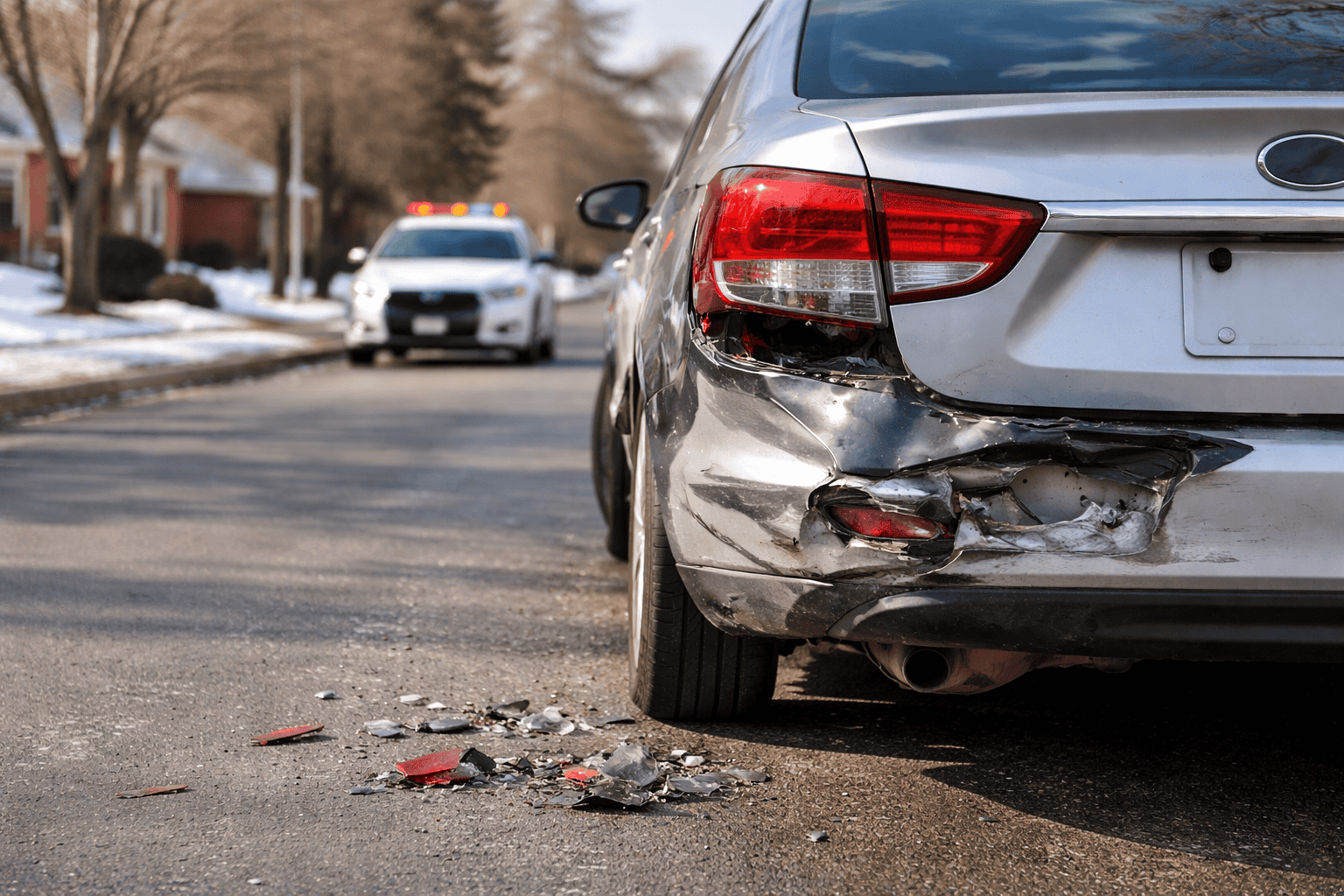
You come back to your car and your stomach drops. There’s damage—a dent, scraped paint, maybe worse—and no note. No driver. No explanation. Just the sinking realization that someone hit your vehicle and drove away.
In our practice, we hear this story more often than you might think. And the first question is always the same: What do I do now?
This guide walks you through your rights under Colorado law, the steps to protect yourself, and when it makes sense to talk to an attorney.
What Colorado Law Says About Hit-and-Run Accidents
Under Colorado Revised Statutes § 42-4-1601, any driver involved in an accident that causes damage to another vehicle is legally required to stop immediately. They must provide their name, address, and vehicle registration to the other driver—or, if the owner isn’t present, leave that information in a conspicuous place on the damaged vehicle.
When a driver fails to do this, they’ve commited a hit-and-run offense. Depending on the severity, this can range from a traffic infraction to a criminal misdemeanor. If there were injuries involved, the consequences become significantly more serious.
But here’s what matters to you: the other driver breaking the law doesn’t automatically make your recovery easier. You still need to navigate the claims process, and that process has rules of its own.
Your First Steps After Discovering the Damage
1. Document Everything Immediately
Before you move your vehicle or touch anything, take photographs. Capture the damage from multiple angles, any paint transfer, debris on the ground, and the surrounding area. If there are nearby security cameras—on businesses, ATMs, or residences—note their locations.
This documentation serves two purposes: it supports your insurance claim, and it may help identify the responsible driver if witnesses or footage surface later.
2. File a Police Report
Even if the damage seems minor, file a police report. In Colorado, you can report a hit-and-run to the local police department or, in unincorporated areas, the county sheriff’s office. Many departments allow online reporting for incidents without injuries.
The police report creates an official record of the incident. Some insurance companies require it before processing a hit-and-run claim. Even when they don’t require it, having one strengthens your position.
3. Check for Witnesses
Look around. Ask nearby business owners or residents if they saw anything. Sometimes the person who witnessed the collision didn’t realize you’d want to know. People are often willing to help—they just need to be asked.
If you’re in a parking lot, the business may have surveillance footage. Act quickly, though. Many systems overwrite footage within 24-72 hours.
How Insurance Works When the Other Driver Disappears
This is where things get frustrating for many people. You didn’t do anything wrong, but because the at-fault driver fled, you may have to rely on your own insurance to cover the damage.
Collision Coverage
If you carry collision coverage, it typically covers damage to your vehicle regardless of who caused the accident. You’ll pay your deductible, and your insurer covers the rest up to your policy limits. If the hit-and-run driver is later identified, your insurance company may pursue them for reimbursement—including your deductible.
Uninsured Motorist Property Damage (UMPD)
Colorado law (CRS 10-4-609) requires insurers to offer uninsured motorist coverage. If you elected UMPD coverage, it may apply to hit-and-run situations where the other driver is never identified. However, coverage varies by policy—some require physical contact with the fleeing vehicle, and others have specific conditions. Review your declarations page or call your agent to understand what your policy actually covers.
What If You Only Have Liability Coverage?
If your policy only includes liability coverage (which pays for damage you cause to others), you may be responsible for your own repair costs unless the hit-and-run driver is found. This is one of those situations where the gap between minimum legal coverage and adequate protection becomes painfully clear.
When Should You Talk to an Attorney?
For minor property damage where your insurance is handling things smoothly, you may not need legal help. But certain situations warrant a conversation:
You were injured. If you were in or near the vehicle when it was hit and sustained injuries, the stakes change entirely. Medical bills, lost wages, and pain and suffering are all recoverable damages—but insurance companies don’t hand them over willingly.
Your claim was denied or undervalued. Insurance companies sometimes deny hit-and-run claims or offer settlements that don’t come close to covering actual repair costs. An attorney can review your policy and push back.
The driver was identified. If police or witnesses identify the person who hit your car, you may have a claim directly against them. This becomes especially important if their insurance is insufficient or if they were commiting another offense at the time (like DUI).
The damage is significant. When repair costs run into the thousands, or when you’re dealing with a totaled vehicle, having an advocate ensures you’re not leaving money on the table.
Time Limits You Need to Know
Colorado’s statute of limitations for property damage claims is three years from the date of the incident (CRS 13-80-101). For personal injury claims, it’s also three years under most circumstances (CRS 13-80-102). But waiting too long creates problems beyond legal deadlines: evidence disappears, memories fade, and surveillance footage gets erased.
The sooner you act, the stronger your position.
Protecting Your Rights After a Hit-and-Run
Finding damage on your parked car with no explanation is maddening. You didn’t ask for this, and you shouldn’t have to figure it out alone.
If you’re dealing with a hit-and-run in Colorado—especially one involving injuries or a disputed insurance claim—we’re here to help you understand your options.
Call Flanagan Law at 720-928-9178 for a free consultation. We’ll review your situation and give you honest guidance about your next steps—no pressure, no obligation.
Frequently Asked Questions
Will filing a hit-and-run claim raise my insurance rates?
It depends on your insurer and your policy. Generally, claims where you’re not at fault shouldn’t increase your rates, but practices vary. Ask your agent directly before filing if this is a concern.
What if the damage is less than my deductible?
If repair costs are lower than your deductible, filing an insurance claim won’t make financial sense. You’d pay out of pocket either way. However, you should still file a police report to document the incident.
How long do police investigate hit-and-run cases?
For property-damage-only hit-and-runs, investigation resources are often limited. Police may check nearby cameras and follow up on leads, but these cases frequently go unsolved unless a witness comes forward. Cases involving injuries receive more investigative attention.
Can I sue the hit-and-run driver if they’re caught?
Yes. If the driver is identified, you can pursue a civil claim against them for your damages. This is separate from any criminal charges the state may file. An attorney can help you evaluate whether this is worth pursuing based on the driver’s ability to pay.
Sources
Colorado Revised Statutes § 42-4-1601 (Duty to Report Accidents)
Colorado Revised Statutes § 10-4-609 (Uninsured Motorist Coverage)
Colorado Revised Statutes § 13-80-101 (Statute of Limitations—Property Damage)
Colorado Revised Statutes § 13-80-102 (Statute of Limitations—Personal Injury)