
Collision Course: Analyzing the Alarming Rise of Distracted Driving Accidents on I-25
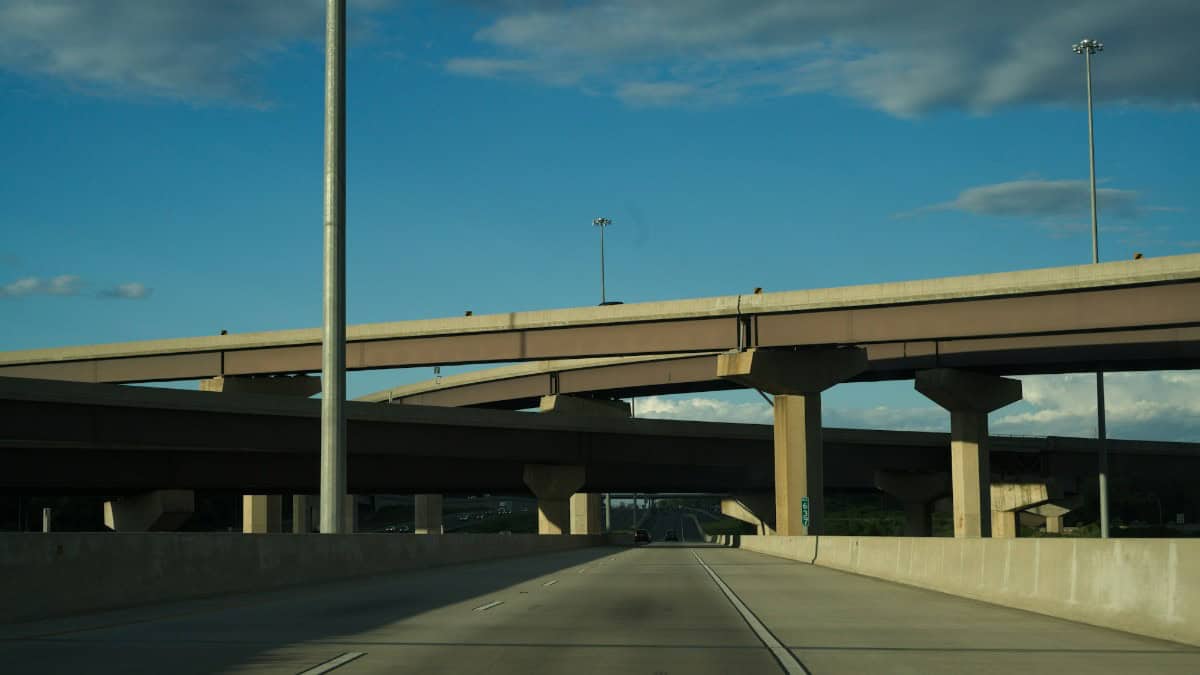
For the thousands of Coloradans who travel it every day, Interstate 25 is the vital artery of the Front Range. It is also, increasingly, one of the most dangerous places to drive in our state. While congestion and speed play a role, a growing body of data reveals a more insidious culprit behind the rising number of serious accidents: distracted driving. A quick glance at the cars around you confirms what the statistics now prove—an alarming number of drivers are looking at their phones instead of the road.
At Flanagan Law, we analyzed recent crash data from the Colorado Department of Transportation (CDOT) and the Colorado State Patrol to put a spotlight on this dangerous trend. The numbers paint a stark picture of a preventable epidemic that is putting every driver on I-25 at risk.
The Statewide Epidemic Hits Home on I-25
Distracted driving is a known killer, but its prevalence in Colorado is shocking. According to a 2025 CDOT driver behavior survey, a staggering 91% of Colorado drivers admit to driving while distracted in the past week. This includes everything from eating to adjusting the radio, but the most dangerous distraction is the cell phone.
In 2024, the Colorado State Patrol investigated 268 fatal and serious injury crashes involving a distracted driver. When you apply this behavior to a high-volume, high-speed environment like I-25—especially during the peak rush hour between 3 p.m. and 6 p.m.—you create a perfect storm for tragedy. Denver County alone accounts for the highest number of crashes in the state, with I-25 serving as the epicenter for many of these incidents.
Why I-25 is a Hotspot for Distracted Driving Wrecks
Several factors combine to make I-25 particularly susceptible to accidents caused by inattention:
- High Congestion & “Stop-and-Go” Traffic: During peak hours, the constant braking and accelerating create a high-risk environment for rear-end collisions. A driver looking down at a phone for even a few seconds can easily miss the sudden stop of the car in front of them.
- High Speeds: In less congested stretches, drivers traveling at 65-75 MPH cover the length of a football field in under 4 seconds. Looking down to read a text means you are effectively driving blind for a huge distance.
- Complex Interchanges: Major interchanges like I-70, 6th Avenue, and Hampden Avenue require a driver’s full attention to navigate merging lanes and exiting traffic. A moment of distraction here can easily lead to a dangerous side-impact or lane-change collision.
- False Sense of Security: Many drivers mistakenly believe that highway driving is “easier” than city streets, leading them to feel it’s safer to glance at their phone. The data proves this assumption is lethally incorrect.
The Human Cost: Beyond the Statistics
Behind every statistic is a life irrevocably changed. A distracted driving accident is not a simple mistake; it’s the result of a conscious choice to prioritize a notification over the safety of others. Victims are often left with catastrophic injuries, from whiplash and herniated discs to traumatic brain injuries, all because a driver could not wait to send a message. [Link “distracted driving accident” to your /distracted-driving-accidents/ page]
Proving that a driver was distracted is a critical part of a personal injury claim. It establishes clear negligence and is essential for holding the at-fault party fully accountable for the harm they’ve caused.
Frequently Asked Questions
How can you prove the other driver was on their phone?
Proving phone use is a multi-step process. It starts with witness statements and the police report. Crucially, your attorney can send a preservation letter and then issue a legal subpoena to the at-fault driver’s cell phone carrier. The records won’t show the content of messages, but they provide a timestamped log of all call, text, and data activity, which can be matched to the exact time of the crash.
What part of I-25 in the Denver metro area is the most dangerous?
While the entire corridor is a high-risk area, data consistently shows that the interchanges with other major highways and avenues see the highest crash volumes. The sections of I-25 that intersect with I-70, I-225, 6th Avenue, and Hampden Avenue are perennial hotspots for all types of accidents, including those caused by distraction.
Does Colorado’s new hands-free law help?
Yes. As of January 1, 2025, Colorado’s new law prohibits drivers from holding a mobile device while driving. This makes it easier for law enforcement to cite drivers and provides a stronger basis for a negligence claim in a civil lawsuit. However, the law still allows for hands-free use, which can still be a significant cognitive distraction.
Is distracted driving considered reckless driving?
While it can be, they are separate offenses. A standard distracted driving ticket is a traffic misdemeanor. However, if the driver’s behavior was particularly egregious (e.g., weaving through traffic at high speed while clearly on their phone), an officer could cite them for the more serious offense of Reckless Driving, which carries harsher penalties.
If I’m hit by a distracted driver on I-25, what is the most important first step for my case?
After seeking medical attention, the most critical step is to preserve evidence. This means contacting a personal injury attorney as soon as possible. Key evidence, like a truck’s black box data or a company’s cell phone records, can be legally destroyed after a certain period. An attorney can act immediately to ensure this vital information is saved and used to build your case.
If you were one of the many people injured on I-25 by a driver who was looking at their phone instead of the road, you deserve justice. Don’t let their negligence derail your life. Contact Flanagan Law for a free, confidential consultation. We have the experience to subpoena the records and prove the distraction that caused your harm, fighting to secure the compensation you need to recover.