
The Science of Whiplash: Why Symptoms Appear Days After a Collision
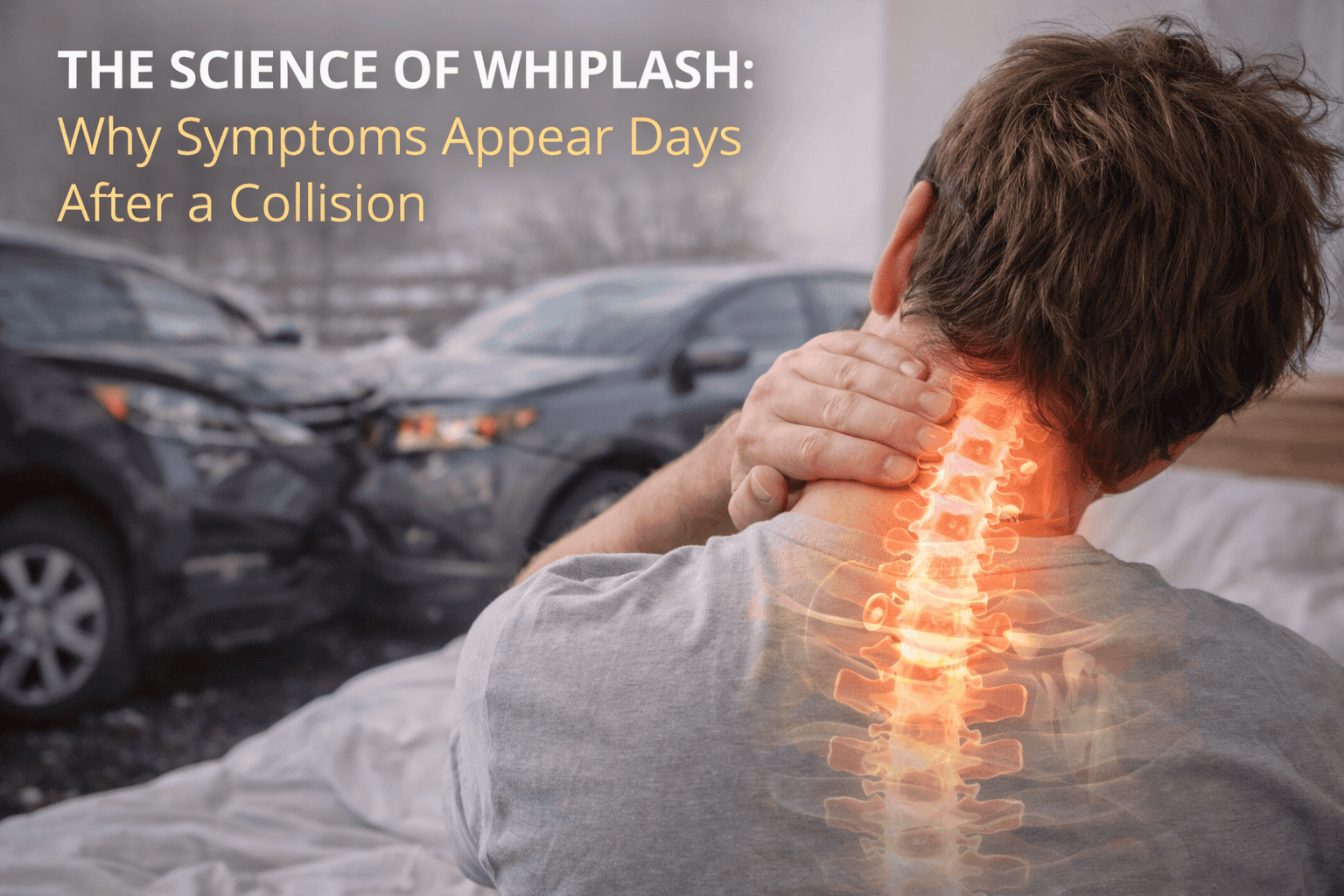
The crash felt minor. Maybe you were rear-ended at a stoplight, or sideswiped in a parking lot. You walked away feeling fine—a little shaken, but nothing hurt. Then three days later, you woke up unable to turn your head.
This isn’t unusual. It’s actually how whiplash works, and understanding the science behind delayed symptoms can help you protect both your health and your legal rights.
What Actually Happens to Your Neck in a Collision
Whiplash occurs when your head is thrown rapidly backward and then forward—or side to side—faster than your muscles can react to protect your spine. This violent motion happens in milliseconds, often before you even realize you’ve been hit.
During impact, your cervical spine (the seven vertebrae in your neck) bends beyond its normal range of motion. The ligaments that connect these vertebrae stretch or tear. The muscles surrounding your neck strain as they try to stabilize your head. The facet joints between vertebrae can become inflamed or damaged. In more severe cases, the discs that cushion your vertebrae can bulge or herniate.
All of this damage happens instantly. But you might not feel it right away.
Why Pain Takes Days to Appear
Your body’s immediate response to trauma is flooding your system with adrenaline and endorphins. These chemicals mask pain signals, allowing you to function in what your brain perceives as a dangerous situation. This is an evolutionary advantage—our ancestors needed to escape predators even when injured.
But this protective response means you can walk away from an accident feeling relatively normal while significant soft tissue damage has already occured.
The Inflammation Timeline
Soft tissue injuries trigger an inflammatory response that builds over time. In the hours and days following injury, damaged cells release chemicals that increase blood flow to the affected area. Swelling develops as fluid accumulates in injured tissues. This inflammation is actually part of the healing process, but it’s also what causes pain, stiffness, and reduced range of motion.
Peak inflammation typically occurs 24 to 72 hours after injury. This is why so many whiplash sufferers report waking up two or three days after an accident unable to move normally.
Micro-Tears and Delayed Symptoms
The ligaments and muscles in your neck can sustain micro-tears that don’t immediately announce themselves. These small injuries accumulate stress as you continue normal activities—looking over your shoulder while driving, sleeping in your usual position, sitting at your desk. Each movement aggravates damage you don’t know you have.
By the time symptoms appear, what started as minor tears may have progressed to more significant injuries requiring longer recovery times.
The Medical Reality of “Minor” Whiplash
Emergency rooms see countless accident victims who decline treatment because they feel fine. Doctors understand this pattern and often warn patients to watch for delayed symptoms, but the warnings don’t always sink in when you’re eager to go home.
Research consistently shows that whiplash injuries are more complex than many people assume. Studies published in medical journals have found that even “minor” whiplash can cause structural changes visible on MRI scans. Some patients develop chronic pain lasting months or years. Neck injuries can trigger headaches, cognitive difficulties, and sleep disturbances that aren’t immediately connected to the accident.
Symptoms to Watch For
In the days following a collision, be alert for neck pain or stiffness, headaches (especially at the base of the skull), shoulder or upper back pain, tingling or numbness in the arms, dizziness, fatigue, difficulty concentrating, blurred vision, and ringing in the ears.
These symptoms can appear immediately or emerge gradually over the first week. Any of them warrant medical evaluation.
How Delayed Symptoms Affect Your Legal Claim
Insurance companies know that whiplash symptoms are often delayed. Unfortunately, some adjusters use this medical reality against accident victims.
If you told the officer at the scene that you weren’t hurt, or if you waited a week to see a doctor, the insurance company may argue that your injuries aren’t related to the accident—or that they can’t be as serious as you claim.
Protecting Your Claim From Day One
Even if you feel fine after an accident, consider seeing a doctor within 24 to 48 hours. Explain that you were in a collision and want to be evaluated for potential soft tissue injuries. This creates a medical record connecting any symptoms that develop to the accident.
Document everything. Keep notes about how you feel each day, what activities are difficult, and how your symptoms progress. Take photos of any visible injuries, even minor bruising.
Don’t give recorded statements to the other driver’s insurance company without understanding your rights. Adjusters may ask leading questions designed to minimize your injuries or suggest they’re unrelated to the crash.
The Long-Term Impact of Untreated Whiplash
Some people recover from whiplash within a few weeks with rest and over-the-counter pain medication. Others develop chronic conditions that affect their quality of life for years.
Research suggests that early treatment improves outcomes. Physical therapy, chiropractic care, and other interventions can help damaged tissues heal properly and prevent chronic pain from developing. Delaying treatment—whether because you didn’t realize you were hurt or because you hoped symptoms would resolve on their own—can lead to longer recovery times and persistant problems.
When to Talk to an Attorney About Whiplash
Not every whiplash case requires legal representation. But if your symptoms are significant, if they’re affecting your ability to work, or if the insurance company is pushing back on your claim, having an advocate makes a difference.
Whiplash cases can be surprisingly complicated. Insurance adjusters often dismiss these injuries as minor, even when victims are experiencing real limitations. Medical records need to clearly document the connection between the accident and your symptoms. Future medical needs must be considered in any settlement.
If you’re experiencing delayed symptoms after a Colorado car accident, call Flanagan Law at 720-928-9178. We’ll help you understand your options and make sure your injuries are taken seriously.
Frequently Asked Questions
How long after an accident can whiplash symptoms appear?
Most whiplash symptoms appear within 24 to 72 hours, but some people don’t notice problems for a week or more. Any new symptoms in the first two weeks after a collision should be evaluated by a doctor and documented as potentially accident-related.
Can whiplash cause permanent damage?
Yes. While many people recover fully, some develop chronic neck pain, recurring headaches, or other long-term problems. Early treatment and proper rehabilitation reduce the risk of permanent damage, which is why prompt medical attention matters.
Will an X-ray show whiplash injuries?
Usually not. X-rays show bones, not soft tissues. Whiplash primarily affects muscles, ligaments, and discs, which require MRI or CT scans to visualize. A normal X-ray doesn’t mean you’re not injured—it just means your bones aren’t broken.
What’s the average settlement for a whiplash claim in Colorado?
Settlement amounts vary dramatically based on the severity of injuries, the length of treatment, whether you missed work, and many other factors. Minor whiplash cases might settle for a few thousand dollars, while severe injuries with long-term effects can result in much larger recoveries. Each case is unique.