Denver’s December Driving Danger Explained
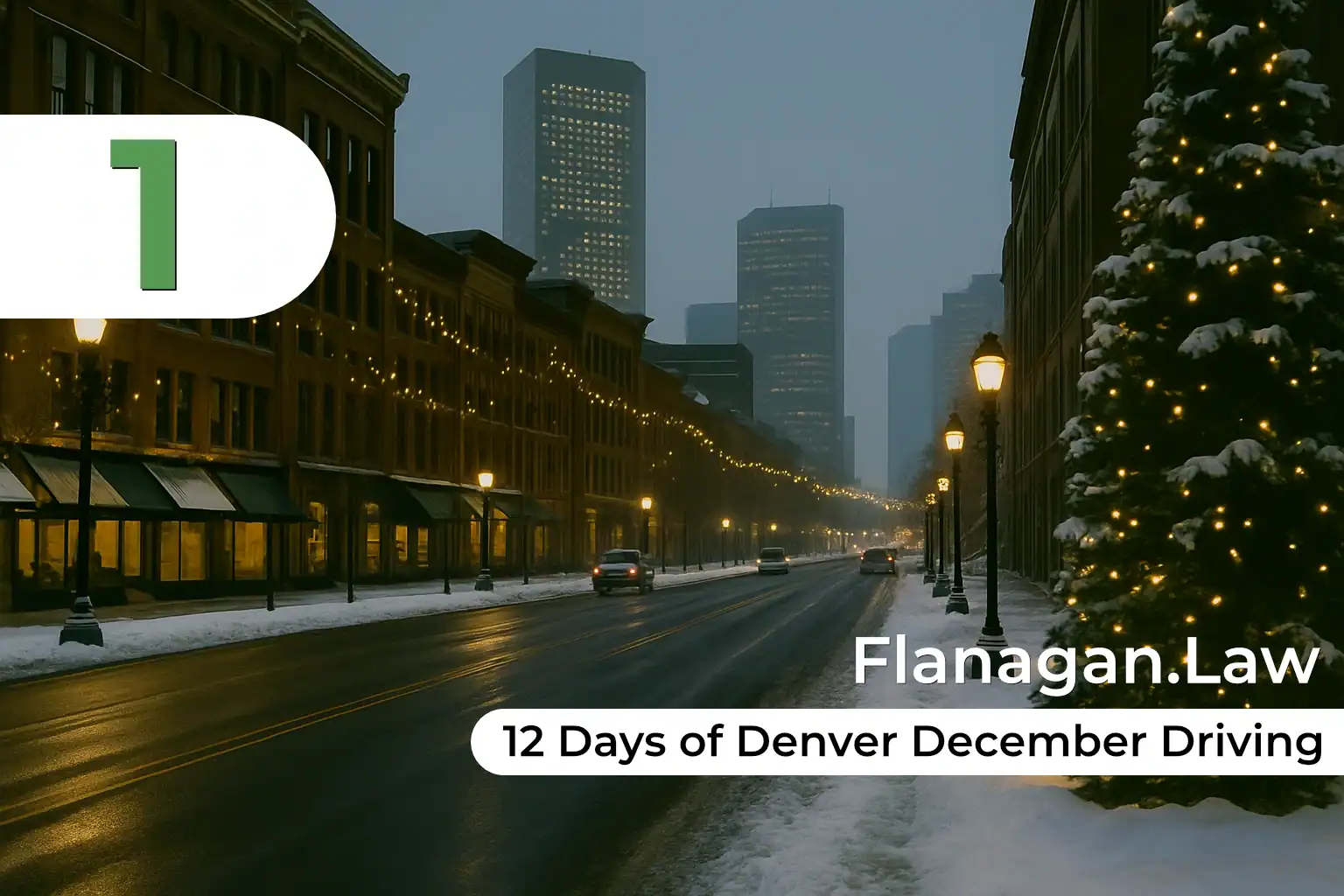
Denver’s Most Dangerous Driving Month
Every winter, Denver roads shift from predictable to unpredictable almost overnight. December brings snowstorms, freezing fog, surprise temperature drops, and thousands of extra cars on the road. It’s the month when drivers feel rushed, roads turn slick, and small mistakes turn into big collisions.
If you’ve ever hit black ice on Quebec, slid toward a stoplight on Colfax, or watched traffic clog the entire I-25 corridor at 4pm, you know December driving isn’t normal driving. It demands more attention, more patience, and honestly, a little luck.
Why December Accidents Spike
Several patterns make December uniquely dangerous:
Sudden Freeze-Thaw Cycles
Denver’s daytime melt and nighttime refreeze create invisible danger zones. A road that felt safe at noon can feel like a skating rink by 7pm. Many drivers don’t realize how fast the temperature shifts until they’ve already lost traction.
Holiday Traffic Volume
More visitors, more delivery vans, more shoppers, more school events. December traffic isn’t just heavier—it’s distracted, rushed, and stressed. A classic recipe for rear-end collisions.
Limited Daylight
Dark commutes hide ice, reduce visibility, and make depth perception tricky. That quick glance that works in July doesn’t work in winter light.
Winter Maintenance Delays
Denver does a strong job clearing major roads, but side streets, hills, neighborhood cut-throughs, and bridges can stay slick far longer than drivers expect.
The Human Side of December Crashes
Most people who crash in December aren’t reckless. They’re normal people heading to work, trying to finish holiday errands, or picking kids up from school. And in one moment, everything changes—plans, health, finances, the rest of the season.
Nobody plans for that. Nobody thinks it’ll be them until it is. I’ve heard people say they felt embarrassed, or even guilty, after a winter crash. But winter collisions don’t mean you did something wrong. Weather is unforgiving, and other drivers make mistakes you can’t predict. One small misjudgment or one driver going too fast for conditions can cause a chain reaction.
Sometimes folks blame themselves too quickly, when the actual at-fault driver was speeding, texting, tailgating, or driving on bald tires. Those details matter more than most people realize.
What Injury Victims Should Know
If you’re hurt in a December accident, a few things make winter claims different:
- Ice, snow, and low-traction conditions make fault disputes more common.
- Insurance companies often argue “weather, not negligence,” even when a driver clearly made unsafe choices.
- Evidence disappears faster in winter—tire tracks, skid marks, debris, all gone with the next snowfall.
- Injuries flare worse in cold weather, especially neck and back injuries.
A small oversight—a rushed statement, an unclear description, one call to the wrong adjuster—can reduce your compensation more than you’d guess.
Stay Safe This December
Drive slower than you think you need. Give more space. Turn headlights on early. And if a crash happens, take a breath, make sure you’re safe, and get medical care even if you “feel okay.” Winter injuries often show up late.
Free Denver Winter-Accident Case Review
If a December crash disrupted your plans, your work, or your peace of mind, you don’t need to shoulder this alone. Cold weather makes recovery harder, and insurance pressure starts fast.
Call 720-928-9178 now for a free, no-pressure consultation with Flanagan Law. We’ll listen, guide you, and help you understand every option you have.
FAQs
What time of day sees the most December accidents in Denver?
Early mornings and early evenings see the most crashes because temperatures drop fastest, creating invisible ice and reduced visibility right when most people are commuting.
Does four-wheel drive prevent December accidents?
Four-wheel drive improves traction when you’re accelerating, but it does very little to help you stop faster on ice or snow. Many drivers overestimate its safety and crash anyway.
Why do side streets feel more dangerous than major Denver roads in winter?
Side streets receive less plowing and have lower traffic volume, which lets ice and snow compact into slick layers that can last for days longer than the main routes.
Can cold weather make injuries feel worse after a crash?
Yes. Cold temperatures increase muscle stiffness, reduce circulation, and can make whiplash, back pain, and joint injuries feel more intense a day or two after the collision.
Should I move my car after a winter crash, or keep it in place?
If it’s safe, move your car out of traffic to avoid secondary collisions, which are more common in winter because approaching drivers can’t stop as fast on slick pavement.
How long do winter-related insurance claims typically take to resolve?
Winter claims often take longer because adjusters handle more cases, and evidence is harder to interpret when snow has altered the scene or removed skid marks.
Does Colorado consider “driving too fast for conditions” negligence in winter?
Yes. Even if you’re under the posted speed limit, driving too fast for icy or snowy conditions can be considered negligent and influence fault decisions.